Closing Ceremon(ies)

This slideshow requires JavaScript.

 The last weekend of June was a compression of intense, ceremonious events involving the conclusion of the teacher training exams, the “Final Practice Teach,” “Closing Circle” and two dinner parties.  After completing the suspenseful ” In-Class Exam”  and turning in the “Take-Home Exam” on Saturday morning, I taught my last class based on Padmasana—I marveled at the progress that so many of the students had made in the program mastering a series of complex poses.  Our session was followed by a full afternoon of lectures and preparation for the “Final Practice Teach”–the grand finale of the Yogaworks program when the students conduct a class of assigned poses.  Although many of the students had grown confident in their teaching overall, there could still be improvement in some areas.   I gathered everyone around at the end of the day and made a few critical comments based on my observations. I really had to be firm and they seemed disappointed that I wasn’t completely satisfied with them.

On Sunday, I woke up realizing that I would be leaving for Los Angeles on Monday and as I walked toward the Gotanda teacher training studio for the last time, I wondered how things would go on this long, sentimental day of “closings.”

The “Final Practice Teach” started with Ahn Eunsun who gave a soul-stirring opening that highlighted our journey as a group together over the past months–the first tears of the day began to flow as sniffles were heard throughout the room.  Next, Kenichi Nemoto got up to teach Bidalasana, then Mikiko Goto, followed by Sayaka Iso… the class flowed seamlessly throughout the morning from one newly minted teacher to the next–all twenty-eight of them.   This wonderful class was punctuated with evaluations and comments–my voice cracked occasionally as intermittent tears swelled up in my eyes.  To my surprise everyone rose the to the occasion.  Many of the students who had overcome personal obstacles to make this challenging mental and physical expedition, flourished and held their space.  I had done my job–what seemed impossible on the very first day of training in April had come to a miraculous termination.  I also couldn’t believe I had spent nearly three months living in Tokyo!  Shortly before the “Closing Circle”— a couple of students wanted me to autograph their mats, then slowly one-by-one they all lined up for me to sign or write out a special note –jubilation filling the room as the training comes to an end!

Finally the sacred “Closing Circle.”  I’ve assisted at least three trainings and the profound “Closing Circle” is an intensely emotional experience for a teacher to get through–it’s a revelation of powerfully sensitive comments as people reflect on a journey.  Each persons’ story is earnestly regarded as they make a bold step to share their deepest feelings.  We chose to do a candle exchange and Tomoko quietly and patiently whispered every remark in my ear as each person in the circle spoke after receiving a candle.  I listened and was surprisingly composed as I took it all in.

Charlotte Tanaka and Natsumi Ishikawa had formed a committee to organize our sensational closing party which would be at a nearby Indian restaurant. Curry is popular in Tokyo and there are a surprising number of Indian restaurants throughout the city and our group commandeered a small place for the evening. We enjoyed a delicious, festive pre-fix meal of assorted curry dishes washed down with mango lasses.  I got up to walk to the other tables and was then given a book made by the students: a fuchsia colored photo album of pictures taken by me, them, along with personalized hand written notes.   Although numerous  wonderful gifts were given to me throughout the day and into the dinner, this one in particular tugged at my heart–the idea of this intimate and devout gift was such a surprise!  At that moment, they wanted me to get up and give a speech.  I stood up and began to thank them for being great students, their thoughtful gifts and the dinner party, as continued I suddenly  began sobbing and couldn’t say another word.   Then Lotte said, “We have to clear the room!”   Kenichi instructed me how to chant “YYYYOOO”! and then told me that I should clap once afterwards.  I laughed hysterically and then after a moment we all shouted “YYYYYOOOOO!!!” and clapped once loudly in unison.  This ritual is called  “Ippon Sime,” a Japanese custom that is carried out to clear a space, to close a ceremony or event and also expresses appreciation for the visitor–a remarkable and glorious end to our training and time together.

As I walked outside into the rain, I turned say farewell to my students before heading out with Tomoko and Arisa to a going away party for me hosted by the YogaPlus teachers…

A congregation of teachers were seated on floor cushions at a long table covered with numerous dishes of tofu, fish, tempura and assorted drinks.  I had associated with them over the months through workshops and the classes they took with me during the week. Three of the teachers were also my translators for these classes.  My work activities with them were just as significant as my time with the students in the teacher training, compounding my responsibilities as a teacher and mentor.  Stuffed from the dinner, I couldn’t eat another bite.  However, it was always fun to socialize with the YogaPlus teachers–they were a lively enthusiastic bunch and before I realized it was around 9:00 p.m and I still needed to pack!   I thought, “I will be up all night,” but they didn’t want me to leave and I had a hard time tearing myself away.  At one point, Mikoto said “Romy you must stay in Japan!”  I laughed “believe me” I said, “I would love to!” but it was time for me to go.   We got up to take a few photos and then shared a joyous hug circle”–never had I felt so accepted and embraced by people and it was sincerely touchingPeriodically, I would overhear  Yuri and Tomoko mention the concept of “Sangha”  which traditionally is a collective term identifying all Buddhist “Bhikkhu.”  Furthermore, in Sanskrit “Samga” means association, assembly,  and “gana” flock, troop, tribe.” The interpretation of these terms  appropriately applied to this yoga “sangha”  of talented teachers and students.  As I left with my bags of gifts, I turned to see the group standing and waving good-bye. “Sayonaora!” I said….in my mind, I can still see the image of them standing there smiling warmly.

The Subway

That Friday evening after returning  to Gotanda from Kamakura,  I realized that this would be the last time I would be on  the subway before leaving Tokyo. As I rode the escalator exiting the station, I saw the billboard for “Tipness Fitness” which had been running an advertisement campaign throughout the spring.  Although there were many other engaging and dynamic advertisements,  I always liked seeing this particular ad because it seemed to capture the frantic energy of the subway and the exuberant youthful spirit I felt embodied many people I had met in Tokyo.

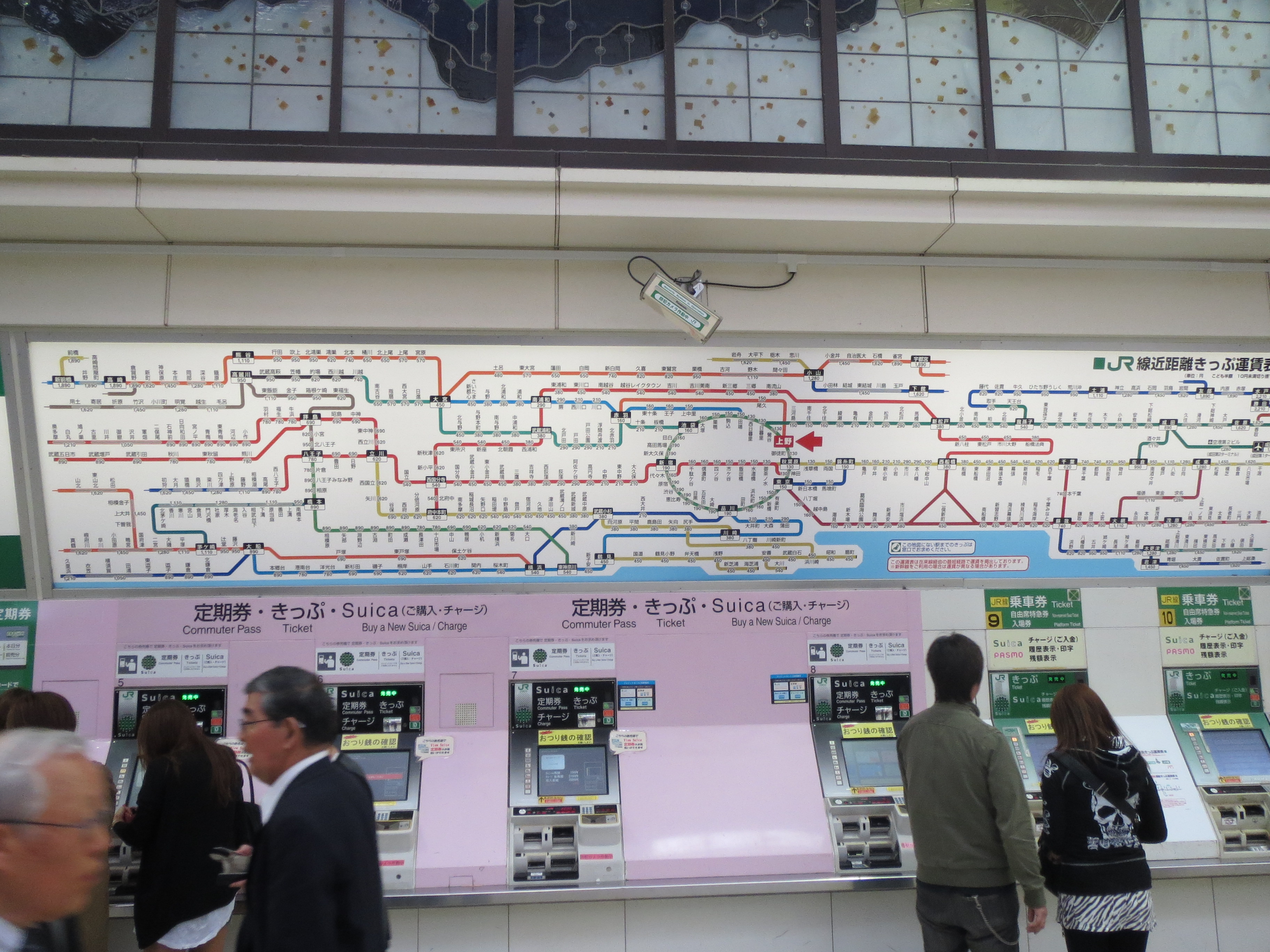
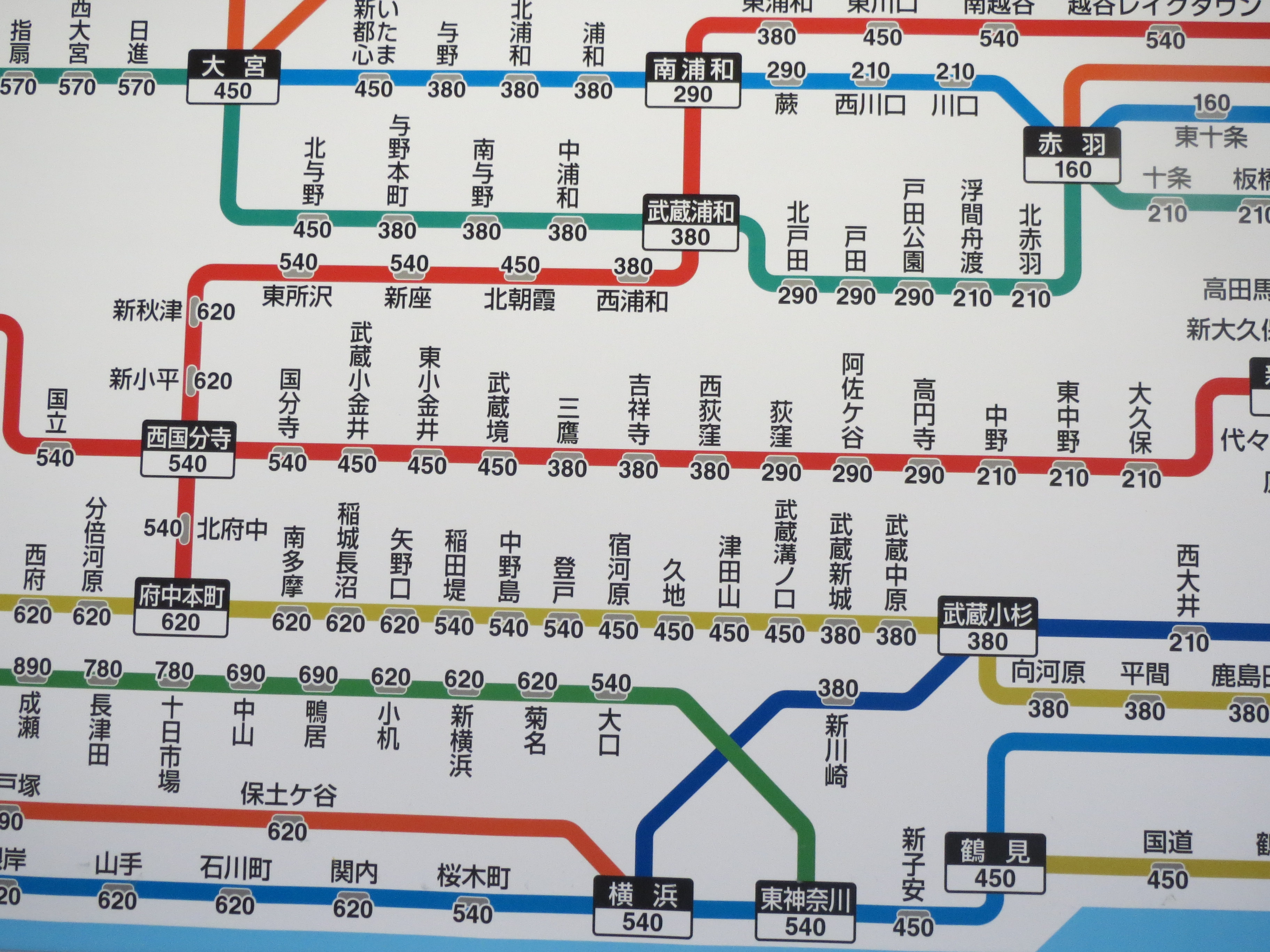
I recounted how I overcame my fear of  Tokyo’s challenging, sprawling subway over the weeks and marveled at my ability to get around with more confidence.  I never had a problem with New York City’s “grid-like” mass transit system where I lived for 18 years.  However, in contrast Tokyo’s web of meandering train lines was much more intimidating.  First of all, the signage is written in Japanese  with English translations listed underneath or flashed across screens.  Secondly, although English subway maps are available, you really need to study it before you head out because many stops on local routes aren’t indicated and you need to know the final destination of that specific train line.  For example, Sangenjaya is an unmarked stop on the Den-en-toshi Line with Chuo-rinkan being the final stop. At first, I was only traveling from Gotanda to Shibuya and then transferring to Sangenjaya—I would only venture further out on the train when I was taken on outings.  Nevertheless, Soufflar gave me some advice that would prove invaluable in helping me navigate around the subway–stick to the JR Line which forms a loop around the city and then take connecting routes from that line.  In addition, the city’s major subway stops—Ueno, Ikebukuro, Shinjuku, Shibuya, Shimbashi & Tokyo are strategically positioned on this circle. This advice worked out perfectly for me. I should also note that the trains are punctual and the courteous nature of the Japanese extends to the subway where people line up single file to enter the train, even during rush hour. Yes you do get packed in by subway attendants if its busy, but you have to line up first.

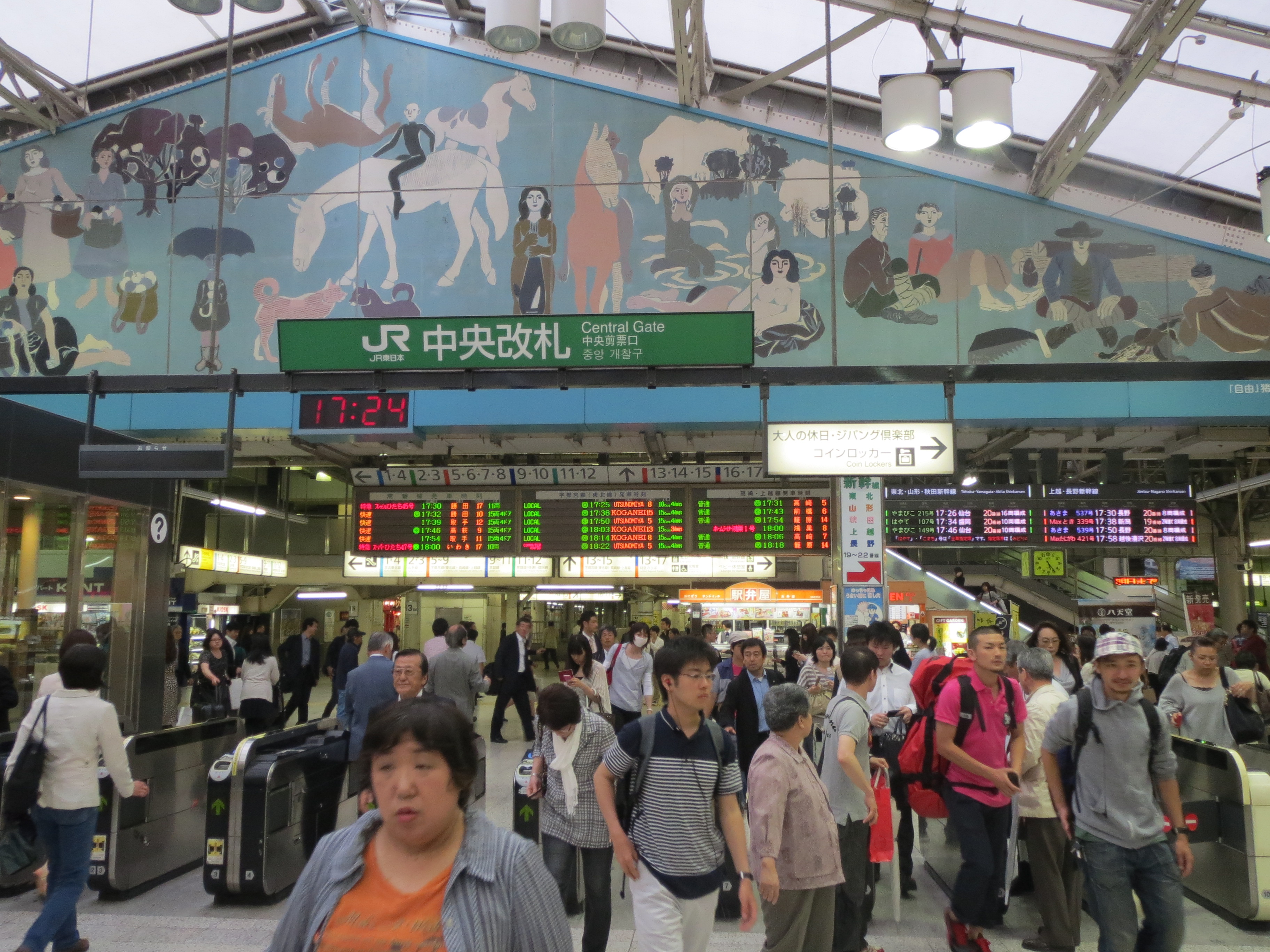
Ueno Station

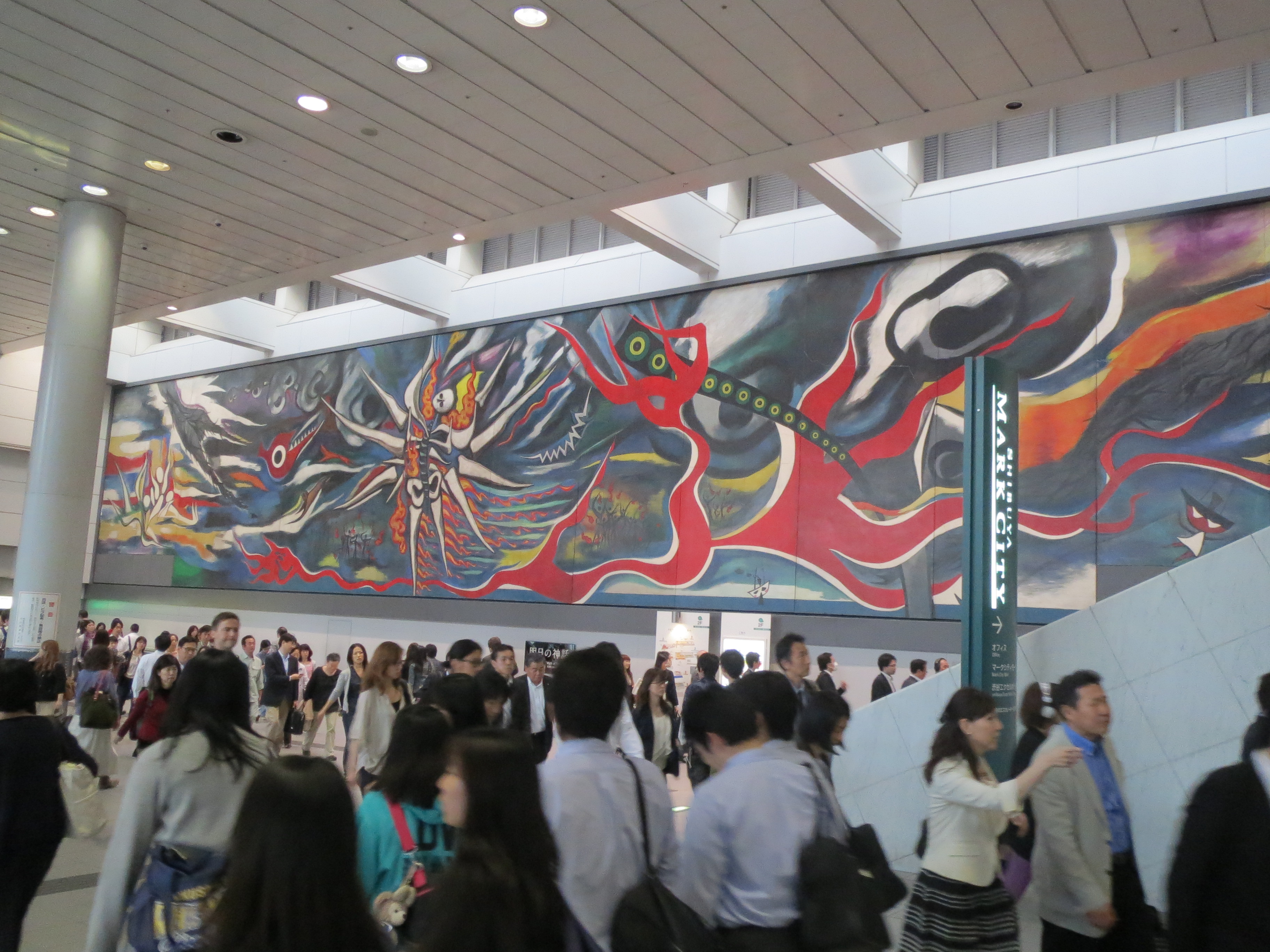
Ueno StationShibuya Station

10:00 p.m. Shibuya Station

A Trip to Kamakura with Tomoko Kawahara

This slideshow requires JavaScript.

Friday of that week, June 29, Tomoko Kawahara took me to Kamakura–we had been working so hard during the training that we never had time to spend any social time together. Many people had mentioned that I would like Kamakura, a seaside community that features nearly forty shrines and temples, notably the Great Buddha of Kamakura. We took a number of trains there and  finally ended up approximately an hour outside of Tokyo. Once there we paid for a trolley to take us to the local spots. Our first stop was an organic restaurant on Yuigahama Beach for a lunch of tempeh with tomato sauce, and assorted vegetarian dishes.

After walking on the beach we strolled up to the view the Great Buddha at the Kotoku-in Temple.  As usual, before entering the grounds you cleanse at a purification fountain and then proceed. There seemed to be hundreds of people on the Temple grounds on this hot, sunny day. The Great Buddha of Kamakura (Daibutsu) is massive (13.35 meters/43.8ft tall  and weighs approx. 93 tonnes/270,000 lbs).  It is one of the most famous icons of Japan as well as its tallest bronze Buddha and I was very impressed that this icon has existed on this site unharmed since the 1252.  The original Buddha was made out of wood in 1243 and later destroyed and the various halls that housed the Buddha over the centuries succumbed to various natural disasters.   The current bronze statue was cast to replace it and may have been gilded which would have a magnificent sight to see. The statue is hollow and Tomoko said that it is believed that “going inside the Buddha will let you start a new.”  At first I wasn’t sure–I couldn’t imagine walking through the Buddha in the heat with dozens of school children.  However,  I said, “I am returning to L.A.  and could use a new start, let’s go inside.”

From there we strolled along a cheerful, quaint street through  town, passing a small temple, Shū Genji, which was built to commemorate Shijokingo a faithful believer of the religion Nichiren who was persecuted in 1271.  This temple, a former residence made of wood was modest in size surrounded by a brushy garden.

After a quick snack of  matcha  gelato we took the trolley to another stop nearby to see the hilltop Jojuin Temple (c. 1219),  surrounded by 262  pale blue, lavender, pink & white hydrangea bushes on a slope overlooking the ocean.  Jojuin is also referred to as the “Hydrangea Temple” and we were fortunate to be there for peak blooming season.  “262” is the number of Chinese characters used in Hannya-shingyo Sutra. 108 steps lead up to the temple–“108” is the number of tolling bells on New Years eve. The temple grounds had various statues commemorating prominent Buddhist priests associated with this compound.

As we walked toward the train station, we stopped by the Gokurakuji Temple which was built-in Fukazawa in 1259 by the Buddhist priest Ryokanbo Ninsho and then moved to Kamakura around 1262. After and  crouching down to enter the wooden gate we walked down a shaded path toward a very interesting complex  of ornately carved wooden structures.

From there we took the trolley back to the train station and transferred to a bus that would weave its way through Kamakura to the amazing Hokokuji Temple.  Founded by Tengan Eko (Buddhist name Butsujo-Zenji) who was a representative of the Zen literary movement known as Gozan Bungak, this sanctuary flourished as the family temple of both the Ashikaga and Uesugi clans.  A magical and vast  garden of 2,000 Mōsō Bamboo trees dominates the property which is the reason why this complex is commonly referred to as the “Bamboo Temple.”    We decided to rest for a while at the tea house (Kyūkōan) and had fresh matcha tea under a canopy of bamboo overlooking a small waterfall.  A leisurely tour of the temple grounds revealed surprising highlights:  carved stone reliquaries, statues decorated with red hats, deep blue tinged hydrangea, a cave of tombs (Yagura), and a thatched roof bell tower.

Once back at the train station, I saw  trees decorated with colorful ribbons of paper and origami. I can’t remember the specific story associated with the decorated trees that Tomoko told me, but they were delightful and whimsical, so I took a picture.

In all, we saw five temples that day and it would take several trips to see them all.  I asked Tomoko what the difference was between a “temple” and “shrine” and with a little more investigation I found that one is “Buddhist “and the other “Shinto.” “Shinto” (Kami Nomchi—“the way of the Gods”) is a religion indigenous to Japan that worships nature. Originally people prayed to the great natural phenomena such as mountains, wind,rain, trees, rivers, fertility and powerful deities that inhabit heaven and earth.  Distinguishing characteristics of “Shinto Shrines”–are a Tori Gate, such as the grand ones featured at the Meiiji Shrine. In addition, there is a purification fountain near the entrance to cleanse your mouth and hands before prayer.

“Buddhism”  (Bukkyō) made its way into Japan in the 6th century via China and Korea. Predominant details of “Budhhist Temples” are:  the presence of the color red as evident with the Senso-ji Temple ( or a red gate (Yukuimon) and other items); an image of Buddha; and a large incense burner placed in front of the temple. Smoke created by the burning of incense is said to have healing properties. In addition, a pagoda is on the premises.

My trip to Kamakura was the perfect final sightseeing adventure to summarize my experiences in Japan and I ‘m no expert on the subject, but I could see first hand that influences of Shinto are pervasive in almost every aspect of Japanese life and culture–the naturalness of the structures, food and even clothing; respect for people, animals and towards all living things; traditions and celebrations.  Furthermore, there is relatively little crime in Japan and people are generally good spirited and very kind. Nevertheless,  these two religions—Shinto and Buddhism–coexist and complement each other which creates a harmonious balanced life.


Sightseeing: The Meiji Shrine

This slideshow requires JavaScript.

Although I’ve been back in Los Angeles since July 2,  I have a few more stories to tell that conclude my experience in Tokyo. The last week of my stay there was a flurry of activities which made it difficult for me to keep up with the blog–last-minute sightseeing, final obligations to complete the teacher training, packing and traveling.  One of the sightseeing excursions was a visit to the Meiji Shrine which turned out to be a completely different experience than the Senso-ji Temple.  Serene and cool, the impressive Meiji Shrine complex is situated on 175  tree covered acres with adjoining gardens  that make up a surprisingly restful oasis located in the midst of Yoyogi Park.  You first enter a towering Tori gate which dwarfs any human being and then follow a shaded path through a lush forest of pines.   Along this tranquil walk on the path towards the shrine you pass a colorful wall of sake barrels  (nihonshu) which are donated for ceremonies and festivals.  Traditionally in Japan, sake has always been a way to bring gods and people together. Weddings and other services are often held at the Meiji Shrine and I have been told that if you can visit on Sundays, you may be able to see some of the ceremonies with participants wearing traditional kimonos.

After passing through another Tori,  you can view murals depicting the history of  the creation of the Shrine which is dedicated to the Emperor Meiji and his wife Empress Shoken.  The site was chosen because they used to visit an iris garden there and the original shrine built-in 1915-1921 was destroyed in WWII and rebuilt in 1958.  In addition, 120,000 trees representing 365 species were donated and planted on the grounds.

Before entering the grounds you must stop by the purification fountain (Temizusha) and cleanse your mouth and hands before prayer (left hand first, then right and mouth). Once you finally reach the inner precinct (Naeien, the outer precinct is called Gaein) you walk through the vast plaza to the Main Shrine building.  Customarily, you throw coins into the “Offering” box and then “bow twice, clap your hands twice and bow once again.” I then wrote out a prayer and sealed in an envelope which would later be presented at an altar.

There was a certain elegant austerity to the design of the shrine compound built of copper and cypress in the traditional “nagare-zukuri” style which lent itself to the hushed devotional silence of the surroundings. After roaming the grounds I went to the graceful Iris Garden which also had a koi pond surrounded by dense green trees.  It was hard to believe I was in the middle of bustling Tokyo.  As I started to leave I felt remarkably refreshed, I’m really glad I made it there…

The Teacher Training: Tadasana / タダーサナ

This slideshow requires JavaScript.

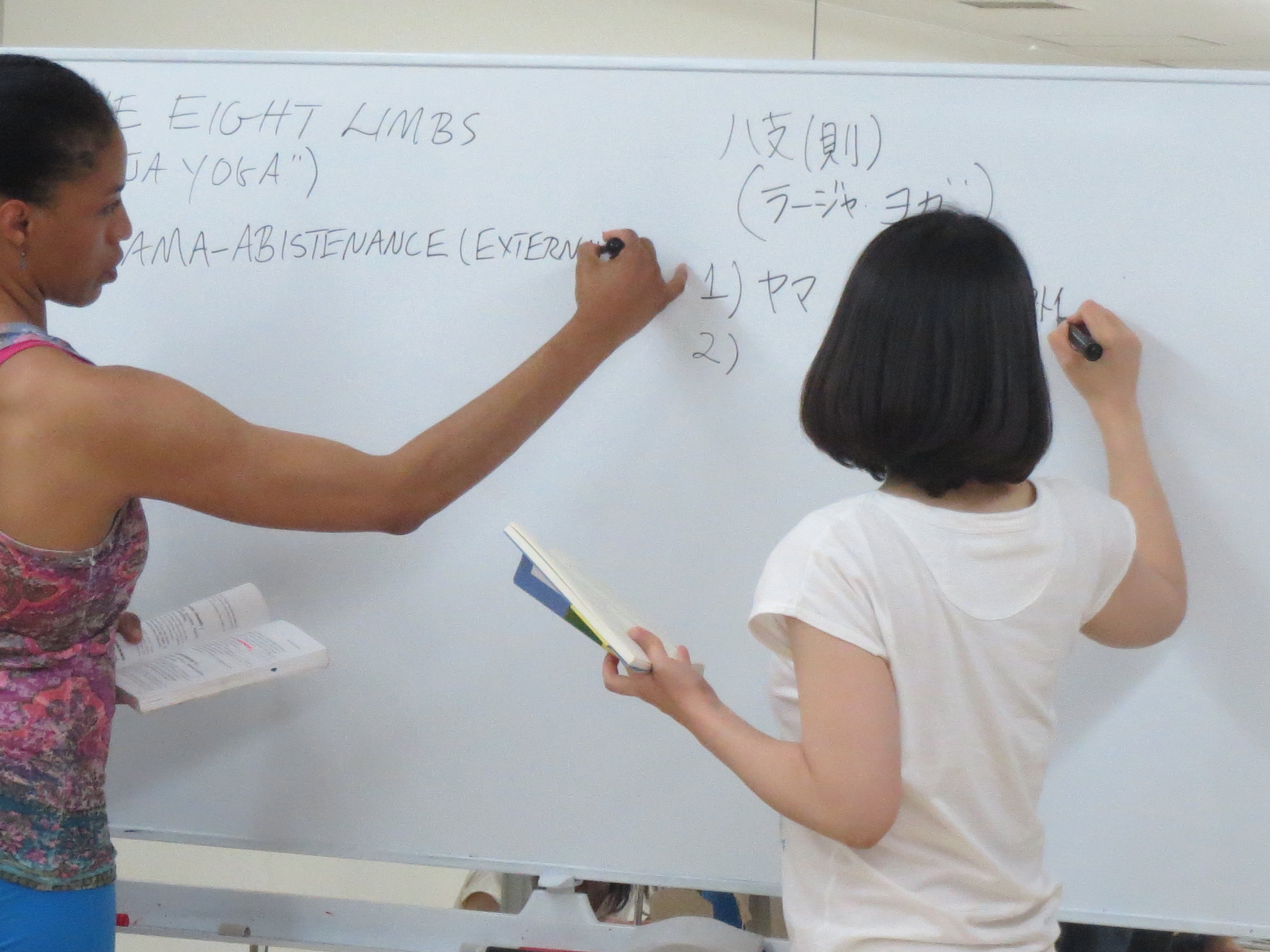
Migi–right, Hidari–left, Sute–Inhale, Haitte–Exhale”…    As the training winds down to its final weekend, I thought I would describe the elaborate system we devised for processing the homework.  In addition, to communicating through a live translator, we had to take things a step further.  A big component of the Yogaworks Teacher Training is the homework–written essays, sequences and reading assignments.  I was told that there wouldn’t be anyone to translate the homework and many of the other teachers had the students do this as a class assignment.  However, I remember how much I gained from receiving personal feedback on these assignments and felt that I had to figure out a way to give these students the same. One teacher who previously taught one of these trainings, Eka Ekong, said that she pasted the assignments into Google Translator—it took a lot of time but at least she could tell what the students where doing.  The translation is awkward and fragmented and sometimes not an accurate description of what someone is saying, but at least you know get an understanding  of what is said and if the student is getting the assignments. The first time I did this it was a humongous undertaking, twenty-eight teaching scripts written in Japanese flooded my inbox and I tediously cut and past each one into Google Translator and sent them back.  Finally, I had them  translate their assignments through Google translator paste it into the document under their Japanese version, and send it to me.  I would then read and type responses in red in the document and then send  it back to them.  This takes a long time and I spent most of my  free time during the week keeping up with this project.  However, the pay off was beneficial, I was able to offer advice and most of all, it really helped me to remember their names.

Sample of teaching script:

これからTrikonasanaのポーズに入ります。ブロックの2個使います。

両手と両足を広げ、足首が手首の下にあることを確認してください。ブロックはかかとの後ろに1つずつ置きます。

右足を90度外側に、左足は45度内側に向けます。左足の土ふまずが右足のかかとと一直線上にあることを確認します。足の四隅で地面をしっかり踏み、太ももに力を入れて立ちましょう。両手を広げ肩をリラックスさせます。息を吸いながら上半身の両側を伸ばし、息を吐きながら上体を右側に倒します。右手はブロックの上に、左手はまっすぐ天井に向けます。

(Google Translator)

Now goes into Trikonasana pose. Use two of the block.

Hands and feet spread out, please make sure that the bottom of the wrist and ankles. Place one block behind the heel.

90 degrees outside right foot, left foot 45 degrees toward the inside. Make sure that it is on the line with the heel of the right foot first Sat of the left foot Fu. Stepping firmly on the ground in the four corners of the foot, let’s start focusing on the thighs. The shoulder is relaxed with open arms. Both sides of the upper body while stretching breath, and pivot to the right the upper body while exhaling. Right hand on top of the block, left hand is straight up towards the ceiling.

Segment of Sequencing Assignment:

シークエンス(後屈、ツイスト)

シャバーサナ(ブロックを頭、胸椎の下に置く)

セツバンダ(呼吸と連動させて、手も上げ下げする)(ブロックを腿に挟む)

エカ・パダ・アパナーサナ

テーブルトップ

CAT/COW

エクステンドチャイルド

ダウンドッグ→プランク→ダウンドッグ

(足を手元へステップ)ウッタナーサナ→タダーサナ

太陽礼拝C(プランク、ダウンドッグ)×2

太陽礼拝A×3

English translation…

Savasana (Block under the head and thoracic)

Setu Bandhasana (in conjunction with breathing / Sandwich the block in thighs)

Eka Pada Apanasana

Table Top Pose

Cat/Cow

Extended Child Pose

AMS→Plank→AMS

(Step Forward) Uttanasana→Tadasana

Surya NamasukarC (Plank/AMS)×2

Surya NamasukarA×3

Everyone took their final exam today and a couple had the option of looking at an english version. I marvel at the ability we all had to communicate such complex topics, learn a common language–Sanskirt, and flourish over the past 11 weeks.

I’ve also included additional images of  students who weren’t included the photo essay from “The Teacher Training: Weeks 5 & 6.”

Sightseeing: The Zoo in Ueno Park

This slideshow requires JavaScript.

A few weeks ago, Charlottte Tanaka, Mikoto, Goto Hisako and Ryu Imaizumi invited me to go with them to the zoo in Ueno Park.  I hadn’t been to a zoo in years and was really looking forward to it and 4 1/2 -year old Ryu was particularly excited.  We took the JR LIne to this vast park, which is very similar to New York’s Central Park, in scale and for the presence of prominent museums.  Shortly after entering the zoo, we  saw the panda bears and then continued on to see an elephant, bears, a towering giraffe, penguins and a menagerie of variegated wildlife.  A powerful storm quickly moved in forcing us to run for cover and take a monorail through lush, green, treetops in search of an area to wait out the downpour.  The four of us had snacks under a pavilion overlooking a sweeping lake covered in waterlilies. Finally the rain stopped and we were able explore a bit longer until a classical melody played over the speakers indicating closing time.  Similarly, throughout Tokyo, a nursery rhyme is amplified at 5:00 p.m. each day, Tomoko Kawahara said that this is a signal “for all little children to go home because their parents are waiting for them.”  After leaving the zoo, Ryu wanted to see the bullet trains “Shinkansen” and we were able to get passes at the train station to go below and see them arrive and depart.  Ryu was so thrilled to be there with the trains–and so upset when we had to leave.  In all, it was great to spend the day experiencing life’s simple pleasures through the eyes of a child.

The Translators: Tomoko Kawahara

Tomoko Kawahara

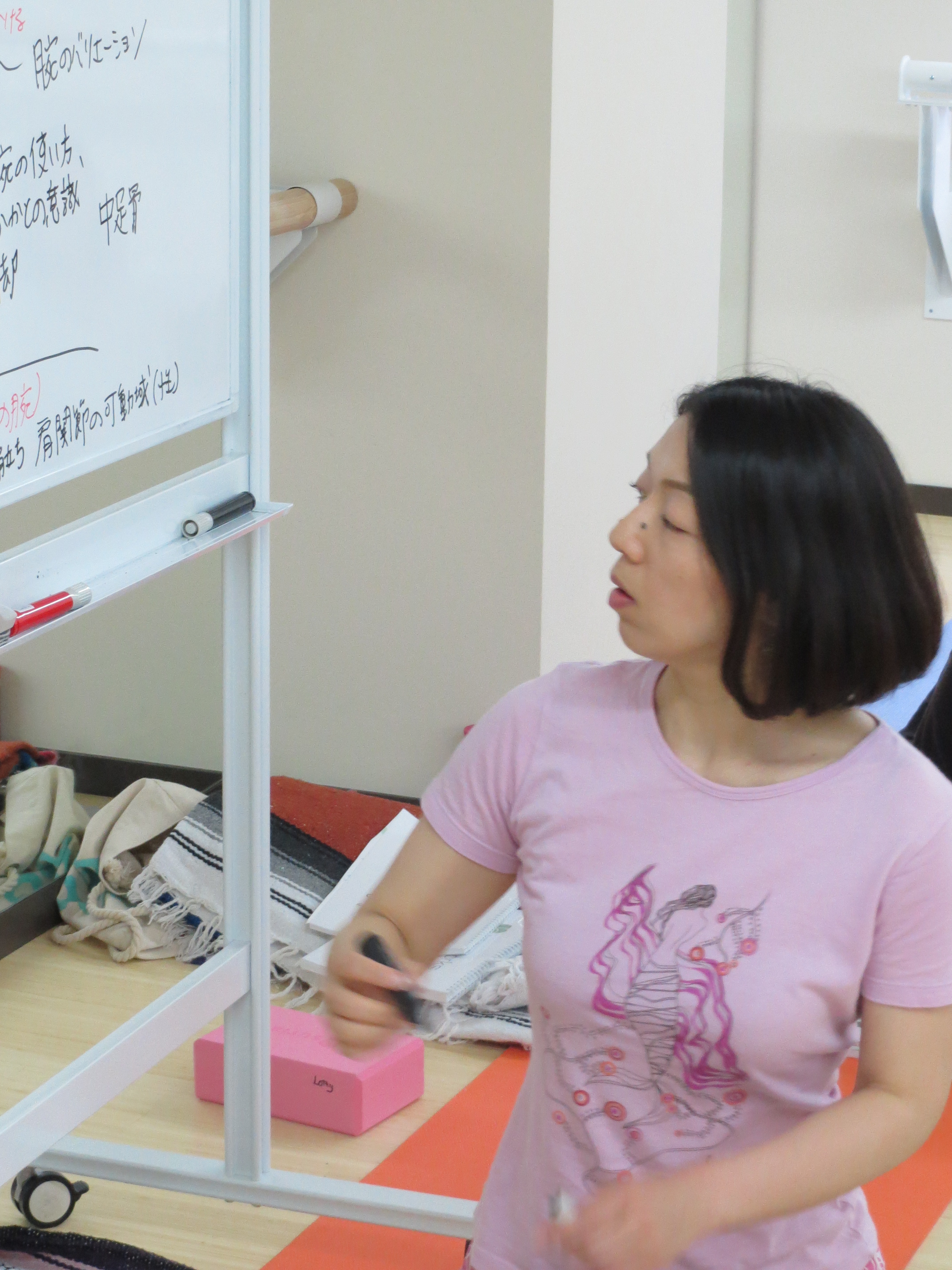
Initially I wanted to begin the segments on “The Translators” with Tomoko Kawahara because she has the most demanding role. In addition, Tomoko is also the woman who all of the other translators look up to—Souffler, Yuri & Kosai.   But, it makes sense to highlight her towards the end of the training because over these weeks I’ve grown to view her as more than a translator, she is a co-teacher. Calm, authoritative and patient, her presence in the classroom is reassuring—-she is the “glue” that keeps things together.  Without her there simply would be no training.  Tomoko also brings balance to the intensity of the training, reminding us to take breaks and brings me chocolate from time to time.  I send her the schedule beforehand so that she knows what’s on the agenda and then she tirelessly speaks every word I say each Saturday & Sunday from the morning practice, throughout the lectures, and until the final closing circle at the end of the day.  She interprets each question the students ask me and my responses.  I’m amazed at how it works, we just get into a rhythm and the day flows without any conflict–its fascinating.  I’ve now learned that a translator has to have specific skills and talent to make it work–the love of language, extensive traveling experience and a healthy curiosity about other cultures.   Furthermore, the translation process is a collaborative effort.  I look to Tomoko for advice and strategies on presenting material or insight when communicating with the students. She’s also my cultural link which I feel has been instrumental in keeping this training flowing smoothly.   There are phrases, words or concepts in English that may not be present in Japanese and she has to find a comparable interpretation.

As a child, Tomoko lived in France for several years and has been intrigued by different cultures ever since. When she was in high school, she lived in the US as a year-long exchange student, and later went to college in the UK. Using her English skills, Tomoko built a career in planning, sales and marketing and soon gravitated toward yoga as a way to alleviate stress and rehabilitate a back injury.  It didn’t take long to realize that yoga worked not only on the body but also for the heart and mind which provided a major turning point in her life. Tomoko’s understanding and perceptions towards yoga completely changed after she started taking classes at “Sun & Moon Yoga” in Tokyo and soon began to  realize in a direct, experiential way that “yoga was not just what we do on the mat.”  Tomoko has been working as a professional interpreter/translator and teacher in the yoga industry for 3 1/2 years and sees interpreting as a ‘union’–of the speaker and herself and a “union of the speaker and the audience.” For her, yoga interpreting is another form of yoga ‘off the mat’. It has become one of her most important spiritual practices.

Tomoko feels she has been blessed to work with so many fabulous guest teachers from overseas including: Geshe Michael Roach (the founder of Tibetan Heart Yoga), Carlos Pomeda, MC YOGI, Daphne Tse, Ellen Watson, Ted Lafferty, Yvonne Jaques, Gina Sara, Caitlin Casella,  and many more.  Not to mention amazing teachers who are based in Tokyo including Leza Lowitz (the owner and the director of Sun & Moon Yoga, Tokyo), Miles Maeda and others.

Impressive in her own right, Tomoko completed her 300hr TT a year ago in Arizona at the Yoga Studies Institute and is an influential presence in Tokyo’s yoga community.  She teaches at a community center; for the staff of her former employer; subs at Sun & Moon Yoga; offers workshops and charity mediation and kirtan session at studios in Tokyo and beyond.   Furthermore, in an effort to share yoga with a wider range of people, she is the co-director of YCIP (Yoga Classic Input Project), Japan which has been saving sacred yogic scriptures and supporting Tibetan refugees.  She is also a Committee Member of YAM (Yoga and Music in Tohoku) a charity that she created in collaboration with other yoga teachers after 3/11 to bring yoga, music,  and bodywork to the lighten up the survivors in the areas affected by the earthquake. She too is a blogger for YOGAYOMU, a free popular magazine in Japan.

I’ve enjoyed hearing about Tomoko’s community involvement during our breaks and always admired the generosity she extends to all around her: me and the students in the training, her colleagues, seniors, and quake victims. I’ll never be able to thank her enough.

http://www.yogaclassics.org/

http://www.facebook.com/YAMTOHOKU

http://www.yogayomu.com/blog/tomoko/

http://sunandmoon.jp/

The Translators: Mayumi Yamashita “Souffler”

Mayumi Yamashita “Souffler”

Mayumi “Souffler” Yamashita translates for my Friday afternoon Vinayasa/Mediation class at the YogaPlus studio in  Sangenjaya.  A seasoned world traveler, Souffler first studied at the  Sivananda Vendana Yoga Center  in India and then later completed  the 200hr  Yoga Works Teacher Training in Tokyo with Caitlin Casella.  Her experiences during this training inspired her to become a translator.  She currently teaches for YogaPlus  and the Sivananda Center in Tokyo, and has taught yoga in the Bahamas, United Kingdom and India.  She was motivated to teach yoga teacher as a means to maintain her connection with her friends all over the word, but mostly because of her late father, Sadayuki Yamashita, who taught Japanese and was a translator as well.  Souffler said that her parents  were so proud of her choice to become a yoga teacher and the potential he had to have a positive influence on people’s lives.  Gregarious and always upbeat, you really do feel the positive energy that Souffler emits in her presence, she is the true embodiment of  “sattva”–luminous and light.

What I also like about Souffler is that she keeps on top of me to get my sequences in to her on time.  Each translator requests my sequence prior to class so that they can prepare and research poses or anatomical terms—I  just can’t show up and teach there’s a collaborative process involved.  Another fact that I appreciate about Souffler is that she is always willing to offer to show me around Tokyo or suggest  a store, neighborhood, or site  that I should visit.  Japanese women in general are very fashionable, especially Souffler, and I’m always commenting on her great outfits. During one of our conversations after class,  she said:

“Have you been to Shimokitazawa?

“What? …Where is that.”  I said

“Shimokitazawa…you’ll love it!  I’ts near Shibuya, take the Inokashria Line to the Shimokitazawa train station. They have lots of good deals there on clothes.”

She wrote out the directions for me and I did take her advice go there the other day and she was right–it was a terrific community–sort of like the East Village in Manhattan with lots of thrift shops and boutiques with fashionable clothes at prices far more affordable than in other areas of Tokyo.

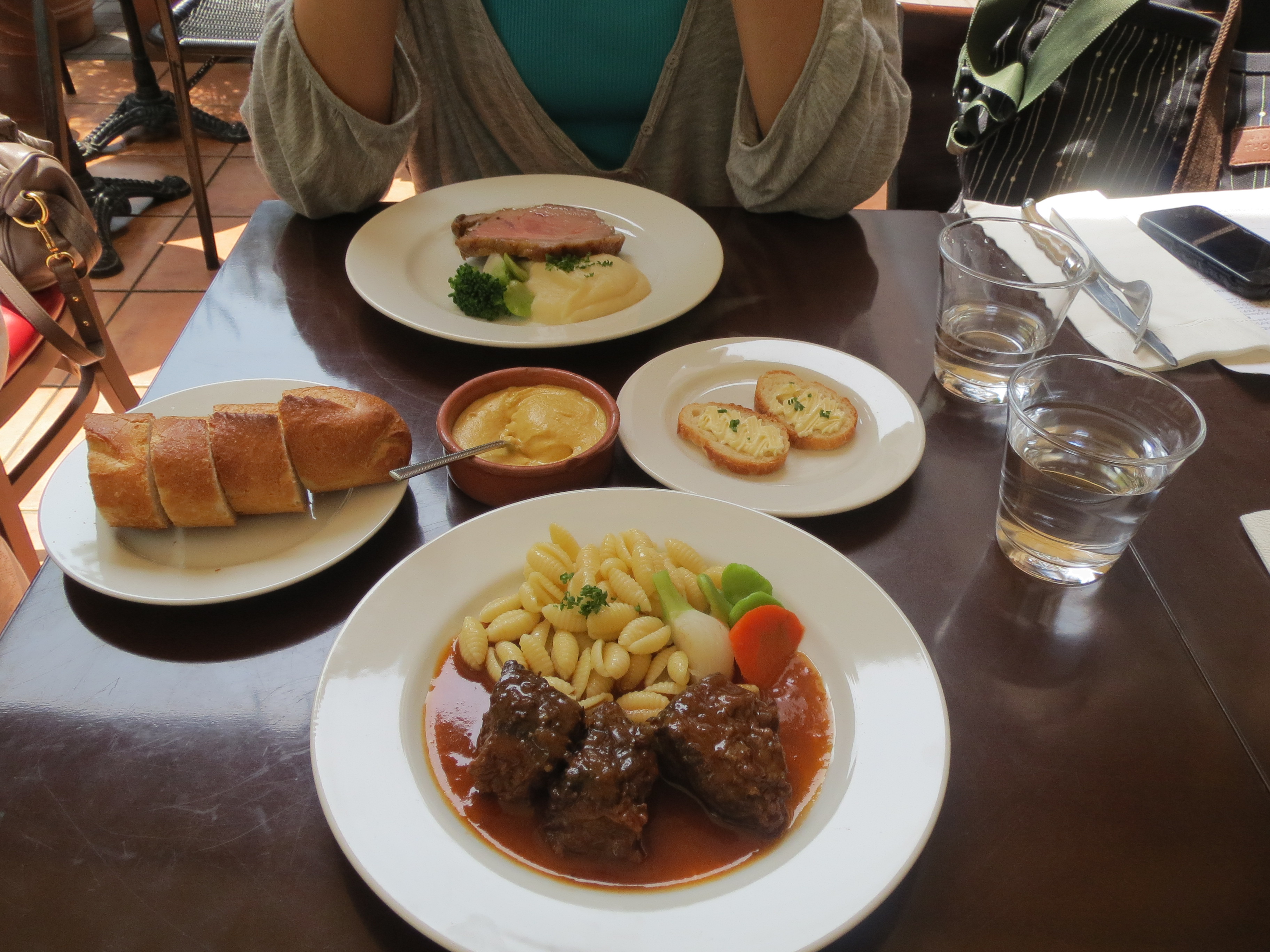
One day she wanted me to meet her take a yoga class in Meguro, I was late so she decided we should have lunch in Ebisu instead.  We went to a quaint French restaurant (Les Lions) that she likes which has a prix-fixe meal–I marvel at how the smallest of spaces can be a restaurant or cafe in Tokyo.  I’ve also noticed that French food is very popular in Tokyo.  Souffler said that there are a number of French restaurants in Tokyo better than those in Paris.   It was a nice sunny day so after lunch she thought I’d might like the shopping center at Ebisu Gardens and took me there.  As we rode on the lengthy “skywalk” for about a mile through a massive subway station, we saw a small building with a red gate nestled between two tall buildings outside. I asked her why a temple would be there of all places, and she said “because its an Inari temple and years ago, someone designated the spot as sacred and nothing can ever be built on the land and the temple will never be moved.”  How interesting I thought,   that a piece of ground could be so sacred and respected today especially in Tokyo where land is so scarce and real-estate is so valuable. I was very impressed,  these influences go back for centuries and decades and I have seen  this  respect for tradition throughout my trip here which is evident in the food, objects, clothing and customs.

Lunch at Les Lions

The Teacher Training: Weeks 5 & 6

This slideshow requires JavaScript.

We just passed the halfway point of the Teacher Training and its at this junction that so many elements come together.  In the past few weeks there has been a steady  but rapid progression of:  lectures, practicing, learning new poses, Sanskrit, philosophy, anatomy, practice teaching and written homework assignments.  It’s a rigorous program and as a teacher, I have to keep everyone motivated, engaged and work hard to present all of the topics in an organized manner.  It’s also at this junction, that I know everyone’s name–all twenty-eight of them–their personalities and who may need a little encouragement.   At week five we had the emotional “Check-in Circle” –it’s when everyone either expresses their fears, insecurities or how they feel inspired.  “Check-in-Circles” are always tough–lots of tears.  Afterwards, shaken and ‘teary” myself,  I said everyone was going to make it through, “those of you who are worried about completing the program will go on to be great teachers and those of you who are already teachers, will be better teachers.”  I then had us recite the “Sarvesham Chant”….”Loka Samastha Sukinoh Bhavantu.”   I was surprised that the words had just tumbled out of my mouth–instinct told me it was the right thing to say at the moment.  The thing I realized as I walked home that evening is that I’m not just a teacher trainer, I have to lead, help them understand and encourage them to grow–and the pressure of that responsibility can be overwhelming.  However, these students motivate me to work throughout the week preparing the lessons and show up on Saturday and Sunday to teach.  I’m seeing a lot of progress:  they are getting stronger in their asana practice, have more confidence with their practice teaching sessions and are improving with their written homework assignments.  We’ve also made it through  some tough assignments: Samadhi Pada & Sadhana Padha of the Yoga Sutras; a number of anatomy topics (the pelvis and planes of movement, shoulder girdle, spine );  subtle body and the dreaded  Surya Namaskar A & B,  Standing Twists and Urdhva Dhanurasana practice sessions.  We have four more weeks and still lots of material to cover, but we’re having a good time together and will support each other until the end.

The Translators: Kosai Kato

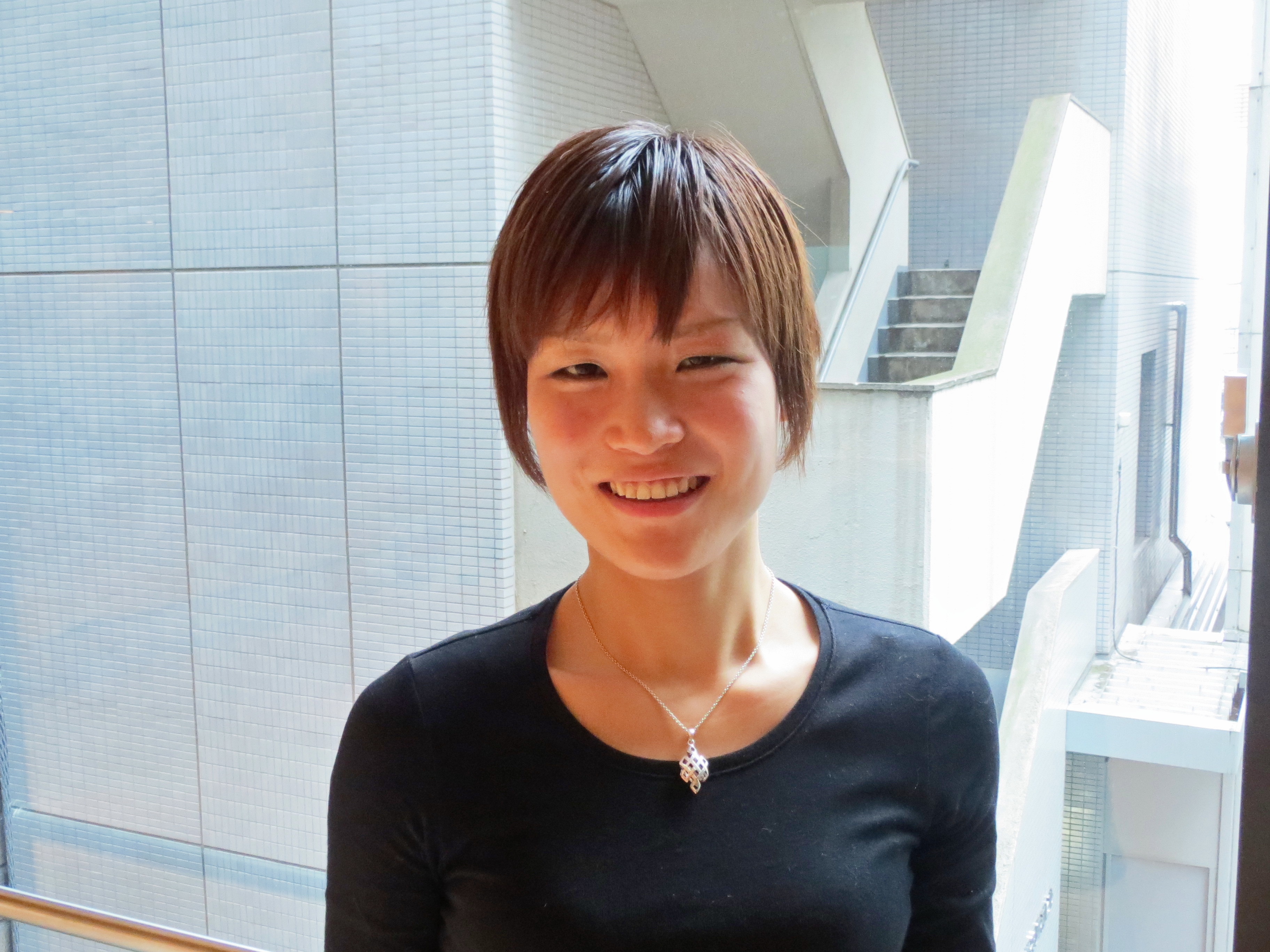
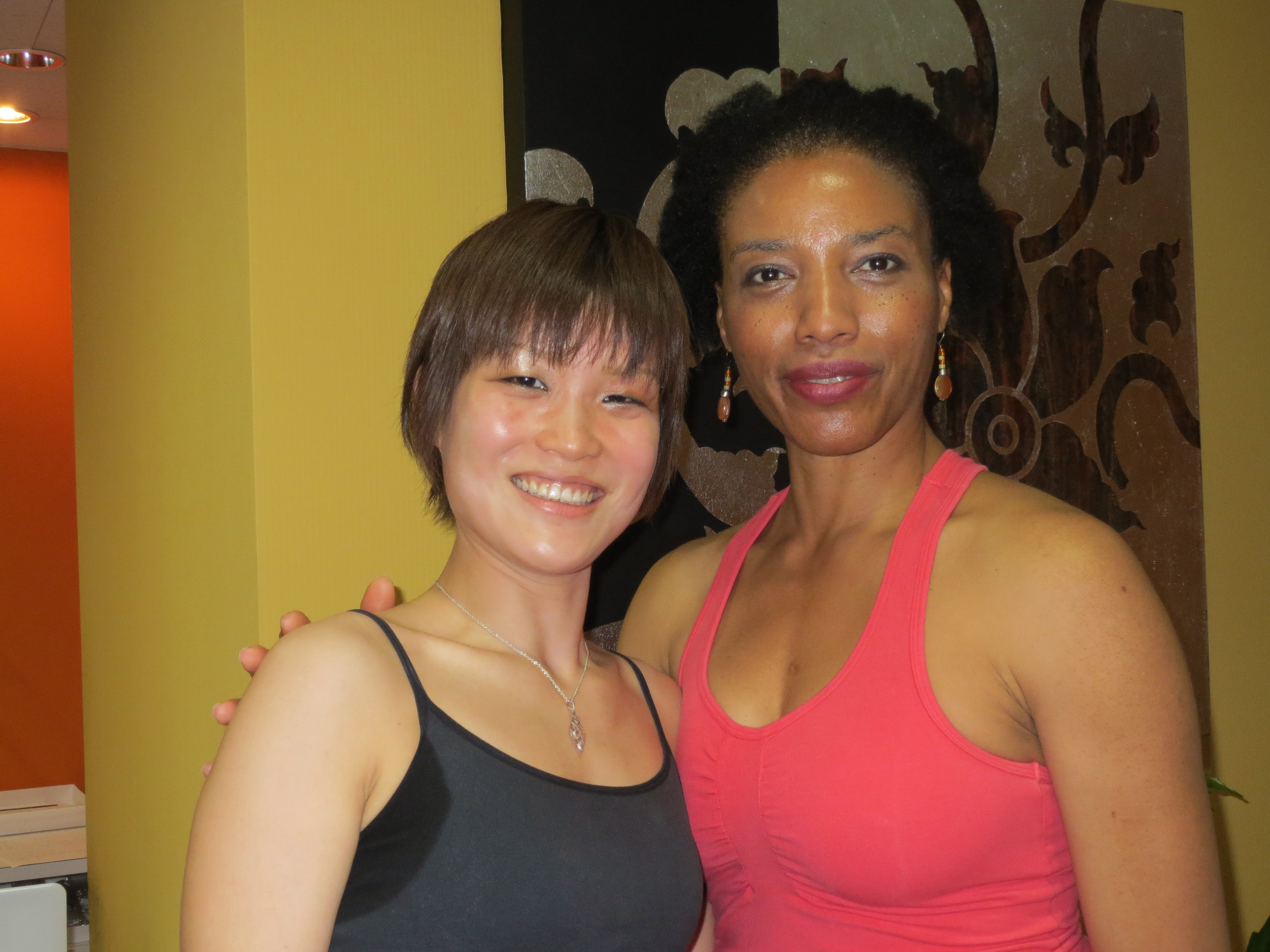
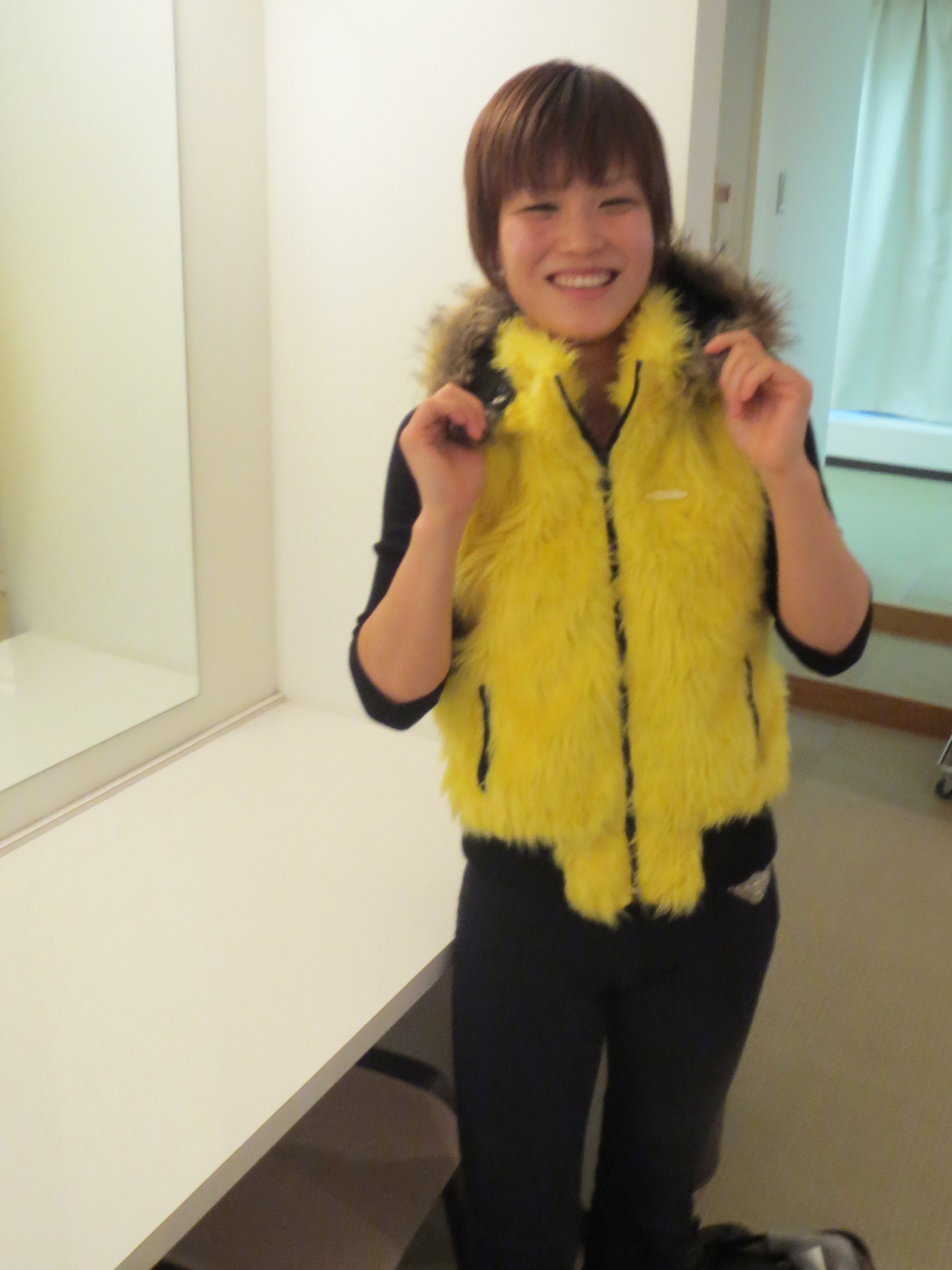
Kosai Kato has been translating for my Tuesday morning Level 1/2  class in Gotanda and for the teacher’s  workshop, “How to Address Common Injuries in the Classroom.”   Always radiant, chic and stylish, she walked into our first  staff meeting  wearing frosted eyeshadow and a fuzzy yellow vest trimmed in black–and looked great!   Not only do I like her personal style, she’s brave and daring as well.  Would you believe that she studied aviation at the University of North Dakota and that she also worked as a member of an international flight crew based in Singapore from 2009-2011?  Kato has been teaching yoga since 2006 and completed her 200HR Yogaworks Teacher Training in Tokyo with Eka Ekong.  She currently teaches at YogaPlus in Yokohama, Tokyo.

Romy & Kosai at the Gotanda Studio

The Infamous Yellow Vest