Students Progressing: From Adho Mukha Vrksasana to Urdhva Dhanurasana

As we enter the final weeks of the teacher training, it is clearly evident that the students are making great progress in their yoga practice. The peak modules of the training—inversions (Adho Mukha Vrksasana, Salamba Sarvangasana, Sirsasana, & Pinca Mayurasana) and back bends (Dhanurasana, Ustrasana, Urdhva Dhanurasana)—are some of the most intensive sessions.  Nevertheless, these categories of asana can be very challenging for yoga teachers to instruct. We want to make sure that we have given our students adequate tools and knowledge to work in these poses carefully with acute awareness.  I was surprised to look around the room these past two weekends and see so many of my students practicing beautifully and confidentially.  It was clear that they had grasped many of the fundamentals and had been strengthening the foundations of their practice over these two months.

In addition, there are now weekly segments of “practice teaching” in preparation for part of the final exam.  A useful method for processing information, these practice sessions allow the students to apply teaching techniques, explore hands on adjustments and gain proficiency with their sanksrit. The room is always filled with exuberant chatter as they organize enthusiastically into small groups. I walk around with either Yuri Nakamura or Kosai Kato and make comments, answer questions or give advice.

Slowly, through the patient translation via Yuri or Kosai, we are also beginning to have more in depth dialogue about Pantanjali’s Yoga Sutras–inquisitive questions about the “klesas ” (obstacles–avidya, asmita, raja, dvesah, abhinivesa) and the “Eight Limbs” in particular….”should we practice the yamas and niymas before asanas?”  ”Ideally, yes I say…but many of us approach yoga at the third limb “asana” and have to work backward and then forward again––It can take us a life-time to work through all eight limbs.”   I like that they’re trying to interpret these concepts on their own terms. I tell them that’s the point really, “we should not only attempt to apply the teachings of the Sutras to our practice, but to our lives as well.”
Spring Fever in Inokoshira Park

This slideshow requires JavaScript.

The final installment on the Hanami series presents the lively antics at Inokoshira Park in Kichijoji. This setting was the most playful and eclectic: packed to the rim with people, picnicking, boating, strolling, and a delightful temple dedicated to Benzaiten actually situated in the parks’ pond.

The colors of this temple, crimson red, cobalt blue with touches of gold and bright accents, gave it an enchanting, folk-like quality.  It was right at home in Kichijoji, a community known for its artistic and creative flair. I later found out that Benzaiten—is the Japanese name for the Hindu Goddess Sarasvati whom symbolizes everything that flows–water, words, speech, eloquence, music and knowledge. She is also a protector deity attributed to granting monetary fortune. Snake and dragon imagery are also associated with her.  In fact, there is dragon shaped statue Bentin in the form of a fountain, at the back of the main temple, where you can wash your coins to help bring you wealth and luck.

I loved being amongst the jubilant crowds covering every inch of the park. There literally wasn’t one spot to sit down.  People had claimed their territory with large blue tarps or make shift tables and were not budging. The pond was crowded with amusing pastel hued and duck shaped boats. I was amused by the fable that Yuri Nakumara told me–there is a common belief that couples that ride the duck boats together will break up.  It was fun to watch the boaters attempt to navigate the pond without crashing into each other!

Petals in the water

Ceremonial Hanami at Shinjuku Gyoen

This slideshow requires JavaScript.

The serene setting of Shinjuku Gyoen offered a contemplative viewing of Hanami. The Imperial Gardens completed in 1906, was once the residence of the Naito family (daimyo) in the Edo period.  A very cold and cloudy day provided a dramatic backdrop as I roamed the vast park for over two hours touring approximately 145 acres of French Formal, English Landscape and Japanese Traditional gardens.   Overall, this venue had a more serious tone, as there was no alcohol allowed on the premises and bags were inspected at the gate. The crowds were small in comparison to other locales and the sounds of the city seemed to disappear as one traversed the stately grounds of vast sweeping lawns, ponds, towering trees and interesting structures–wooden bridges, the Taiwan Pavillion,  a tea house and various stone reliquary statues.  With more space to spread their roots and branches, the sakura trees were impressively grand and enormous.  Shinjuku Gyoen has over 1,500 cherry trees featuring Shidare (Weeping Cherry), Somei (Tokyo Cherry), Kanzan (Cherry).  I also liked the visual contrast of the pale blossoms against the Himalayan Cedars and other vegetation which created a painterly impressionistic effect.

I strolled contentedly taking pictures until my fingers literally froze.  Eventually, a melodic tune played signalling all visitors to leave. I joined the quiet procession of departing visitors feeling very calm and refreshed.

Hanami Extravaganza: Meguro River

This slideshow requires JavaScript.

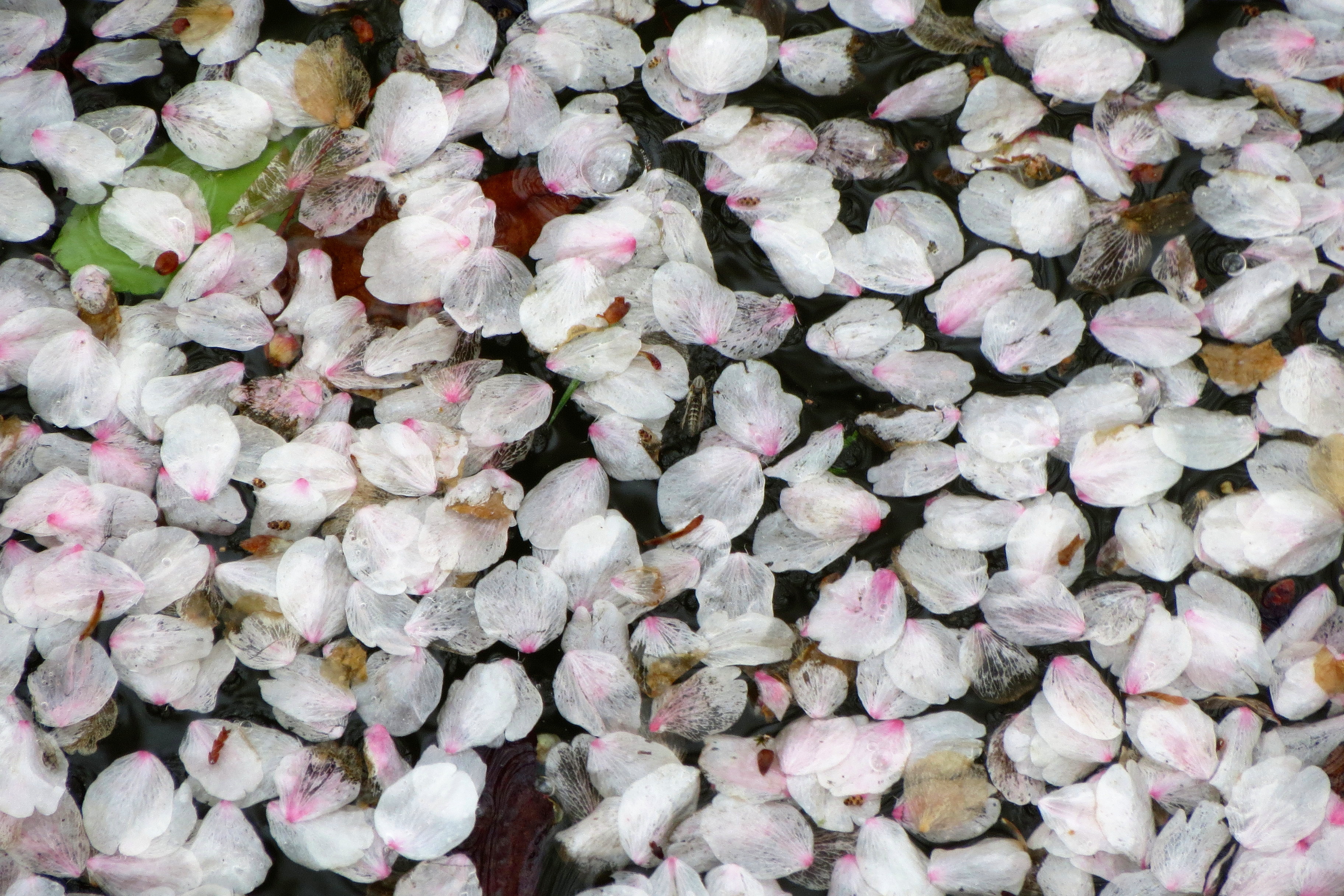
I was fortunate to be in Tokyo for  my first “Hanami” and the widespread festivities welcoming the spring season. The city was literally ablaze in a blizzard of pale pink  petals with celebrations escalating as the blossoms peaked. I was told that the short-lived, delicate “sakura” (cherry blossoms)  would be gone by the first rain. Although we were experiencing chilly, cloudy weather, I ran with camera in hand to prime spots that were suggested to me. I too got caught up in the festivities and the excitement visiting the Meguro River in Nakemeguro; Shinjuku Gyoen and Inokoshira Park–each site offering a unique Hanami experience.

Since the Meguro River offered the most fantastic blooms of these excursions, I thought it would be interesting to visit at night which I would find out later is referred to as “Yozakura,” night Hanami.  I was right, the sakura were just as spectacular with the heightened drama of the glowing lanterns strung along the river reflecting onto the branches and on the water below.  The walkways along the canal were teeming with an almost ritualistic procession of people. They spent continuous days and nights, strolling, taking pictures and enjoying treats from vendors who were selling food, drinks and glasses of rose champagne.

I took so many pictures that I decided to present my Hanami experience in three parts to retain the mood of each setting.