A Yoga Teacher’s Quest for Idyllic Representation with Fluid Frame Photography

This slideshow requires JavaScript.

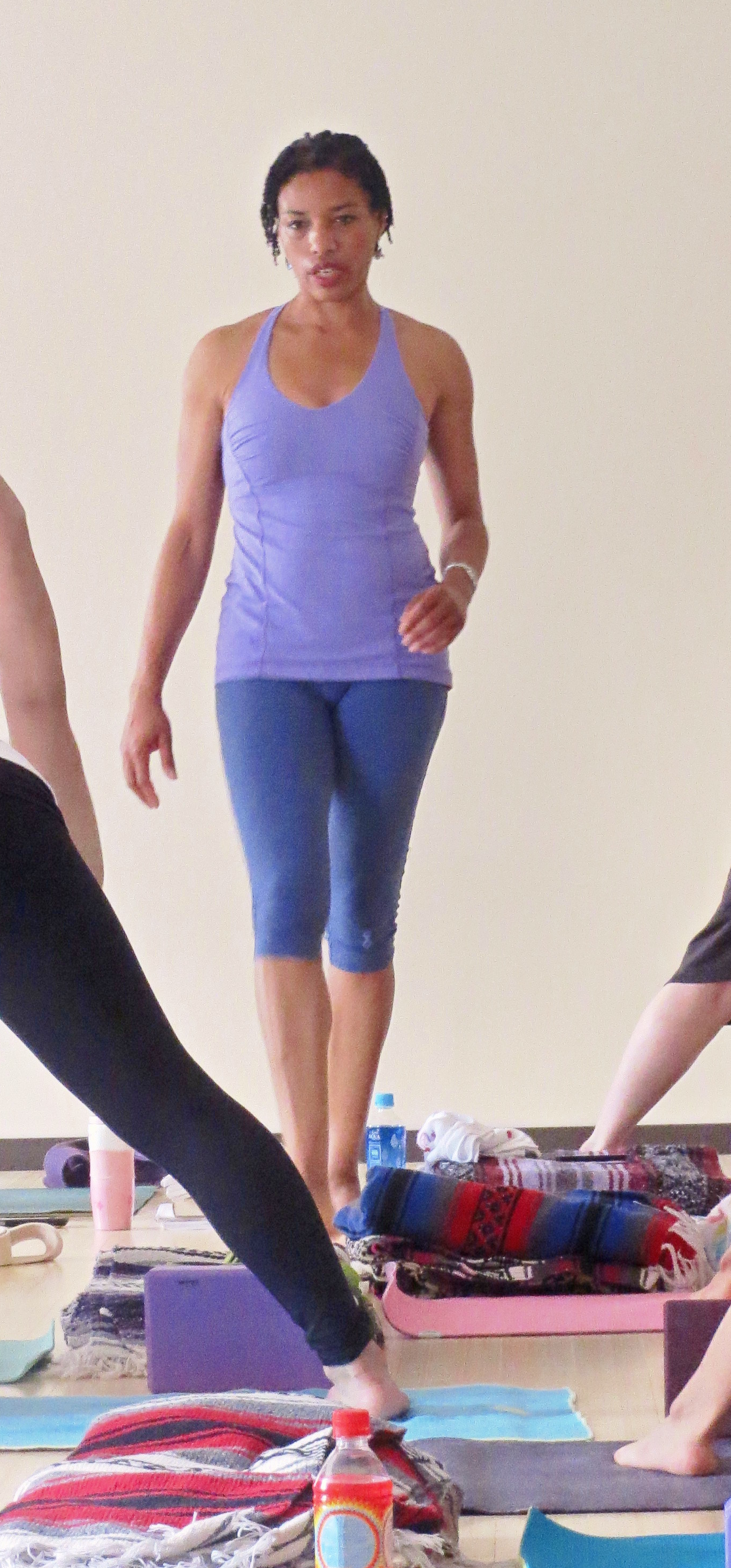
One critical aspect of being a yoga teacher is having attractive pictures of your self readily available for promotional purposes.  This ongoing project is not ego driven, but in fact necessary for career sustainability in a market driven culture.  A few of my peers are featured in remarkably striking ad campaigns or gracefully adorn the cover of magazines, they are the quintessential “yoga models” and can perform many fantastic and complex poses in front of the camera with ease.  However, for me the quest for the ideal image has been illusive.  First of all, I lack the “bendy” body that prevents me from doing those exotic poses that are so visually appealing, and therefore feel self-conscious in front of the camera.  Nevertheless, it’s been difficult to find someone to photograph me in a pictorially compelling way. Over the years, I have enlisted talented friends and colleagues for photo shoots in casual settings: notably parks, a faux finished living room, or on a stroll through downtown Los Angeles.  Although I sincerely appreciated these off-the-cuff budget friendly attempts, I have never been fully satisfied with the results. Friends would always say “Oh, what are you talking about, your pictures on your website look great!” In my mind these pictures were merely suitable –to arrange a professional studio shoot someday was always on my mind.

Shortly after returning from Tokyo, I received an e-mail from Kelly Furey whom I met when I taught a community class at Lululemon in Beverly Hills. Now, working for Fluid Frame Photography, she said they were offering a special package deal for yoga teachers. The price was agreeable and so I decided that this would be the time to go for it. I spent the next weeks before the shoot preparing and practicing daily with intensity while watching the pounds.  During this time, I also began think carefully about how I wanted to be depicted, considering outfits in bright colors contrasted with a slick black outfit for a touch of elegance. I even spent an entire afternoon scrounging around Danny’s Warehouse in Culver City searching for the perfect black leotard.

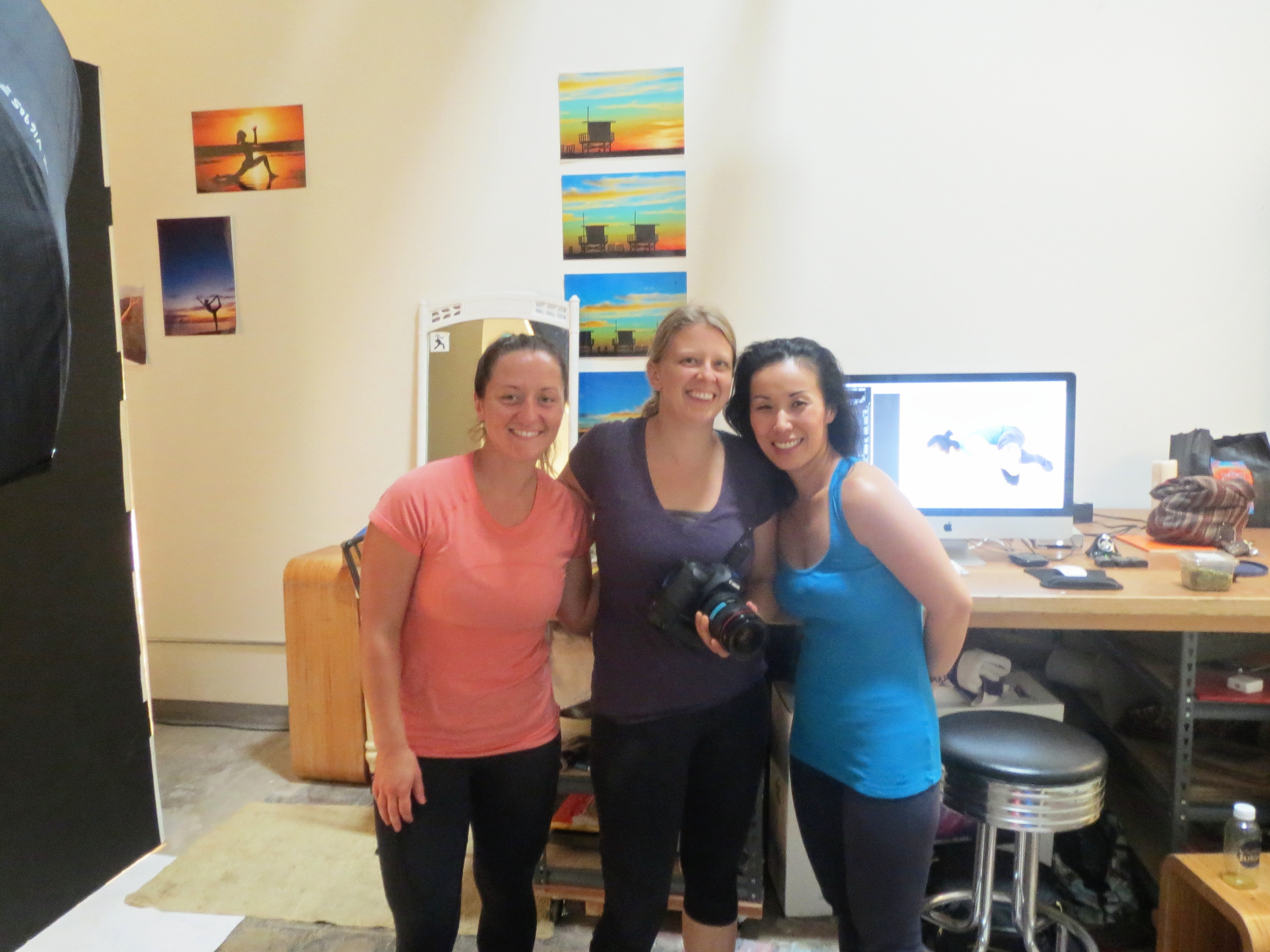
On the day of the shoot, the morning of August 25, I showed up with a bag of yoga attire, an assortment of jewelry, hair and make-up done by me, feeling prepared and in control for once.  Me, and Jessica Kang, a colleague from my Yoga Works 300 Hr. Professional Program, were scheduled back to back and we agreed beforehand to spot each other.  Placed against a pristine backdrop, I posed for almost two hours, asana after asana, until my muscles cramped up and could hardly move. People don’t realize how challenging a shoot is on the body– maybe it’s the lights, the pent-up nervousness, or the fact that you’re doing poses out of sequence repeatedly, but I would be sore days.  Nevertheless, Lisa Joy LoMurray (L.J.), the creative force behind Fluid Frame Photography, was the ultimate professional, patiently and intently snapping away with a high-tech camera, 111 images in all. Young, bright and talented, L.J. has been crafting her skills in the niche of yoga photography and she is assuredly establishing her presence in the field.  She has produced an abundance of wonderful images of yoga teachers in our local community.

Two weeks after the shoot as I was boarding the plane to head home to Maryland for Labor Day, I was able to see the first proofs on my cell phone. I paused for a moment and smiled.  I couldn’t believe what I saw—L.J. seemed to capture a vision of me that I’ve never seen in print.  She was able to make me look captivating in even the simplest and most basic of poses. In the weeks to follow, I would find it very difficult to narrow down my choices to just fifteen pictures, so I went for thirty!

When I reflect on the collection of my yoga pictures from years past, I realize that as teachers, we are always evolving–perhaps through our tireless commitment to the practice, teaching and learning, it is somehow possible for a deeper dimension of our self to shine through.  Finally, I have images of myself that truly gratifying.
http://www.fluidframephoto.com

“Letting Go” @ La Casa De Maria

This slideshow requires JavaScript.

I recently hosted a retreat with Indira Shekerjian at La Casa De Maria in Montecito, California the weekend of September 22 & 23. This was our second retreat together,  we first teamed up with Megan McCarver for a sold out weekend at White Lotus in Santa Barbara, May 2011. I’ve been to LCDM a number of times over the past few years as a guest yoga teacher for a series of retreats held by Dorothy James.  As a satisfied guest, I always desired to hold my own retreat there someday.

The theme for our weekend., “Letting Go” was based on certain aspects of the Fall Equinox where there is a perfect balance between “day and night,” the “sun and  moon.“ This is also applicable to the literal definition of Hatha Yoga: Ha”–sun, “tha”–moon,  and Yoga –“to yoke.”   Through the practice of yoga we strive to strengthen  and reinforce the connection and balance between the mind and body.   Therefore, it seems appropriate that as nature shifts into balance, we too, should try to do the same.  Furthermore, Pantanjali advises us in the Yoga Sutras to observe the niyama, Santoshacontentment (2.42)  and  abhyasa vairagyabhyampracticing non-attachment (1.12).    Indira pointed out in our group discussion, that we typically  start off the year making our “to do lists” and then over the ensuing months, keep pushing the agenda.  But, do we ever stop to see what we’ve accomplished? Is it enough?  As the year winds down, what can we “let go of?”

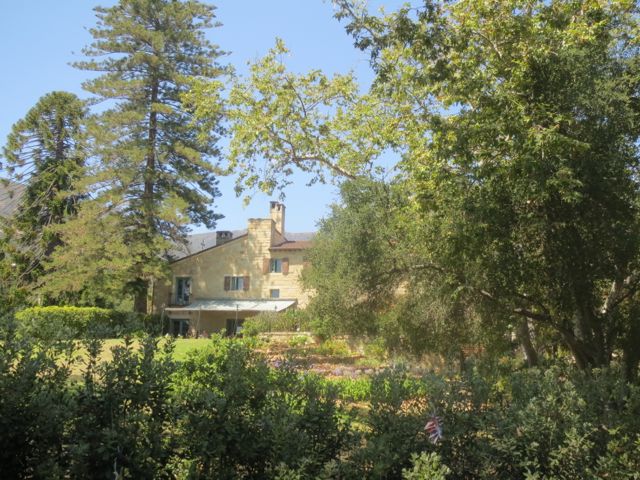
This welcoming center provided the appropriate setting for deep reflection.  LCDM is spread out over 26 acres covered with large shady oak trees—there’s even a towering 500-year-old eucalyptus tree on the property.  An eclectic assortment of  old Spanish Mission Style structures are situated around the estate. Each dwelling built at various times, has its own unique traits. For example, The Immaculate Heart Center, a stoic stone mansion built by a wealthy businessman in 1930, evokes the style and craftsmanship of an old world European manor, its rooms filled with antiques old paintings and religious artifacts.  Other facilities on the property include comfortable and soothing Retreat Rooms; Casa San Yasidro, a dormitory that accommodates more than 20 people, mostly youth groups; and there are houses, Casa Teresita and La Casitafor smaller groups or individuals.  The center has been undergoing renovation with an emphasis on energy conservation. While most of the buildings are being outfitted with solar panels, they still retain their historic charm.

The food is simply excellent whether you’re eating meals prepared by a private chef at the Immaculate Heart Center, or cafeteria food at LCDM, it’s all fresh gourmet mostly vegetarian/vegan fare that ‘s made primarily from produce grown on the property or from nearby organic farms.  A large orchard of fruit trees and a sizable garden further support the Center’s direction towards environmental sustainability.

This interfaith center has an interesting history  dating back to the Chumash Indians who once inhabited it, planting many of the trees, then later over the years privately owned.   The Sisters of the Immaculate Heart of Mary, A Roman Catholic religion purchased the property in 1940 and after breaking away from the Catholic Church in the 1960s & 70s, turned the estate into a non-profit organization.  What I like most about the center is that it’s off the radar for popular yoga retreat destinations.  It’s a retreat and conference center that harmoniously hosts many types of groups and non-profit organizations,  with “programs focused on meditation, spirituality, personal growth, community service, environmental awareness, education and art.”  Many individuals also go there for silent retreats, to write or create.

I also experimented with a new retreat format–an intimate sized group of 10-12 people and the option to spend the weekend or come up for one day.  Most traditional yoga retreat centers typically require twenty people minimum, putting pressure on teachers to get these numbers when in fact they may be happy with around 12-15.  This format  gave everyone the opportunity to connect in a profound way that isn’t possible in larger groups bringing a lightness and calmness to the weekend that proved to be refreshing.

Our group of eleven people occupied the cavernous “Lounge,” one of the meeting rooms on the property, with lofty wood beamed ceilings and a grand stone fireplace. In all, they had an excellent time participating in a well-rounded program of yoga, restorative and meditation classes and a provocative workshop and discussion led by Indira and I.  Everyone also had ample free time to hike, swim read, draw or simply take a nap!

Nevertheless,  LCDM is a good place for serious heartfelt discussion and contemplation. You’re given a rare opportunity to move inward and connect to your innermost self in a supportive environment that encourages you to open up,  reveal and  “let go.” We were all graciously taken care of.  I’ve finally found a “retreat home” and I hope you and others will join me there sometime in the future.

Yoga at the Los Angeles Ballet Summer Intensive

This slideshow requires JavaScript.

For the past four summers I’ve taught yoga to young dancers from around the world who attend The Los Angeles Ballet Summer Intensive (L.A.B.S.I.) to study with Colleen Neary and Thordal Christensen and other world-renowned teachers.  The irony is that although I seriously studied to be a dancer when I was younger and never made it into any companies, I’m now on the faculty of the L.A.B.S.I. and teach yoga to dancers and feel very gratified to have this opportunity.

Although many of the students are in their teens, some of them are already in the company as trainees. A few  are even home-schooled or have taken their High School Equivalency exams.  Younger students up to 12 yrs. old enrolled in the summer program have been successfully taught by Amy Rose Stabley for approximately three years.   During this time, I’ve been able to see many students evolve, grow and move on to become talented professional dancers.  For example, Eric Christenson who was a slight, ambitious 12-year-old when I first starting teaching there, has now grown up to be dashing, “princely” and over six feet tall!

Teaching yoga to flexible students with sophisticated body awareness is extremely challenging, on a fundamental level they are beginners, with little knowledge of yoga technique, but on another level, they are advanced and as accomplished as professional athletes. They can easily put themselves into complex poses such as: Eka Pada Rajakpotasana, Kurmasana, Urdhva Dhanurasana with little effort, yet, not be aware of alignment, the subtle nuances, or the intention of the pose.  Ultimately, my goal is to teach them the more subtle aspects of yoga, provide guidance with injury management, and help them to relax after a long week of rehearsals and classes.

At the end of the summer session there is final program. I sit with the parents and friends that come to watch every year and feel proud as I watch the students perform, solos, duets, and various ensemble pieces.  I also think that whether or not they pursue dance careers, this is a positive and culturally enriching way for young people to spend their summers.

L.A.–Revisited

Photo by Yvette Hamaya

Now the focus shifts back to life in Los Angeles along with teaching and practicing yoga. What’s different?  What has changed?  The theme since returning in July seems to be about “revisiting” familiar territory with a new attitude. I got busy teaching right away, navigating my way through clogged streets, highways in endless traffic.  Nevertheless, it was great to come back and see my students and colleagues. Thanks to a great team of subs (Lee Wolfort, Veronica Wolkow, Kiyomi Takahashi, Suzanne Dunn and Jocelyn Kay Levy) I had classes to come back too! It’s not easy keeping a class subbed out for three months.

Before Class at South Bay, 12:00

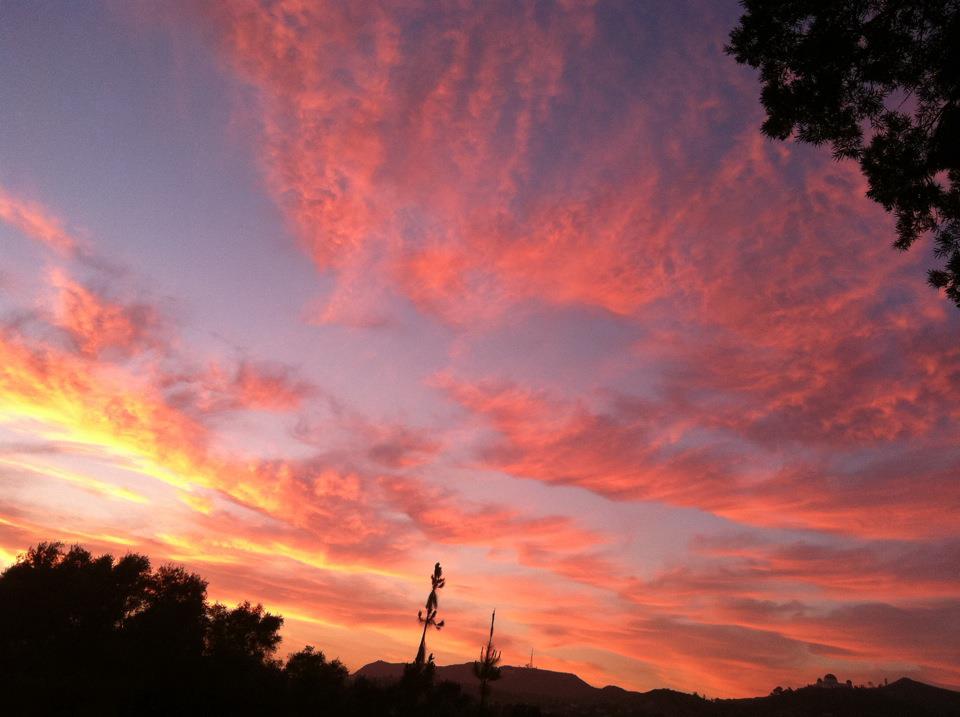
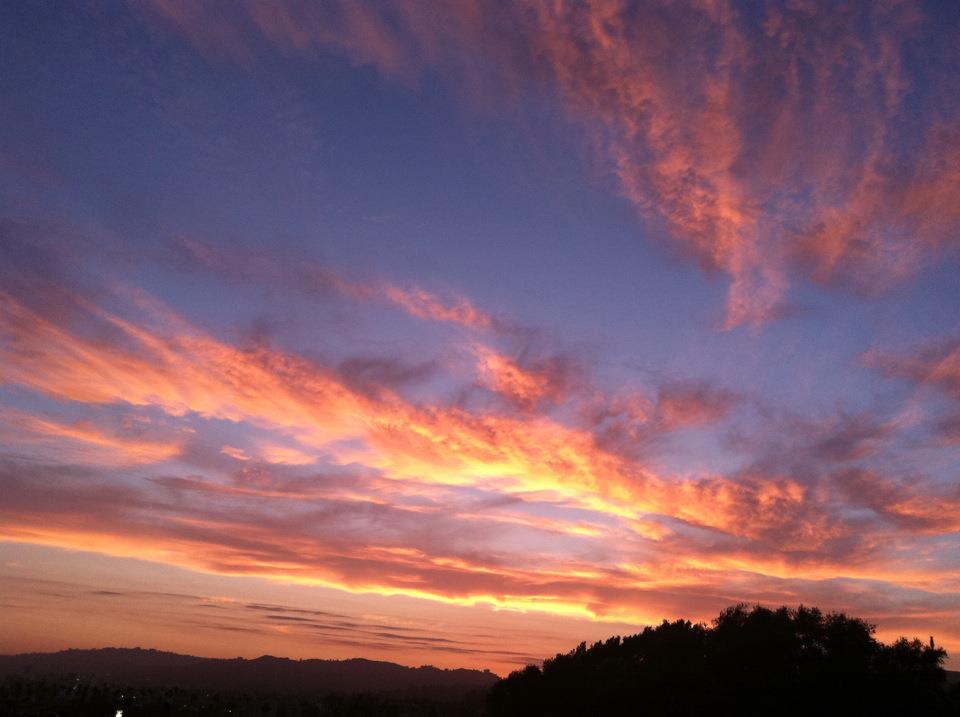
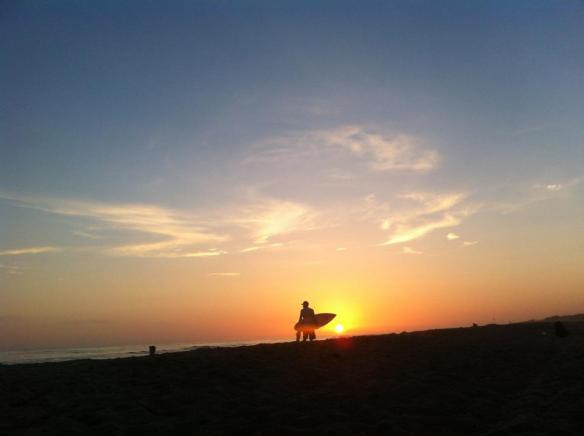
There have been a number of social events over the past few weeks that have highlighted an undercurrent theme,  “reunions.’  Many of them taking place during summer evenings against a backdrop of extraordinary and magical sunsets that are unique to our environment. One weekend shortly after getting back, I met up with a long-time friend and colleague, Lynn Carmichael, to attend an outdoor event at the Barnsdall Art Park in Hollywood. On the lawn of the Hollyhock House, everyone stopped awe-struck, to take a picture of this spectacular Technicolor sunset.  Inspired and appreciative, I stood and thought how this glorious scene made me joyous about the prospects of new beginnings.

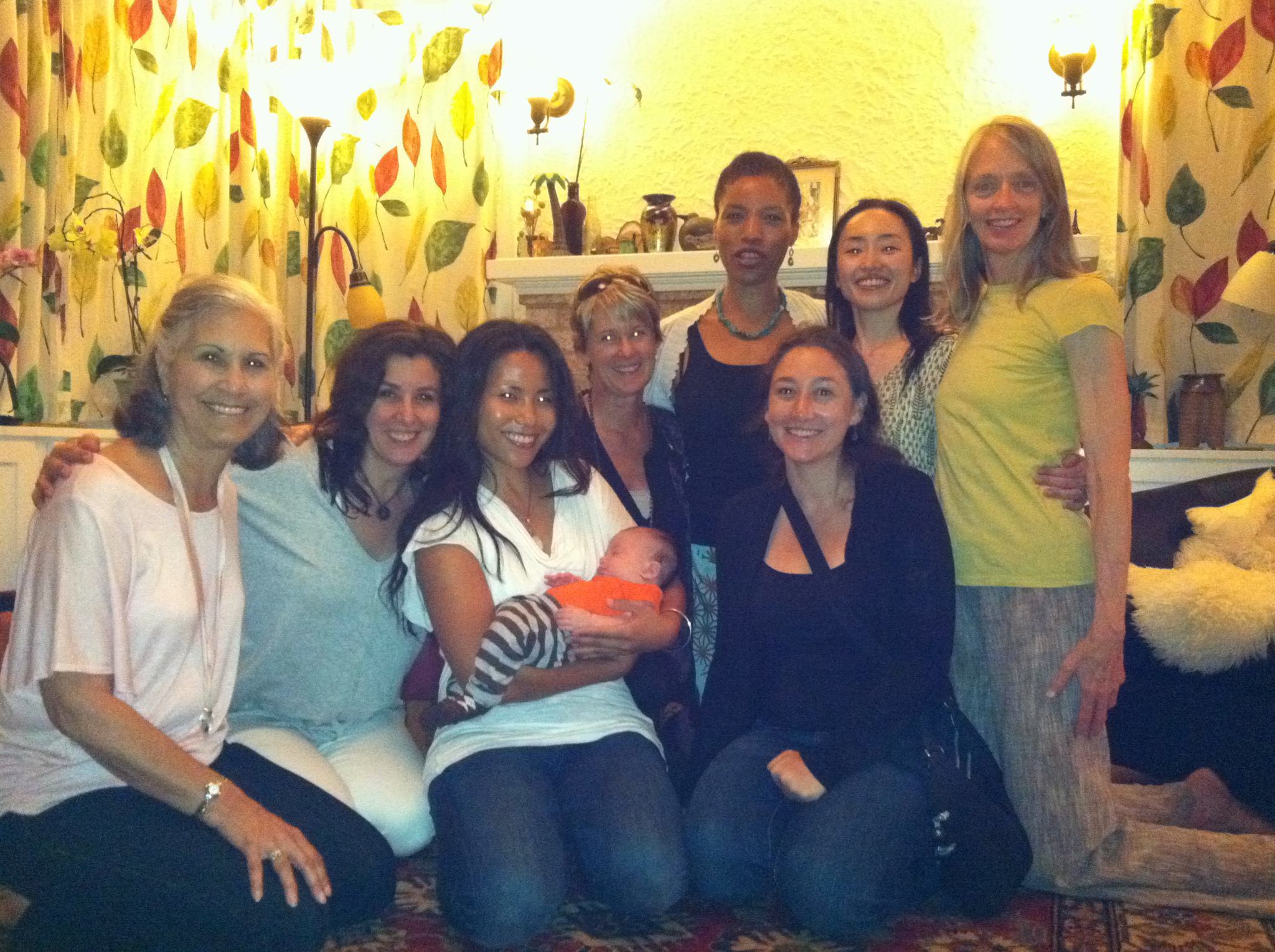
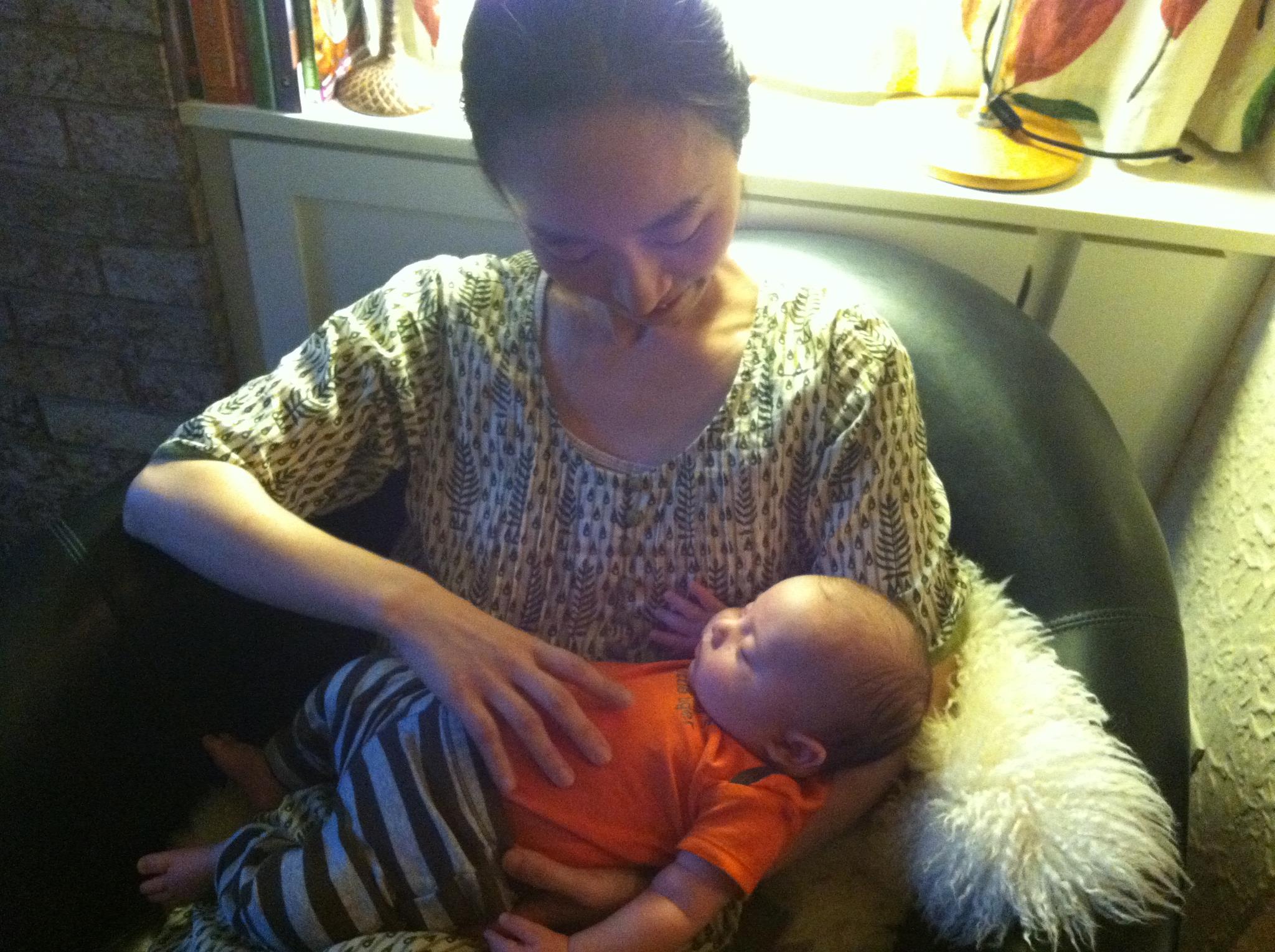
By coincidence, I’ve also had the opportunity to re-unite with many of my Yoga Works 300hr Professional Program colleagues over past few weeks. The women from our class (2007) have been getting together for potlucks periodically to celebrate major events or simply connect.  Coincidentally, Keiko Okuno from Tokyo was passing through town and we all gathered for a vegetarian soiree at Brenda Johnson’s house in Venice to celebrate the arrival of Amy Rose Stabley’s angelic baby son, Mateo.

Andrea Wagner, Michelle Sachs, Kiyomi Takahashi, Mateo Stabley, Heather Ehlers, Romy Phillips, Amy Rose Stabley, Keiko Okuno, Brenda Johnson

Keiko Okuno with Mateo Stabley

I also met up with Jessica Kang for an amazing and long-anticipated photo shoot with Fluid Frame Photography—we hadn’t seen each other since she left for Hong Kong shortly after graduating from our 300 hr.  Program, which was followed by stints in Korea & India.

So far, I’ve been able to maintain the positive changes and keep planning for the future.  I’m forging ahead teaching and am also busy organizing upcoming retreats—La Casa de Maria in Montecito, CA this fall and Hawaii with David Kim & Yvette Hamaya in the spring.

(For information on the retreat at La Casa De Maria, September 22 & 23, please visit   www.romyphillipsyoga.com

Sayonara, A Bow, An Expression…

Now seated comfortably on the bus toward Narita Airport, I thought about that first night in April when I arrived not knowing what to expect but completely open to new adventures.  As I waited on that chilly night for transportation to take me to Tokyo, I saw a porter bow deeply at a departing bus.  I was struck by the grace of the salutation, the expression, and the ultimate acknowledgement of respect. Throughout my stay, I was bowed to, my students bowed to each other, and I too began to bow: apologetically for not knowing the language well enough to communicate freely, but most of all as way to express my appreciation and gratitude.

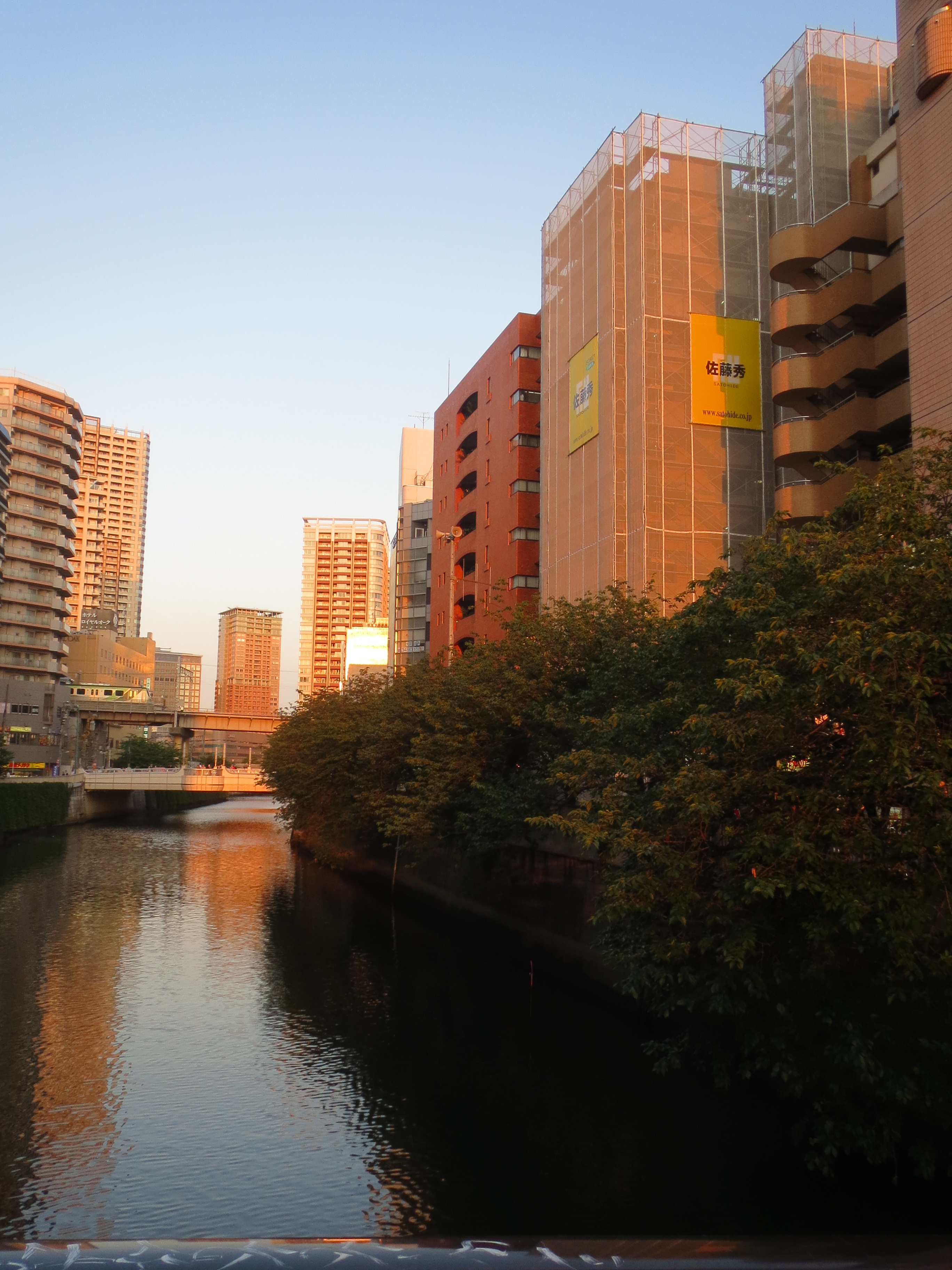
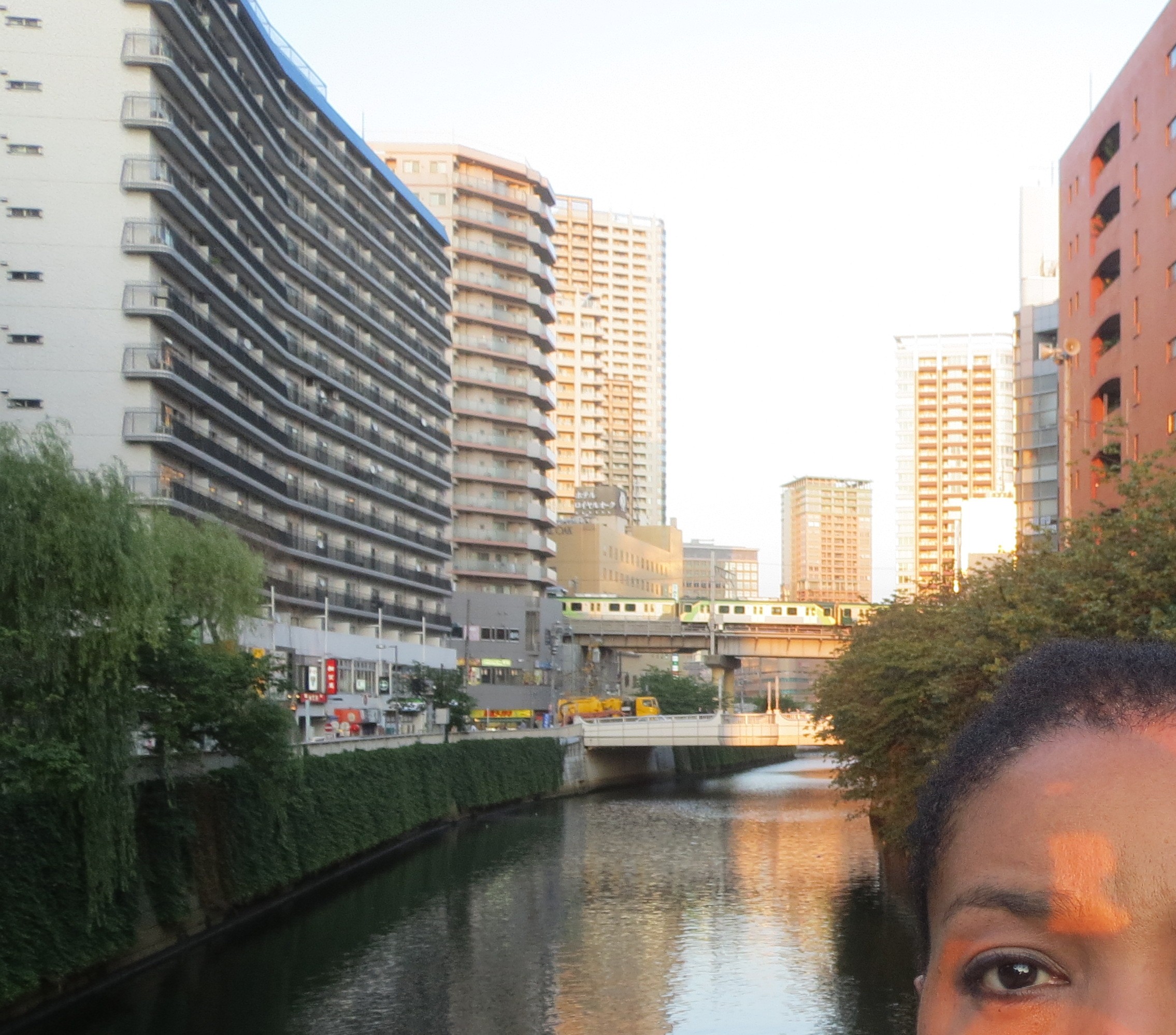
One late afternoon in June I was walking toward the Gotanda Station and passed the same spot on the bridge that is in the image of the first posting of this dairy: trees sprinkling their fading blossoms along the river one rainy day back in April.    The sun was now setting on this very same scene, casting a dreamy golden light on the buildings and water. The trees were now a fresh green.  I stopped for a moment to take a picture.  Later when I compared the images, I was struck by the differences—spring to summer—which not only indicated the passing of time, but renewal and transformation.

Svadhyaya:” Commentary on a Yoga Teacher’s Sabbitical

After leaving the restaurant that rainy evening, I quietly walked up Nishi-Gotanda towards my apartment.   Worn to a frazzle from all of the weekend’s festivities–I still had to pack, meticulously clean the apartment, and be prepared to leave by 1:00 p.m. the next day, July 2.  Although I had been organizing off-and-on throughout in the week, I found that I still needed to make room in my three suitcases for new things, which meant getting rid of the old.   As I quickly got busy tearing into this herculean task, I began to think about a concept that had periodically crossed my mind – that this entire experience was somewhat like a “sabbatical.” I realized how lucky I was to have the opportunity to really immerse myself and concentrate on teaching, learning and practicing yoga.    Moreover, the circumstances of this situation allowed me to cultivate, in-depth, many facets of teaching.  At the beginning of each week, I would glance at the teacher-training manual, highlighting topics that I needed to spend more time on–nothing was left out, and then decisively prepare for upcoming sessions.  Luckily I had the foresight to bring a small library of yoga books (costing me more at the airport), which provided invaluable research support.   Instead of circumventing topics that I found intimidating I boldly approached, yoga philosophy, the Yoga Sutras, subtle body, anatomy–and lectured for hours on them.  I once e-mailed one of my friends to say that I suddenly felt like a “yoga scholar.”   For the first time I began to grasp the essence of subjects that had perplexed me for years and now saw the potential for deeper understanding through continued study, future trainings or use through other applications.  Furthermore, the five classes I taught during the week pushed my professional boundaries: Level 1, Level ½, Level 2/3, Yoga Therapeutics, & “Vinyasa Flow and Meditation” and four workshops, offered variety, a chance to create interesting sequences, and develop workshop content. The workshops were new for me and I was able to develop an inspiring project to move forward —“Living a Better Life Through Yoga” will continue on. 

In conjunction with this intense yoga immersion, I was able to focus on myself–although the photographs of the Tokyo training show me interacting socially, in reality I spent a lot of time alone—with my thoughts, positive and negative.  A sort of  “vipassana”–with deep-rooted samskaras persistently rising to the surface, forcing me to process and face my obstacles (klésas).   “Svadhyaya” one of the niyamas outlined in the eight-limbs of Pantanjali’s Yoga Sutras, describes the concept of  “self-study” where we examine not only spiritual texts, but also ourselves–even our physical practice can be a form of personal discovery.  Coincidentally my life in L.A. before venturing abroad was full of conflict and I was at a crossroads–weary, suffering from chronic back & joint pain, stressed financially, I asked myself,  “Can I continue on this path as a yoga teacher?”   Constant mental chatter –chitta vrittis– clouded my thoughts, limiting my ability to be focused and organized.  Although my colleagues reassured me, I didn’t feel competent or ready to lead training, “Why me?” I asked.  Yet, I felt I had nothing to lose by coming to Tokyo.  My brother, Alaric Phillips said that maybe I would find the answers and solutions while I was away. He had also given me the Japanese version of the Rosetta Stone as a “bon voyage gift” adding another stimulating component of learning. 

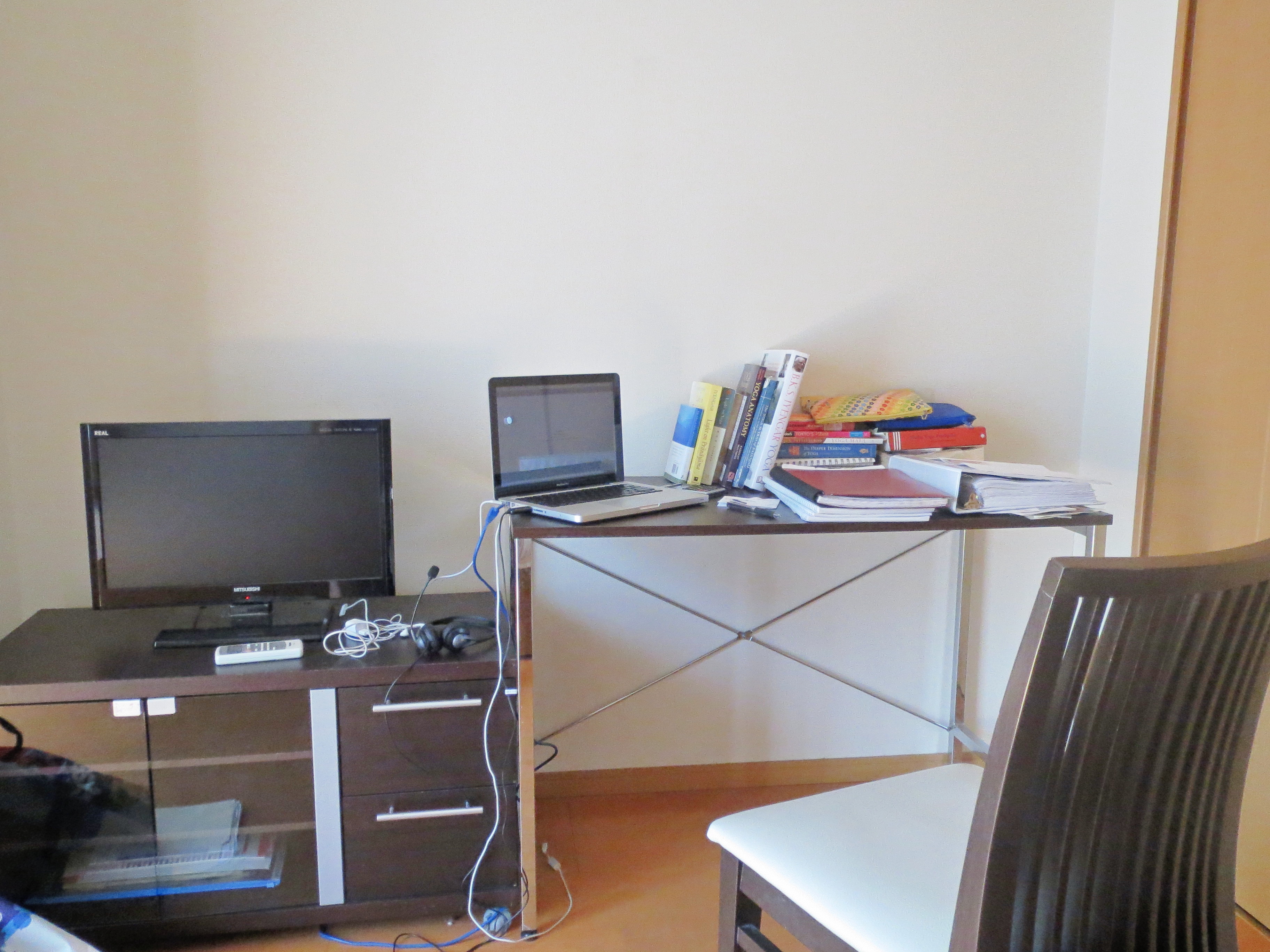
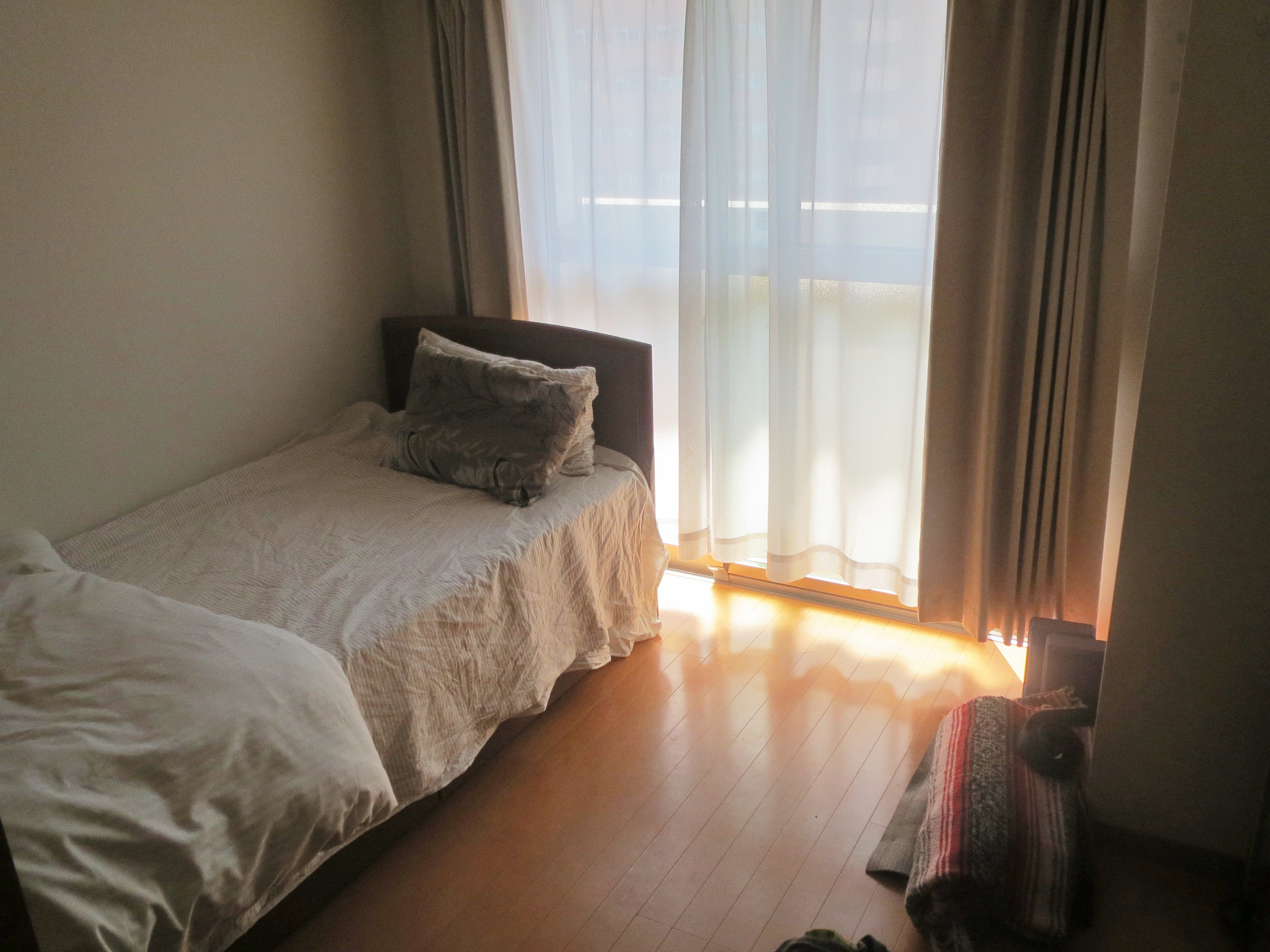
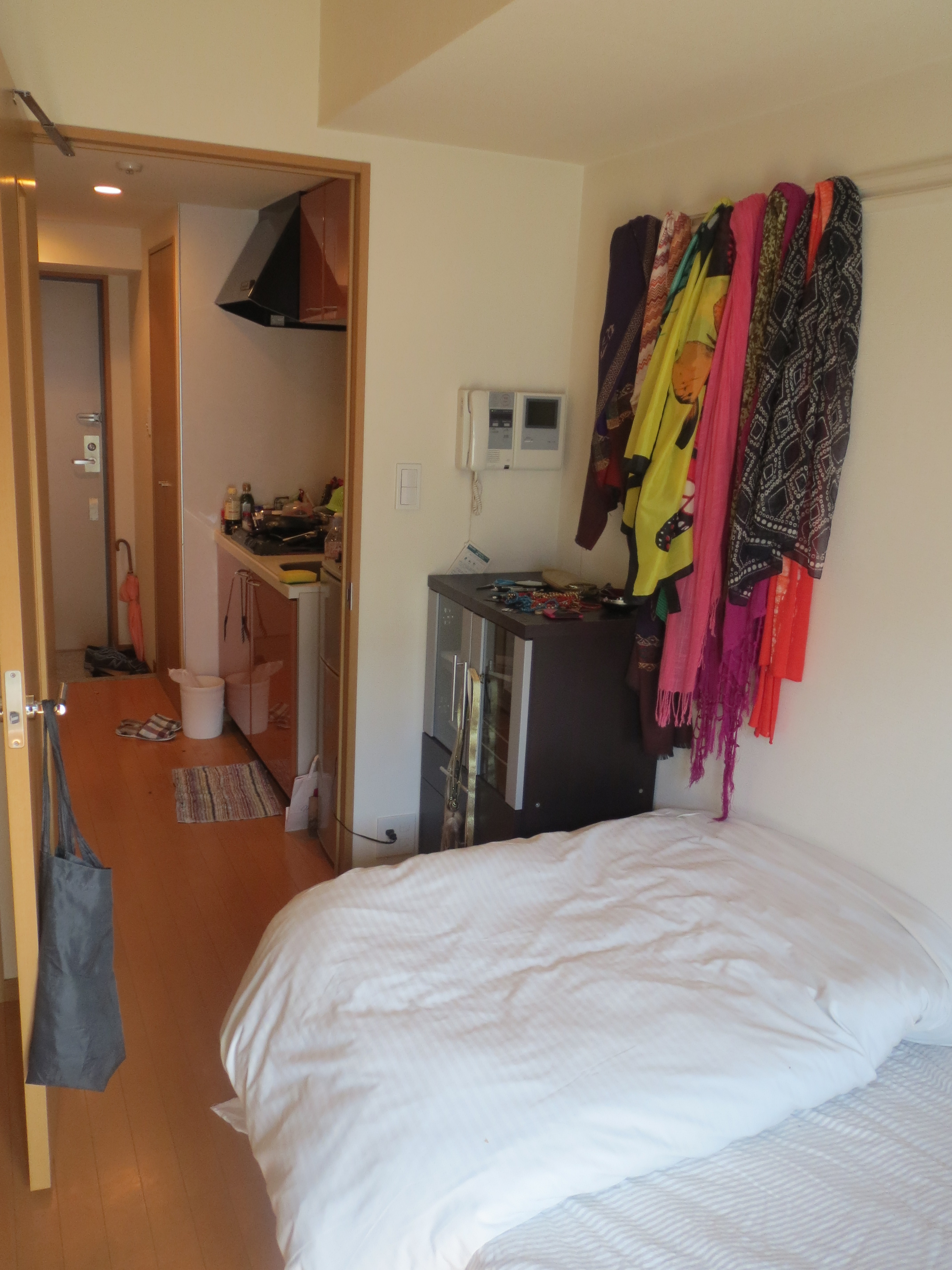
Busy sorting clothes, dishes & cookware in the early morning hours, the packing and cleaning was now in full swing. This simple, modest room was like a sanctuary–a home away from home, with its intimate space equipped with a tiny kitchen, bathroom and even a washing machine.  The television offered invaluable insight into Japanese traditions and popular culture and cooking.  Setting a weekly schedule of self-practice, I placed my mat on a sliver of floor space, and for up to two hours or more, worked on poses that were challenging to me, honestly addressing the parts of my body that offered the most resistance–something I couldn’t manage to do in Los Angeles.  Slowly my back pain started to go away, stress subsided and I lost weight ( 10 lbs!).  The impossibly hard bed actually became comfortable and the claustrophobic cramped space actually became cozy.  “Overcoming obstacles that come your way.” 

As I taught Pantajali’s Yoga Sutras to my students, a number of the aphorisms applied to my personal circumstances.  “Atha Yoganusasasnam”(1.1) as we all started out on this journey together, I began to learn and appreciate yoga again through new eyes and filtered through a new environment and language. “Yogas Citta Vritti Nirodaha” (1.2) as I worked on confronting my personal obstacles (klésas), the” ripples in the lake” became clearer and I was able to see my true self “Tada Drastuh Svarupe Vasthanam” (1.3)

Slowly I began to see what was wrong with life in L.A., with teaching yoga, and I started thinking of solutions.  Since I was able to experience three months of “bliss” where absolutely nothing went wrong, I realized that there was nothing wrong with me—I just needed to make better choices in my personal and professional life:  Slow down the chatter, get organized, stop dreaming, and face reality.  I thought to myself, “I hope that when I get back, that I can continue to connect the dots…

The next day, after thoroughly completing the tasks, I turned to look at the sparking clean apartment and neatly packed suitcases.   Arisa came to take me to the Prince Hotel in Shinagawa to catch the bus to Narita Airport.


Closing Ceremon(ies)

This slideshow requires JavaScript.

 The last weekend of June was a compression of intense, ceremonious events involving the conclusion of the teacher training exams, the “Final Practice Teach,” “Closing Circle” and two dinner parties.  After completing the suspenseful ” In-Class Exam”  and turning in the “Take-Home Exam” on Saturday morning, I taught my last class based on Padmasana—I marveled at the progress that so many of the students had made in the program mastering a series of complex poses.  Our session was followed by a full afternoon of lectures and preparation for the “Final Practice Teach”–the grand finale of the Yogaworks program when the students conduct a class of assigned poses.  Although many of the students had grown confident in their teaching overall, there could still be improvement in some areas.   I gathered everyone around at the end of the day and made a few critical comments based on my observations. I really had to be firm and they seemed disappointed that I wasn’t completely satisfied with them.

On Sunday, I woke up realizing that I would be leaving for Los Angeles on Monday and as I walked toward the Gotanda teacher training studio for the last time, I wondered how things would go on this long, sentimental day of “closings.”

The “Final Practice Teach” started with Ahn Eunsun who gave a soul-stirring opening that highlighted our journey as a group together over the past months–the first tears of the day began to flow as sniffles were heard throughout the room.  Next, Kenichi Nemoto got up to teach Bidalasana, then Mikiko Goto, followed by Sayaka Iso… the class flowed seamlessly throughout the morning from one newly minted teacher to the next–all twenty-eight of them.   This wonderful class was punctuated with evaluations and comments–my voice cracked occasionally as intermittent tears swelled up in my eyes.  To my surprise everyone rose the to the occasion.  Many of the students who had overcome personal obstacles to make this challenging mental and physical expedition, flourished and held their space.  I had done my job–what seemed impossible on the very first day of training in April had come to a miraculous termination.  I also couldn’t believe I had spent nearly three months living in Tokyo!  Shortly before the “Closing Circle”— a couple of students wanted me to autograph their mats, then slowly one-by-one they all lined up for me to sign or write out a special note –jubilation filling the room as the training comes to an end!

Finally the sacred “Closing Circle.”  I’ve assisted at least three trainings and the profound “Closing Circle” is an intensely emotional experience for a teacher to get through–it’s a revelation of powerfully sensitive comments as people reflect on a journey.  Each persons’ story is earnestly regarded as they make a bold step to share their deepest feelings.  We chose to do a candle exchange and Tomoko quietly and patiently whispered every remark in my ear as each person in the circle spoke after receiving a candle.  I listened and was surprisingly composed as I took it all in.

Charlotte Tanaka and Natsumi Ishikawa had formed a committee to organize our sensational closing party which would be at a nearby Indian restaurant. Curry is popular in Tokyo and there are a surprising number of Indian restaurants throughout the city and our group commandeered a small place for the evening. We enjoyed a delicious, festive pre-fix meal of assorted curry dishes washed down with mango lasses.  I got up to walk to the other tables and was then given a book made by the students: a fuchsia colored photo album of pictures taken by me, them, along with personalized hand written notes.   Although numerous  wonderful gifts were given to me throughout the day and into the dinner, this one in particular tugged at my heart–the idea of this intimate and devout gift was such a surprise!  At that moment, they wanted me to get up and give a speech.  I stood up and began to thank them for being great students, their thoughtful gifts and the dinner party, as continued I suddenly  began sobbing and couldn’t say another word.   Then Lotte said, “We have to clear the room!”   Kenichi instructed me how to chant “YYYYOOO”! and then told me that I should clap once afterwards.  I laughed hysterically and then after a moment we all shouted “YYYYYOOOOO!!!” and clapped once loudly in unison.  This ritual is called  “Ippon Sime,” a Japanese custom that is carried out to clear a space, to close a ceremony or event and also expresses appreciation for the visitor–a remarkable and glorious end to our training and time together.

As I walked outside into the rain, I turned say farewell to my students before heading out with Tomoko and Arisa to a going away party for me hosted by the YogaPlus teachers…

A congregation of teachers were seated on floor cushions at a long table covered with numerous dishes of tofu, fish, tempura and assorted drinks.  I had associated with them over the months through workshops and the classes they took with me during the week. Three of the teachers were also my translators for these classes.  My work activities with them were just as significant as my time with the students in the teacher training, compounding my responsibilities as a teacher and mentor.  Stuffed from the dinner, I couldn’t eat another bite.  However, it was always fun to socialize with the YogaPlus teachers–they were a lively enthusiastic bunch and before I realized it was around 9:00 p.m and I still needed to pack!   I thought, “I will be up all night,” but they didn’t want me to leave and I had a hard time tearing myself away.  At one point, Mikoto said “Romy you must stay in Japan!”  I laughed “believe me” I said, “I would love to!” but it was time for me to go.   We got up to take a few photos and then shared a joyous hug circle”–never had I felt so accepted and embraced by people and it was sincerely touchingPeriodically, I would overhear  Yuri and Tomoko mention the concept of “Sangha”  which traditionally is a collective term identifying all Buddhist “Bhikkhu.”  Furthermore, in Sanskrit “Samga” means association, assembly,  and “gana” flock, troop, tribe.” The interpretation of these terms  appropriately applied to this yoga “sangha”  of talented teachers and students.  As I left with my bags of gifts, I turned to see the group standing and waving good-bye. “Sayonaora!” I said….in my mind, I can still see the image of them standing there smiling warmly.

The Subway

That Friday evening after returning  to Gotanda from Kamakura,  I realized that this would be the last time I would be on  the subway before leaving Tokyo. As I rode the escalator exiting the station, I saw the billboard for “Tipness Fitness” which had been running an advertisement campaign throughout the spring.  Although there were many other engaging and dynamic advertisements,  I always liked seeing this particular ad because it seemed to capture the frantic energy of the subway and the exuberant youthful spirit I felt embodied many people I had met in Tokyo.

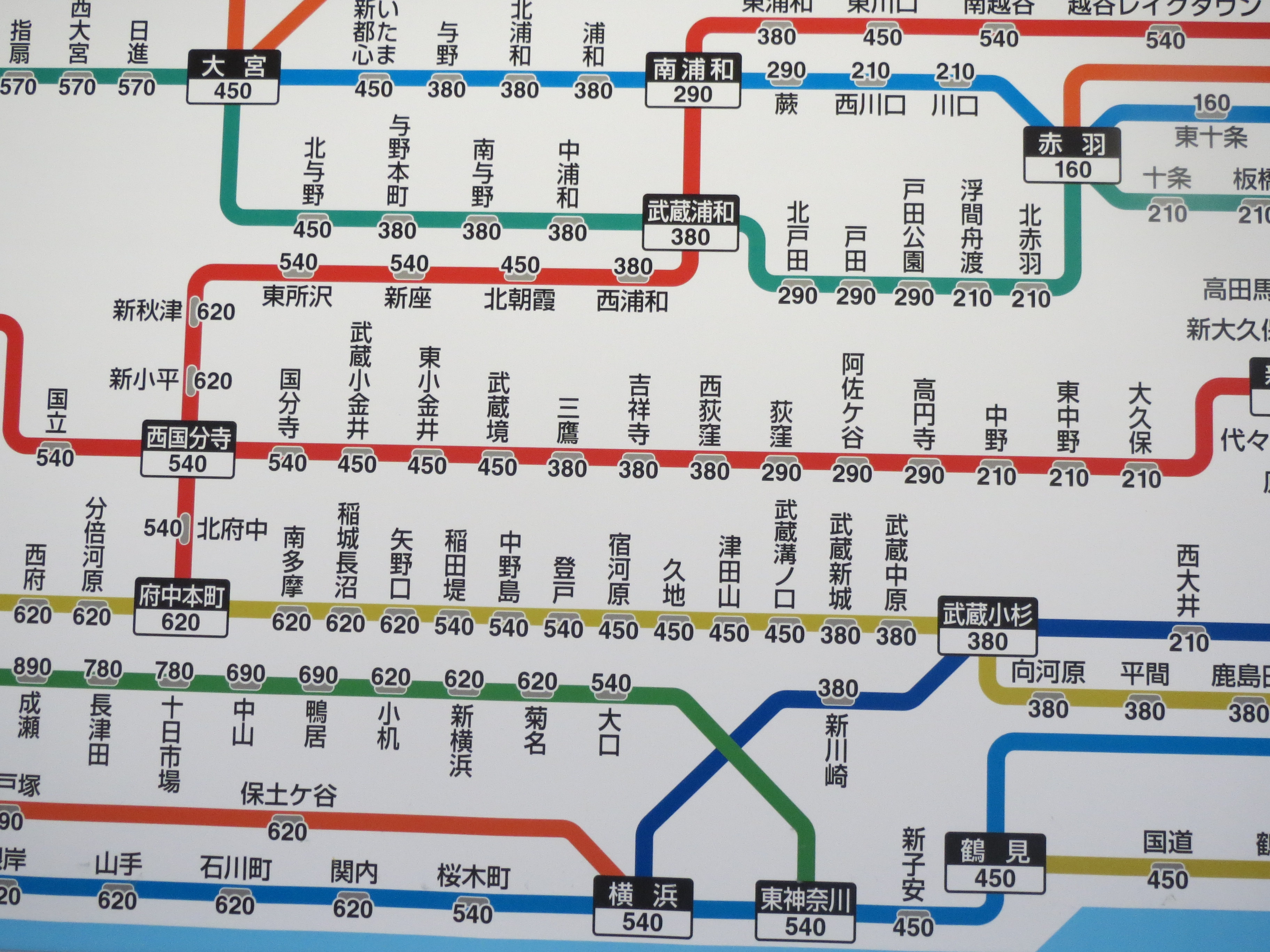
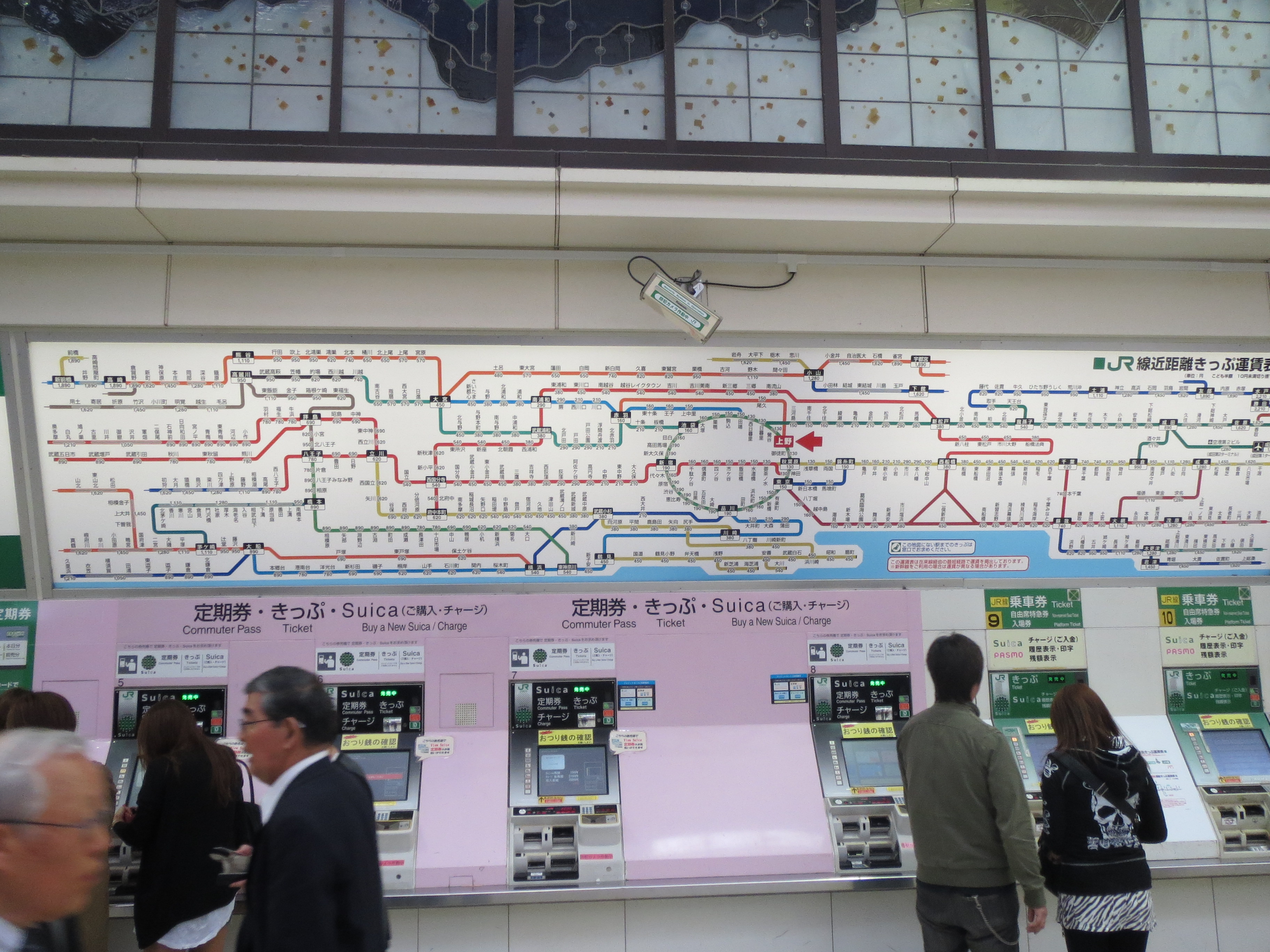
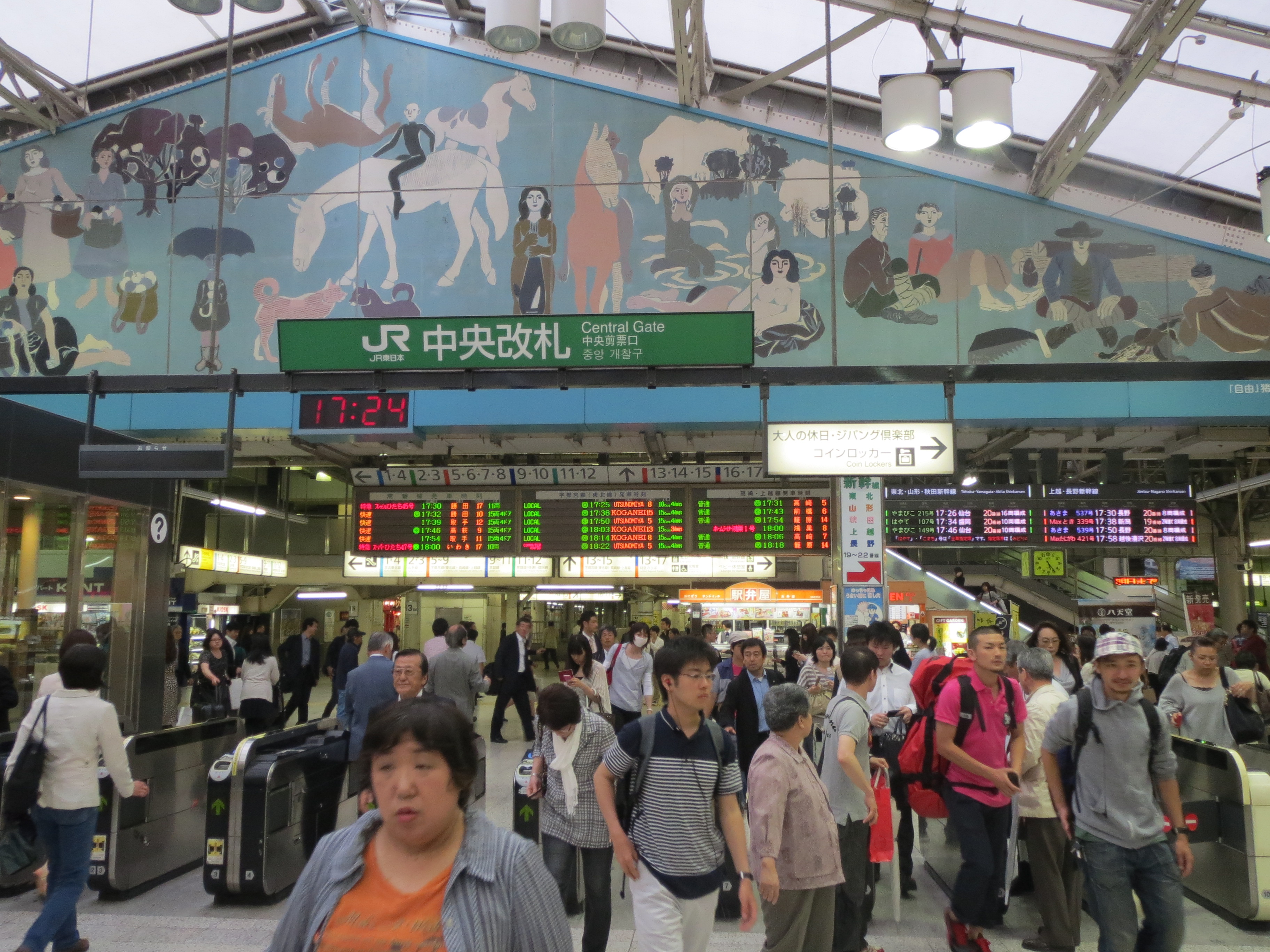
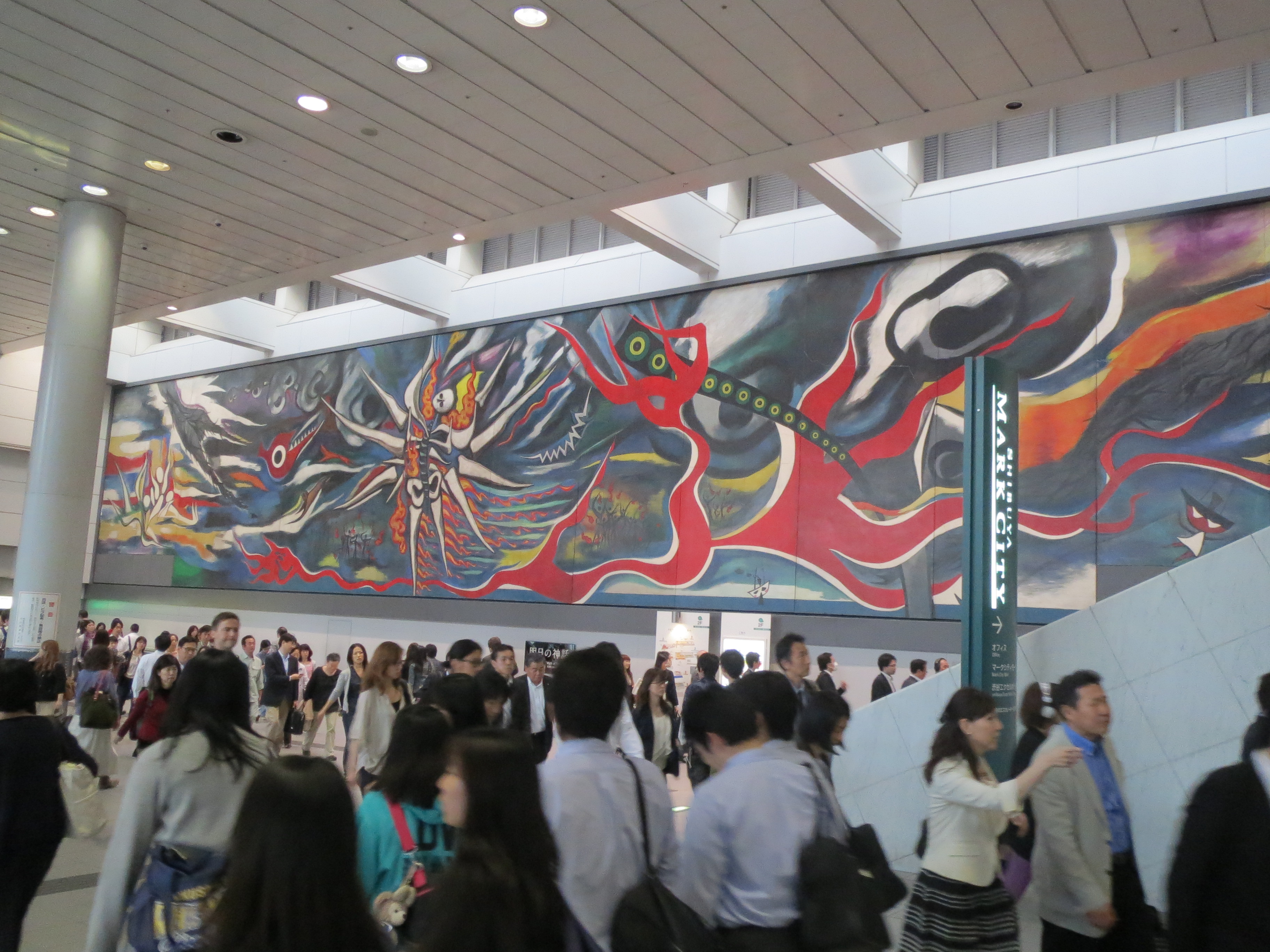
I recounted how I overcame my fear of  Tokyo’s challenging, sprawling subway over the weeks and marveled at my ability to get around with more confidence.  I never had a problem with New York City’s “grid-like” mass transit system where I lived for 18 years.  However, in contrast Tokyo’s web of meandering train lines was much more intimidating.  First of all, the signage is written in Japanese  with English translations listed underneath or flashed across screens.  Secondly, although English subway maps are available, you really need to study it before you head out because many stops on local routes aren’t indicated and you need to know the final destination of that specific train line.  For example, Sangenjaya is an unmarked stop on the Den-en-toshi Line with Chuo-rinkan being the final stop. At first, I was only traveling from Gotanda to Shibuya and then transferring to Sangenjaya—I would only venture further out on the train when I was taken on outings.  Nevertheless, Soufflar gave me some advice that would prove invaluable in helping me navigate around the subway–stick to the JR Line which forms a loop around the city and then take connecting routes from that line.  In addition, the city’s major subway stops—Ueno, Ikebukuro, Shinjuku, Shibuya, Shimbashi & Tokyo are strategically positioned on this circle. This advice worked out perfectly for me. I should also note that the trains are punctual and the courteous nature of the Japanese extends to the subway where people line up single file to enter the train, even during rush hour. Yes you do get packed in by subway attendants if its busy, but you have to line up first.

Ueno Station

Ueno StationShibuya Station

10:00 p.m. Shibuya Station

A Trip to Kamakura with Tomoko Kawahara

This slideshow requires JavaScript.

Friday of that week, June 29, Tomoko Kawahara took me to Kamakura–we had been working so hard during the training that we never had time to spend any social time together. Many people had mentioned that I would like Kamakura, a seaside community that features nearly forty shrines and temples, notably the Great Buddha of Kamakura. We took a number of trains there and  finally ended up approximately an hour outside of Tokyo. Once there we paid for a trolley to take us to the local spots. Our first stop was an organic restaurant on Yuigahama Beach for a lunch of tempeh with tomato sauce, and assorted vegetarian dishes.

After walking on the beach we strolled up to the view the Great Buddha at the Kotoku-in Temple.  As usual, before entering the grounds you cleanse at a purification fountain and then proceed. There seemed to be hundreds of people on the Temple grounds on this hot, sunny day. The Great Buddha of Kamakura (Daibutsu) is massive (13.35 meters/43.8ft tall  and weighs approx. 93 tonnes/270,000 lbs).  It is one of the most famous icons of Japan as well as its tallest bronze Buddha and I was very impressed that this icon has existed on this site unharmed since the 1252.  The original Buddha was made out of wood in 1243 and later destroyed and the various halls that housed the Buddha over the centuries succumbed to various natural disasters.   The current bronze statue was cast to replace it and may have been gilded which would have a magnificent sight to see. The statue is hollow and Tomoko said that it is believed that “going inside the Buddha will let you start a new.”  At first I wasn’t sure–I couldn’t imagine walking through the Buddha in the heat with dozens of school children.  However,  I said, “I am returning to L.A.  and could use a new start, let’s go inside.”

From there we strolled along a cheerful, quaint street through  town, passing a small temple, Shū Genji, which was built to commemorate Shijokingo a faithful believer of the religion Nichiren who was persecuted in 1271.  This temple, a former residence made of wood was modest in size surrounded by a brushy garden.

After a quick snack of  matcha  gelato we took the trolley to another stop nearby to see the hilltop Jojuin Temple (c. 1219),  surrounded by 262  pale blue, lavender, pink & white hydrangea bushes on a slope overlooking the ocean.  Jojuin is also referred to as the “Hydrangea Temple” and we were fortunate to be there for peak blooming season.  “262” is the number of Chinese characters used in Hannya-shingyo Sutra. 108 steps lead up to the temple–“108” is the number of tolling bells on New Years eve. The temple grounds had various statues commemorating prominent Buddhist priests associated with this compound.

As we walked toward the train station, we stopped by the Gokurakuji Temple which was built-in Fukazawa in 1259 by the Buddhist priest Ryokanbo Ninsho and then moved to Kamakura around 1262. After and  crouching down to enter the wooden gate we walked down a shaded path toward a very interesting complex  of ornately carved wooden structures.

From there we took the trolley back to the train station and transferred to a bus that would weave its way through Kamakura to the amazing Hokokuji Temple.  Founded by Tengan Eko (Buddhist name Butsujo-Zenji) who was a representative of the Zen literary movement known as Gozan Bungak, this sanctuary flourished as the family temple of both the Ashikaga and Uesugi clans.  A magical and vast  garden of 2,000 Mōsō Bamboo trees dominates the property which is the reason why this complex is commonly referred to as the “Bamboo Temple.”    We decided to rest for a while at the tea house (Kyūkōan) and had fresh matcha tea under a canopy of bamboo overlooking a small waterfall.  A leisurely tour of the temple grounds revealed surprising highlights:  carved stone reliquaries, statues decorated with red hats, deep blue tinged hydrangea, a cave of tombs (Yagura), and a thatched roof bell tower.

Once back at the train station, I saw  trees decorated with colorful ribbons of paper and origami. I can’t remember the specific story associated with the decorated trees that Tomoko told me, but they were delightful and whimsical, so I took a picture.

In all, we saw five temples that day and it would take several trips to see them all.  I asked Tomoko what the difference was between a “temple” and “shrine” and with a little more investigation I found that one is “Buddhist “and the other “Shinto.” “Shinto” (Kami Nomchi—“the way of the Gods”) is a religion indigenous to Japan that worships nature. Originally people prayed to the great natural phenomena such as mountains, wind,rain, trees, rivers, fertility and powerful deities that inhabit heaven and earth.  Distinguishing characteristics of “Shinto Shrines”–are a Tori Gate, such as the grand ones featured at the Meiiji Shrine. In addition, there is a purification fountain near the entrance to cleanse your mouth and hands before prayer.

“Buddhism”  (Bukkyō) made its way into Japan in the 6th century via China and Korea. Predominant details of “Budhhist Temples” are:  the presence of the color red as evident with the Senso-ji Temple ( or a red gate (Yukuimon) and other items); an image of Buddha; and a large incense burner placed in front of the temple. Smoke created by the burning of incense is said to have healing properties. In addition, a pagoda is on the premises.

My trip to Kamakura was the perfect final sightseeing adventure to summarize my experiences in Japan and I ‘m no expert on the subject, but I could see first hand that influences of Shinto are pervasive in almost every aspect of Japanese life and culture–the naturalness of the structures, food and even clothing; respect for people, animals and towards all living things; traditions and celebrations.  Furthermore, there is relatively little crime in Japan and people are generally good spirited and very kind. Nevertheless,  these two religions—Shinto and Buddhism–coexist and complement each other which creates a harmonious balanced life.


Sightseeing: The Meiji Shrine

This slideshow requires JavaScript.

Although I’ve been back in Los Angeles since July 2,  I have a few more stories to tell that conclude my experience in Tokyo. The last week of my stay there was a flurry of activities which made it difficult for me to keep up with the blog–last-minute sightseeing, final obligations to complete the teacher training, packing and traveling.  One of the sightseeing excursions was a visit to the Meiji Shrine which turned out to be a completely different experience than the Senso-ji Temple.  Serene and cool, the impressive Meiji Shrine complex is situated on 175  tree covered acres with adjoining gardens  that make up a surprisingly restful oasis located in the midst of Yoyogi Park.  You first enter a towering Tori gate which dwarfs any human being and then follow a shaded path through a lush forest of pines.   Along this tranquil walk on the path towards the shrine you pass a colorful wall of sake barrels  (nihonshu) which are donated for ceremonies and festivals.  Traditionally in Japan, sake has always been a way to bring gods and people together. Weddings and other services are often held at the Meiji Shrine and I have been told that if you can visit on Sundays, you may be able to see some of the ceremonies with participants wearing traditional kimonos.

After passing through another Tori,  you can view murals depicting the history of  the creation of the Shrine which is dedicated to the Emperor Meiji and his wife Empress Shoken.  The site was chosen because they used to visit an iris garden there and the original shrine built-in 1915-1921 was destroyed in WWII and rebuilt in 1958.  In addition, 120,000 trees representing 365 species were donated and planted on the grounds.

Before entering the grounds you must stop by the purification fountain (Temizusha) and cleanse your mouth and hands before prayer (left hand first, then right and mouth). Once you finally reach the inner precinct (Naeien, the outer precinct is called Gaein) you walk through the vast plaza to the Main Shrine building.  Customarily, you throw coins into the “Offering” box and then “bow twice, clap your hands twice and bow once again.” I then wrote out a prayer and sealed in an envelope which would later be presented at an altar.

There was a certain elegant austerity to the design of the shrine compound built of copper and cypress in the traditional “nagare-zukuri” style which lent itself to the hushed devotional silence of the surroundings. After roaming the grounds I went to the graceful Iris Garden which also had a koi pond surrounded by dense green trees.  It was hard to believe I was in the middle of bustling Tokyo.  As I started to leave I felt remarkably refreshed, I’m really glad I made it there…