The Translators: Tomoko Kawahara

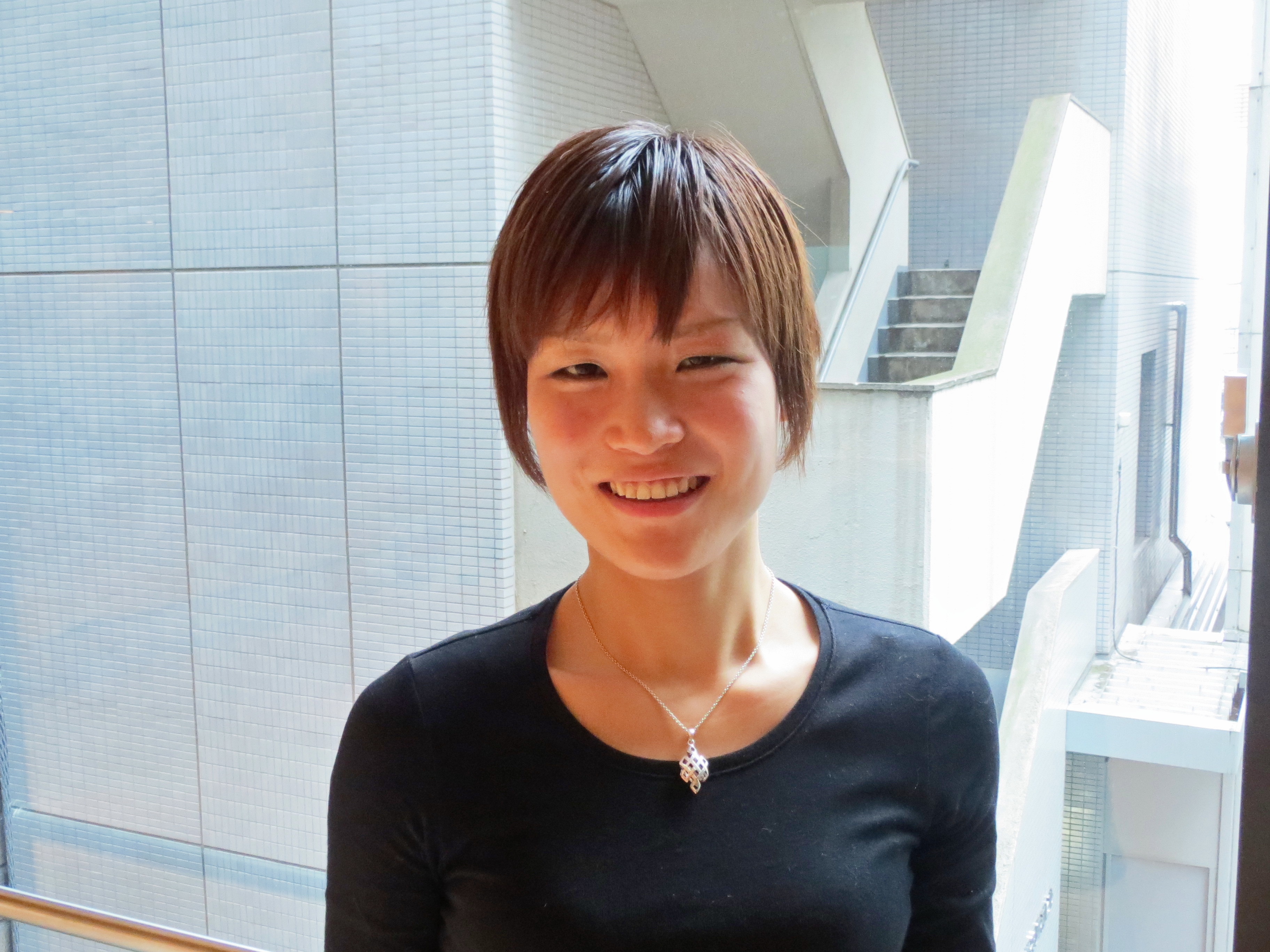
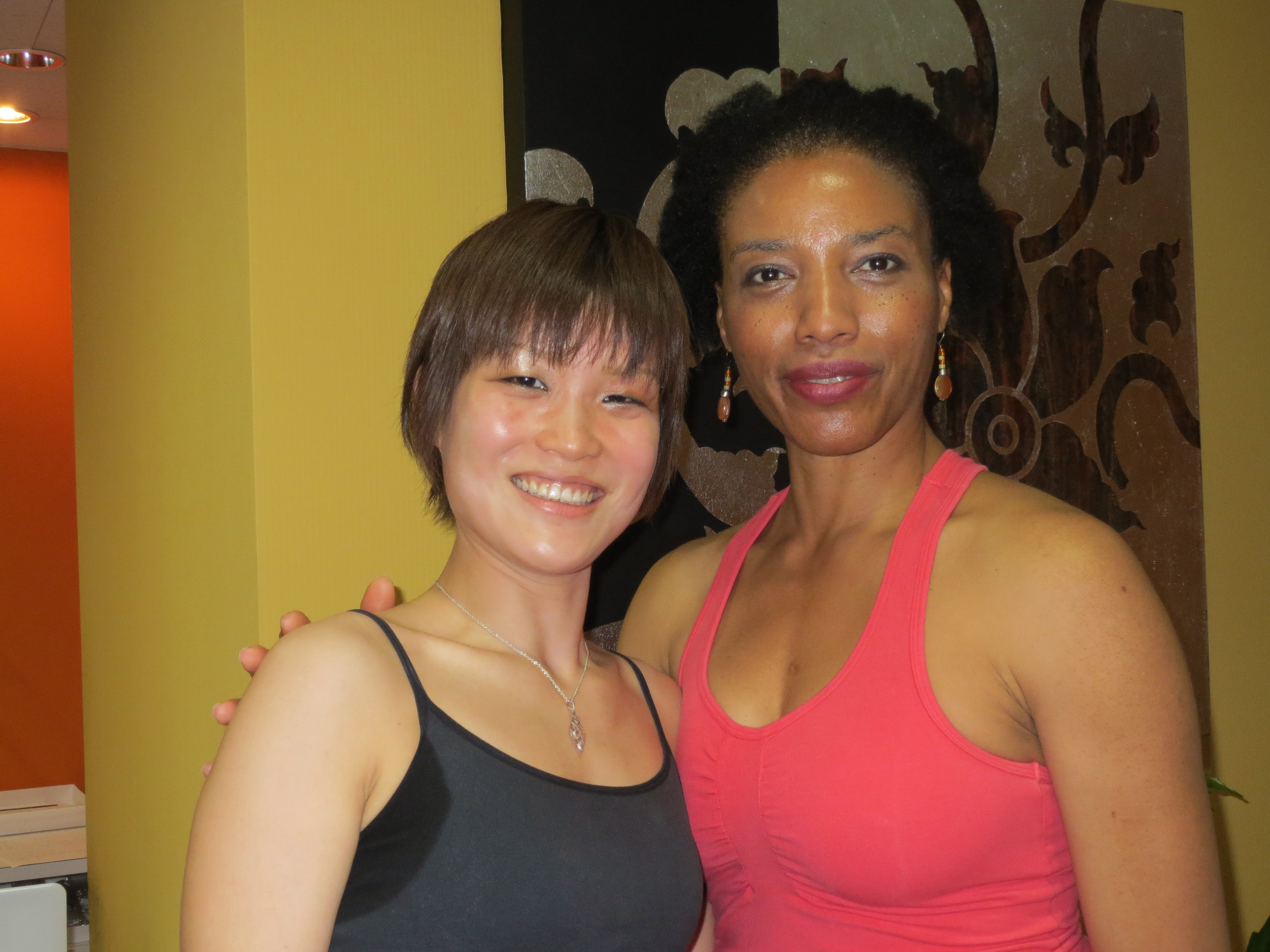
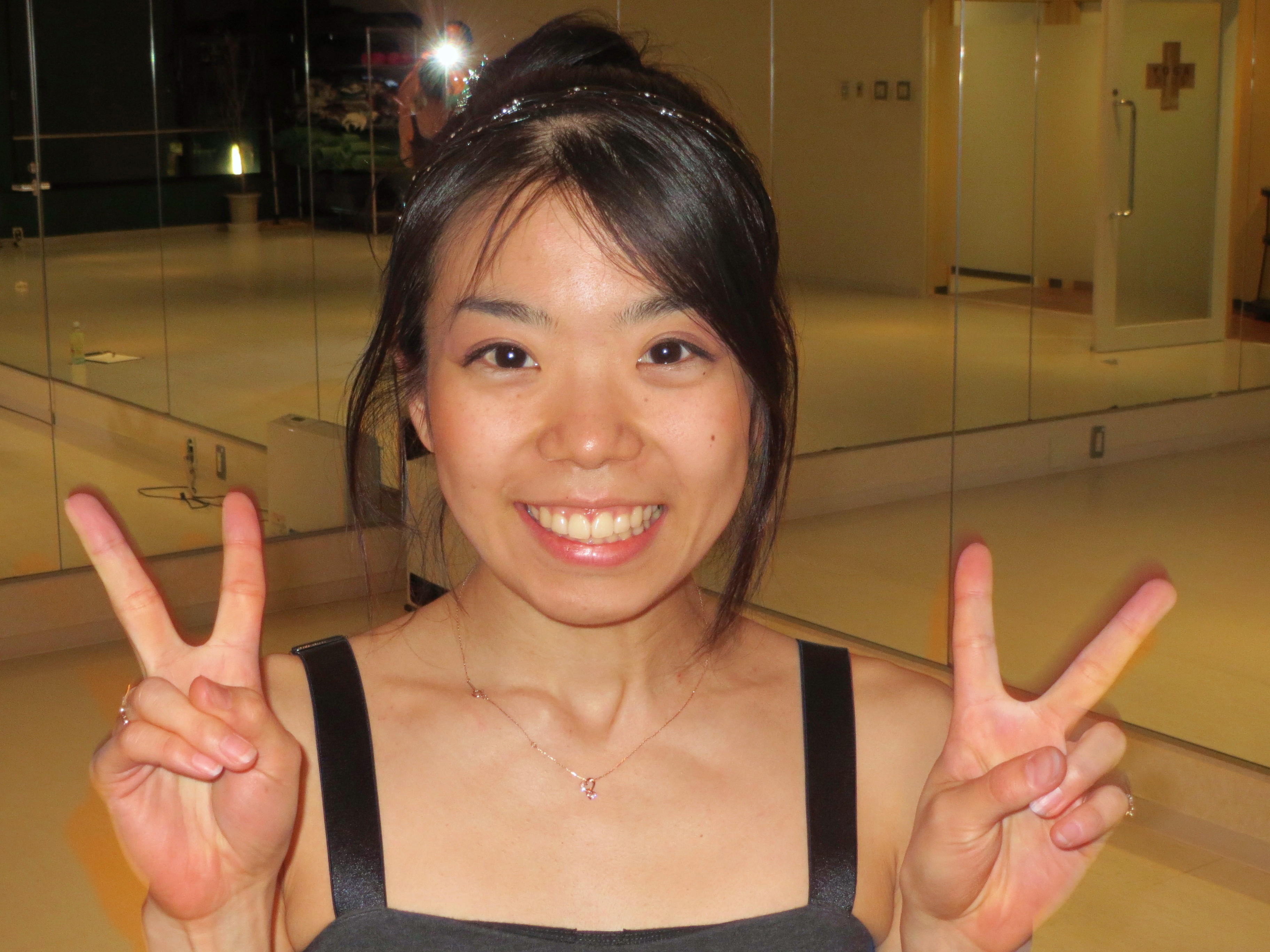
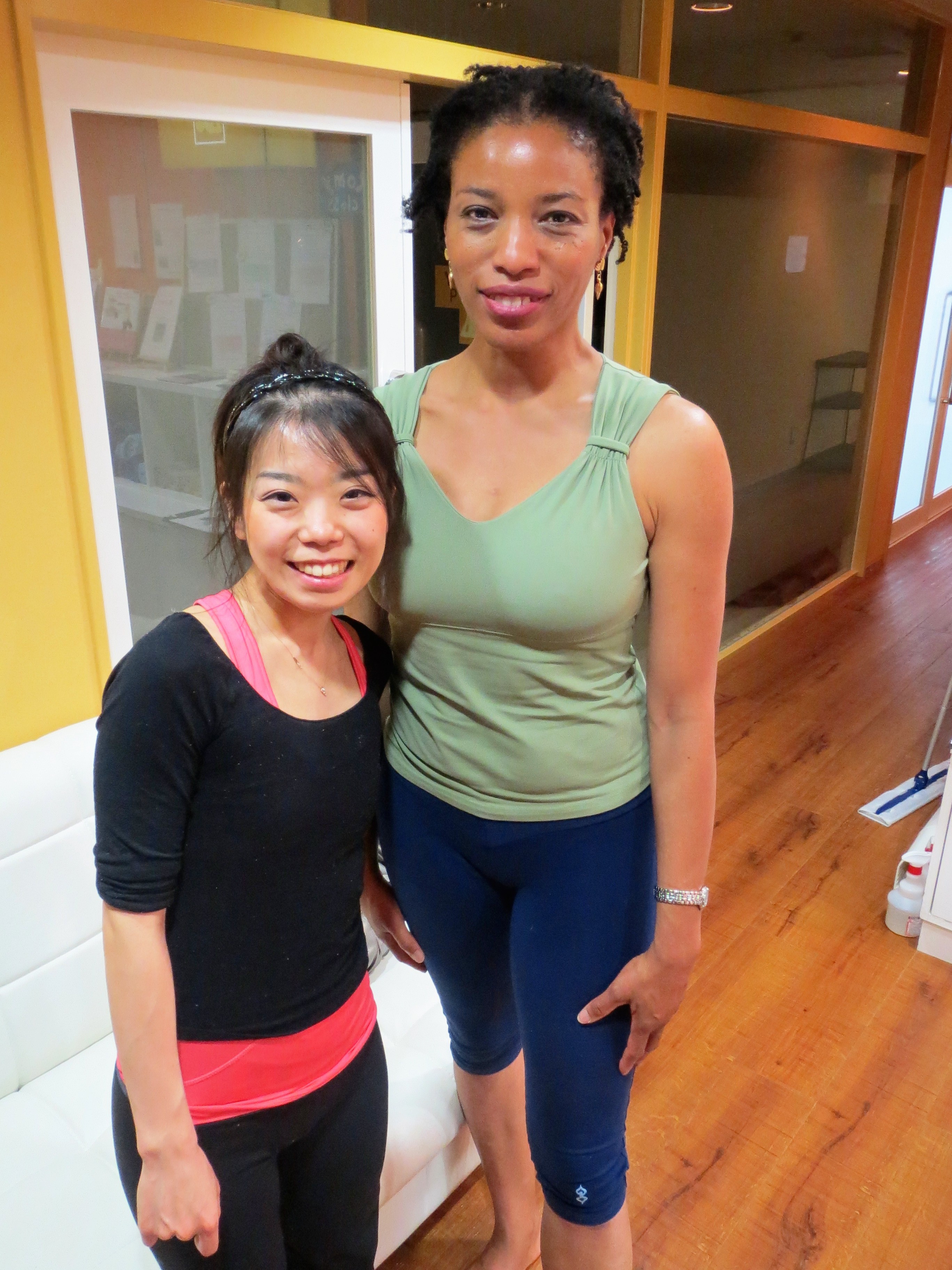
Tomoko Kawahara

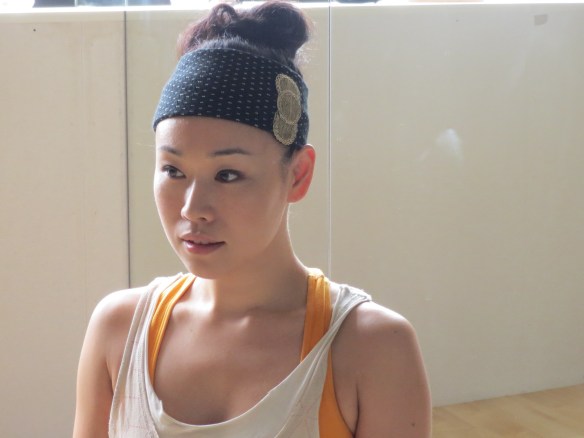
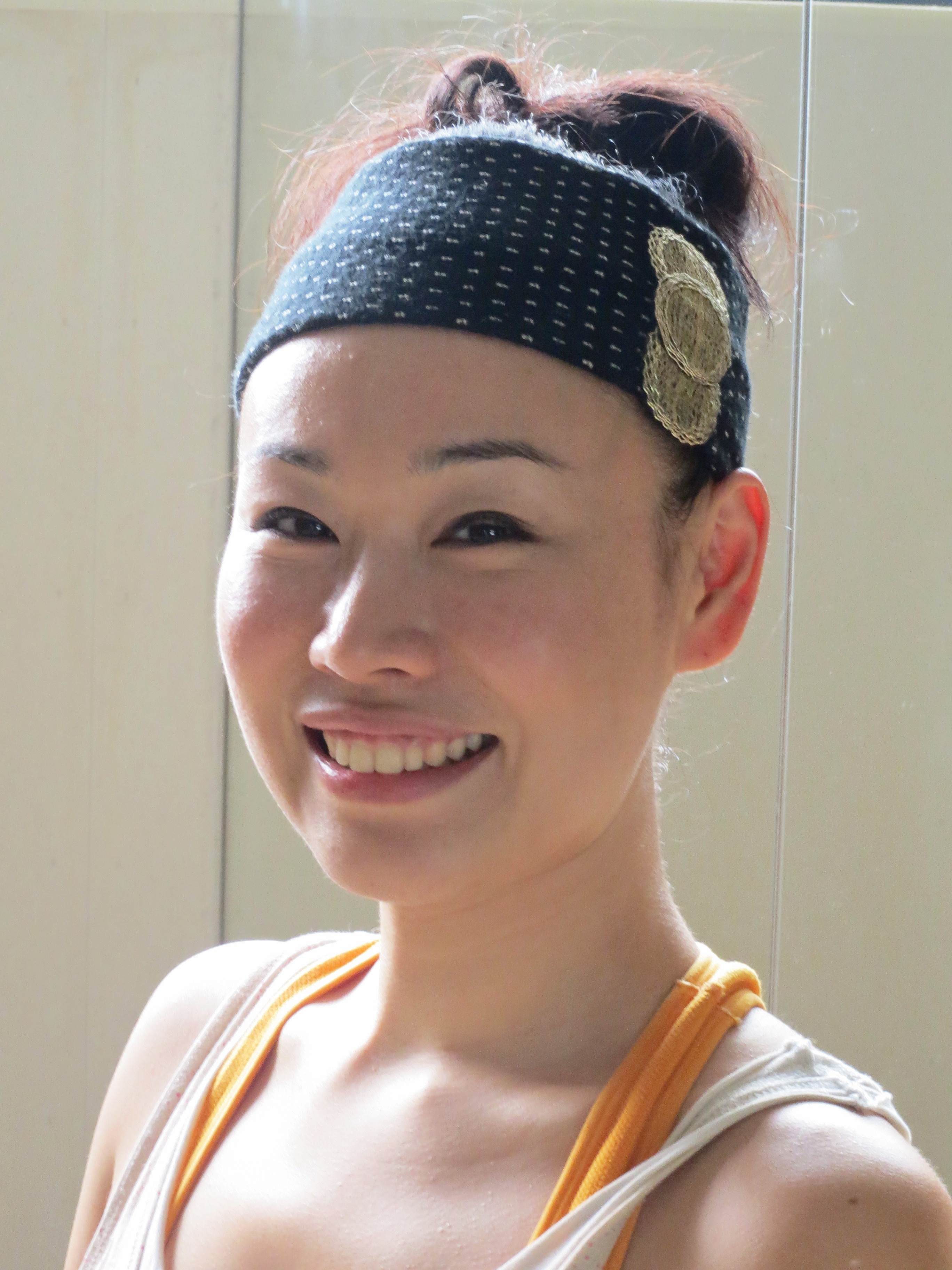
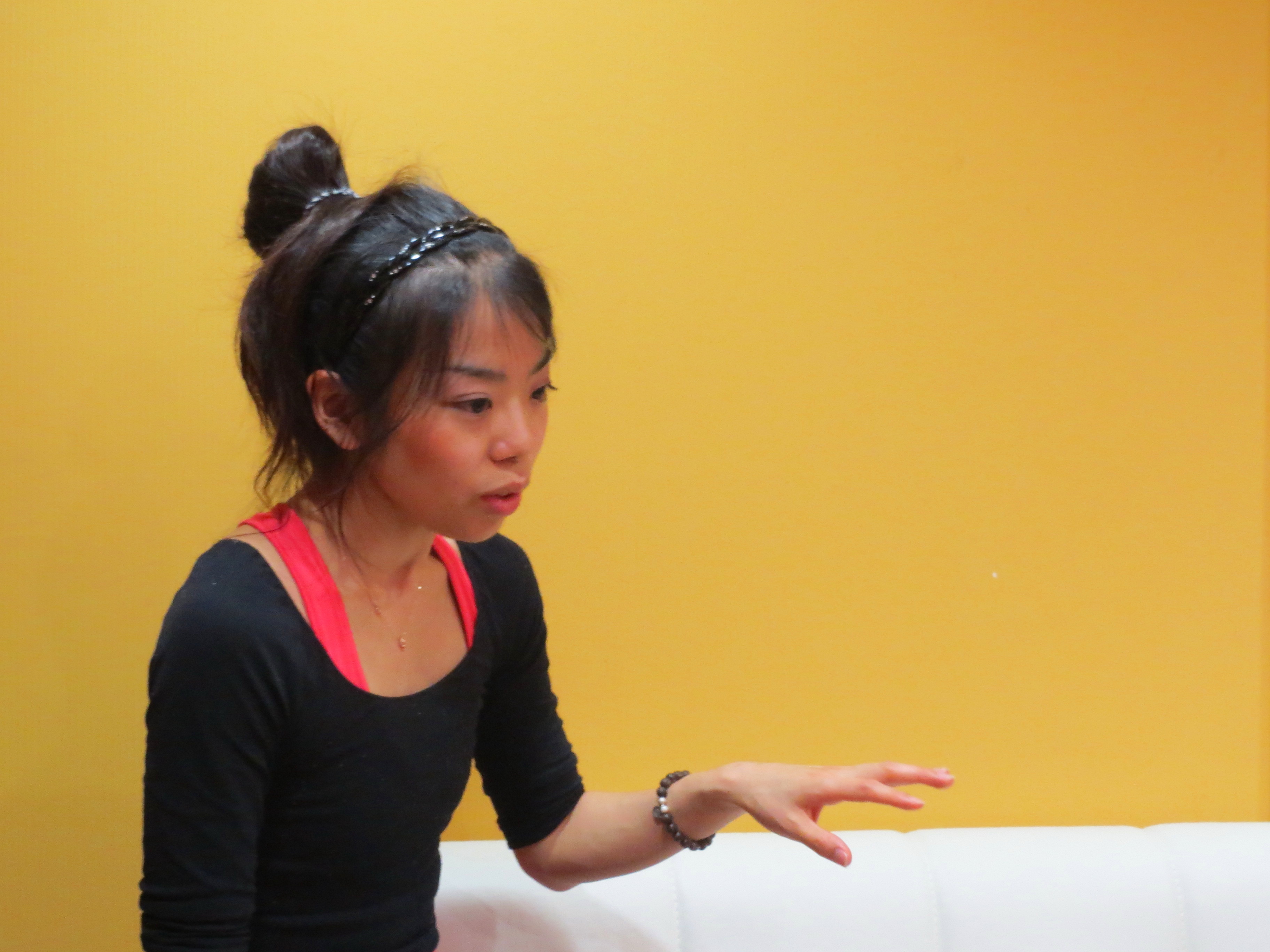
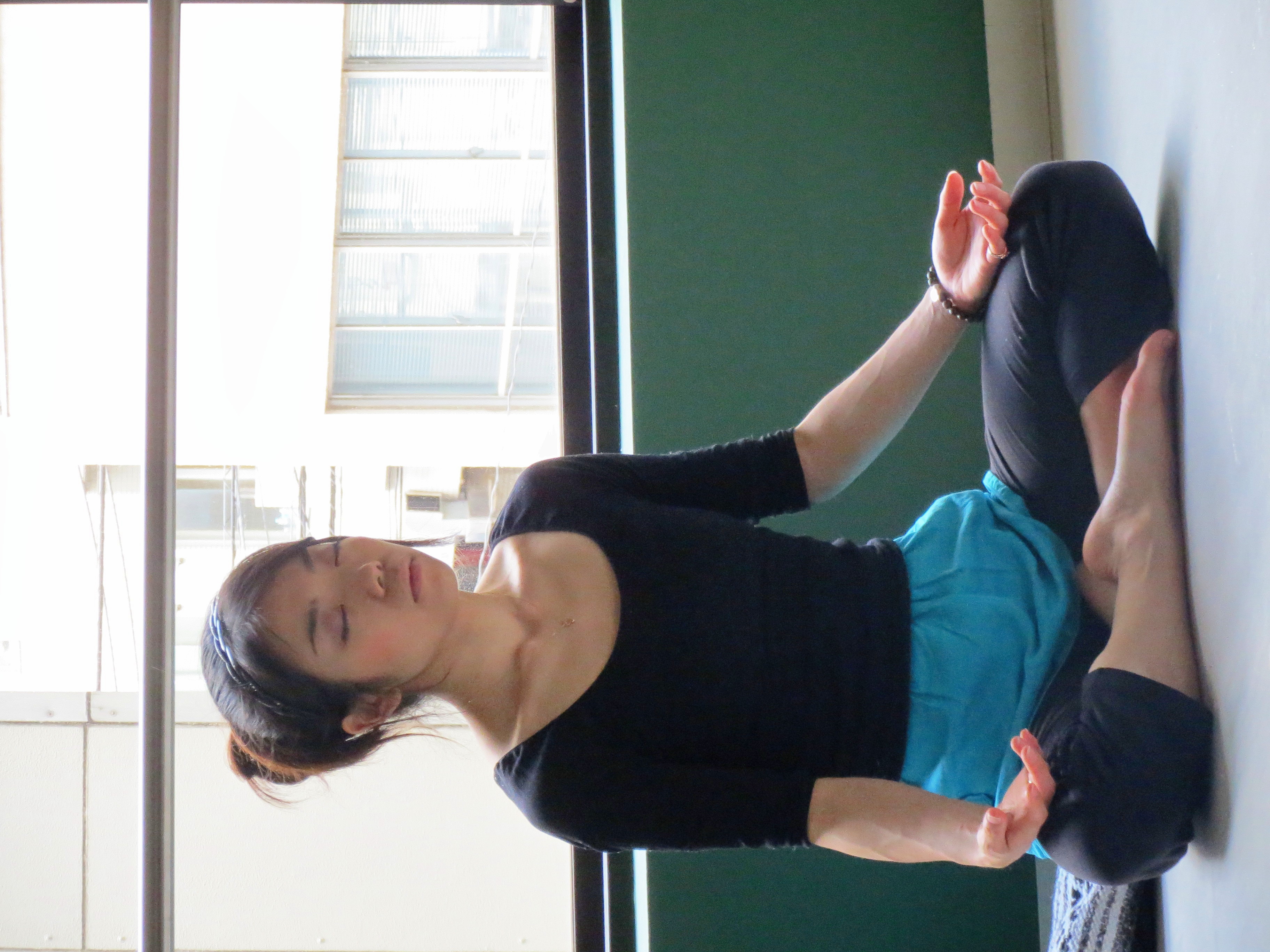
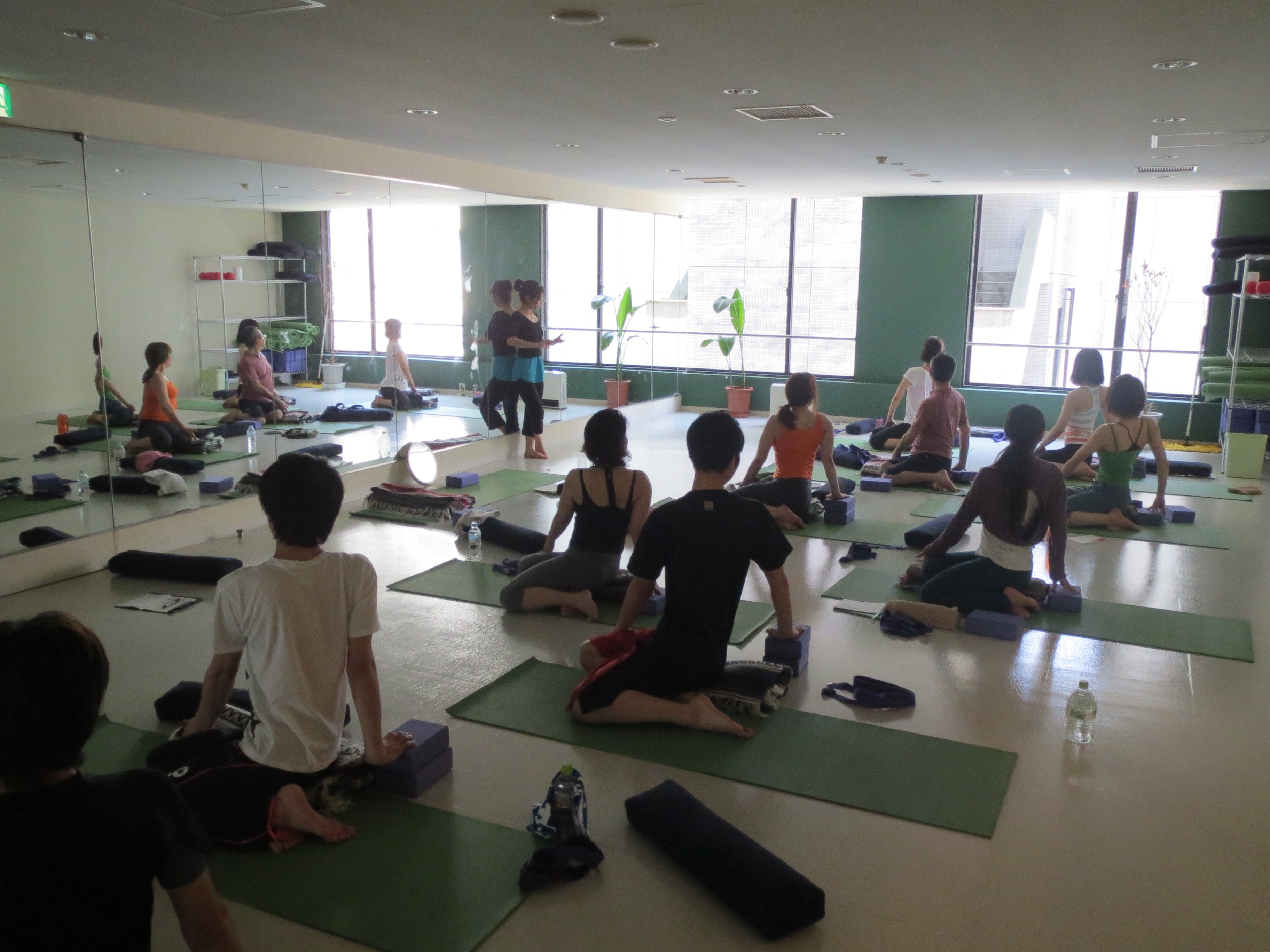
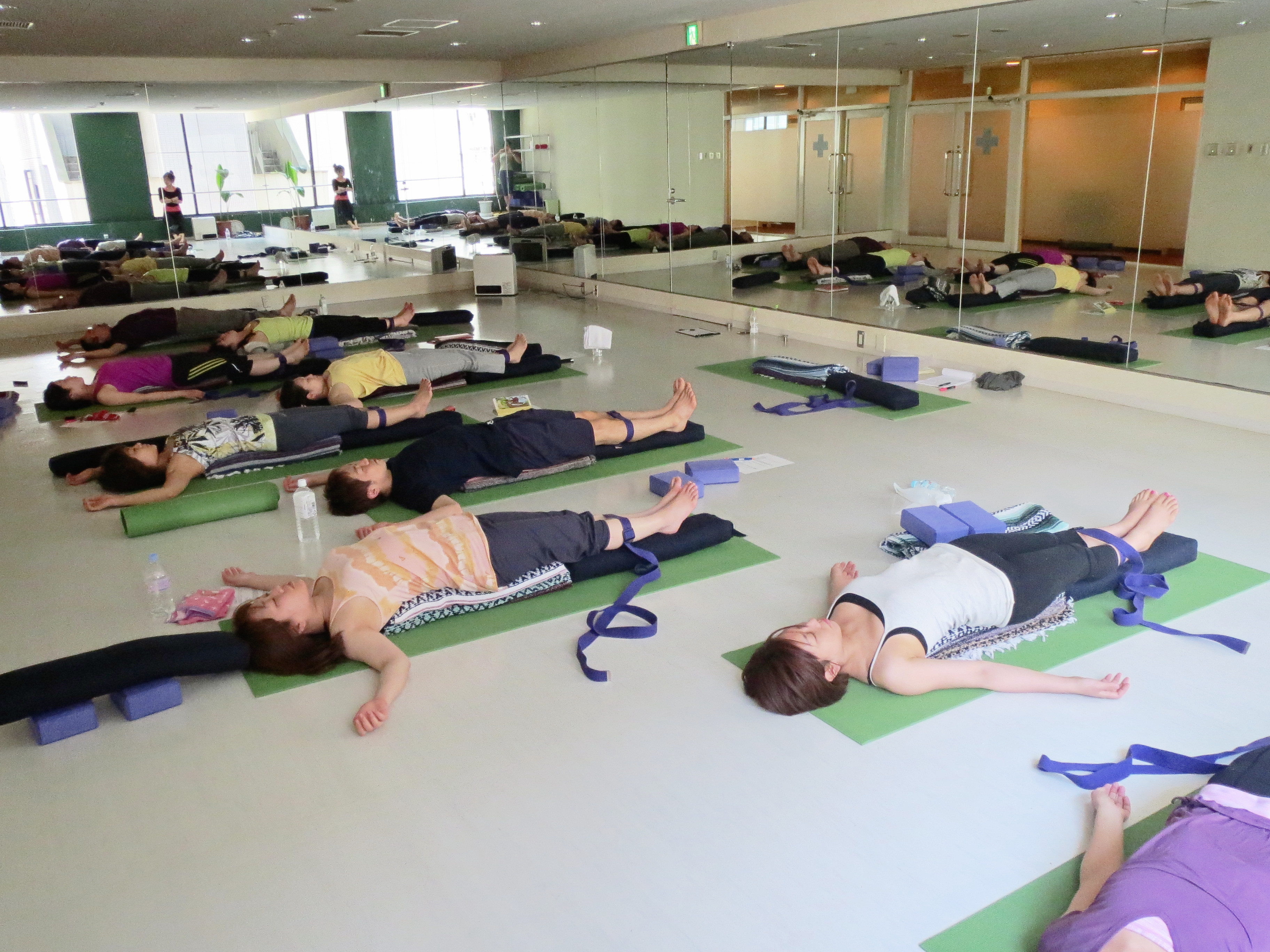
Initially I wanted to begin the segments on “The Translators” with Tomoko Kawahara because she has the most demanding role. In addition, Tomoko is also the woman who all of the other translators look up to—Souffler, Yuri & Kosai.   But, it makes sense to highlight her towards the end of the training because over these weeks I’ve grown to view her as more than a translator, she is a co-teacher. Calm, authoritative and patient, her presence in the classroom is reassuring—-she is the “glue” that keeps things together.  Without her there simply would be no training.  Tomoko also brings balance to the intensity of the training, reminding us to take breaks and brings me chocolate from time to time.  I send her the schedule beforehand so that she knows what’s on the agenda and then she tirelessly speaks every word I say each Saturday & Sunday from the morning practice, throughout the lectures, and until the final closing circle at the end of the day.  She interprets each question the students ask me and my responses.  I’m amazed at how it works, we just get into a rhythm and the day flows without any conflict–its fascinating.  I’ve now learned that a translator has to have specific skills and talent to make it work–the love of language, extensive traveling experience and a healthy curiosity about other cultures.   Furthermore, the translation process is a collaborative effort.  I look to Tomoko for advice and strategies on presenting material or insight when communicating with the students. She’s also my cultural link which I feel has been instrumental in keeping this training flowing smoothly.   There are phrases, words or concepts in English that may not be present in Japanese and she has to find a comparable interpretation.
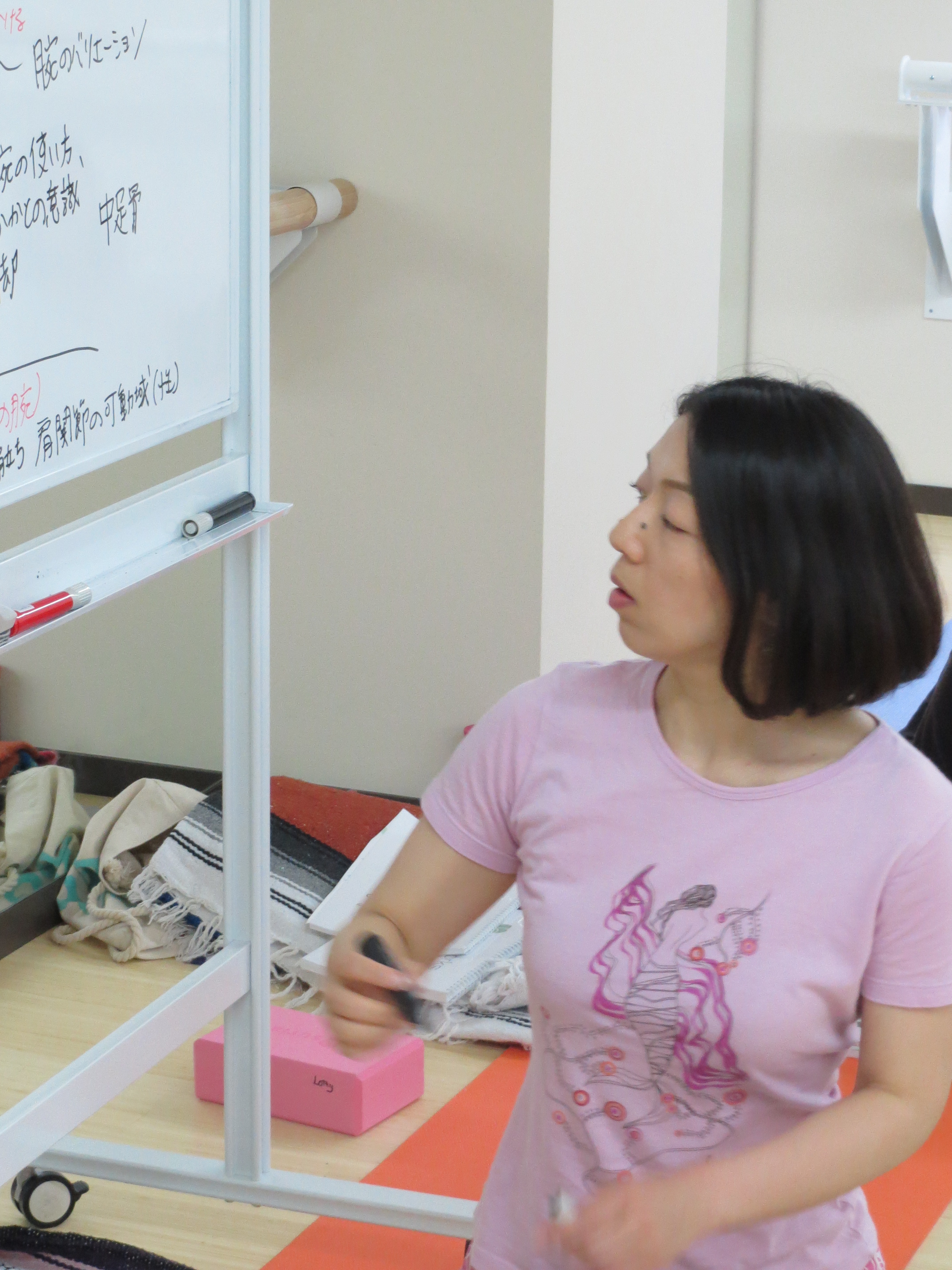
As a child, Tomoko lived in France for several years and has been intrigued by different cultures ever since. When she was in high school, she lived in the US as a year-long exchange student, and later went to college in the UK. Using her English skills, Tomoko built a career in planning, sales and marketing and soon gravitated toward yoga as a way to alleviate stress and rehabilitate a back injury.  It didn’t take long to realize that yoga worked not only on the body but also for the heart and mind which provided a major turning point in her life. Tomoko’s understanding and perceptions towards yoga completely changed after she started taking classes at “Sun & Moon Yoga” in Tokyo and soon began to  realize in a direct, experiential way that “yoga was not just what we do on the mat.”  Tomoko has been working as a professional interpreter/translator and teacher in the yoga industry for 3 1/2 years and sees interpreting as a ‘union’–of the speaker and herself and a “union of the speaker and the audience.” For her, yoga interpreting is another form of yoga ‘off the mat’. It has become one of her most important spiritual practices.

Tomoko feels she has been blessed to work with so many fabulous guest teachers from overseas including: Geshe Michael Roach (the founder of Tibetan Heart Yoga), Carlos Pomeda, MC YOGI, Daphne Tse, Ellen Watson, Ted Lafferty, Yvonne Jaques, Gina Sara, Caitlin Casella,  and many more.  Not to mention amazing teachers who are based in Tokyo including Leza Lowitz (the owner and the director of Sun & Moon Yoga, Tokyo), Miles Maeda and others.
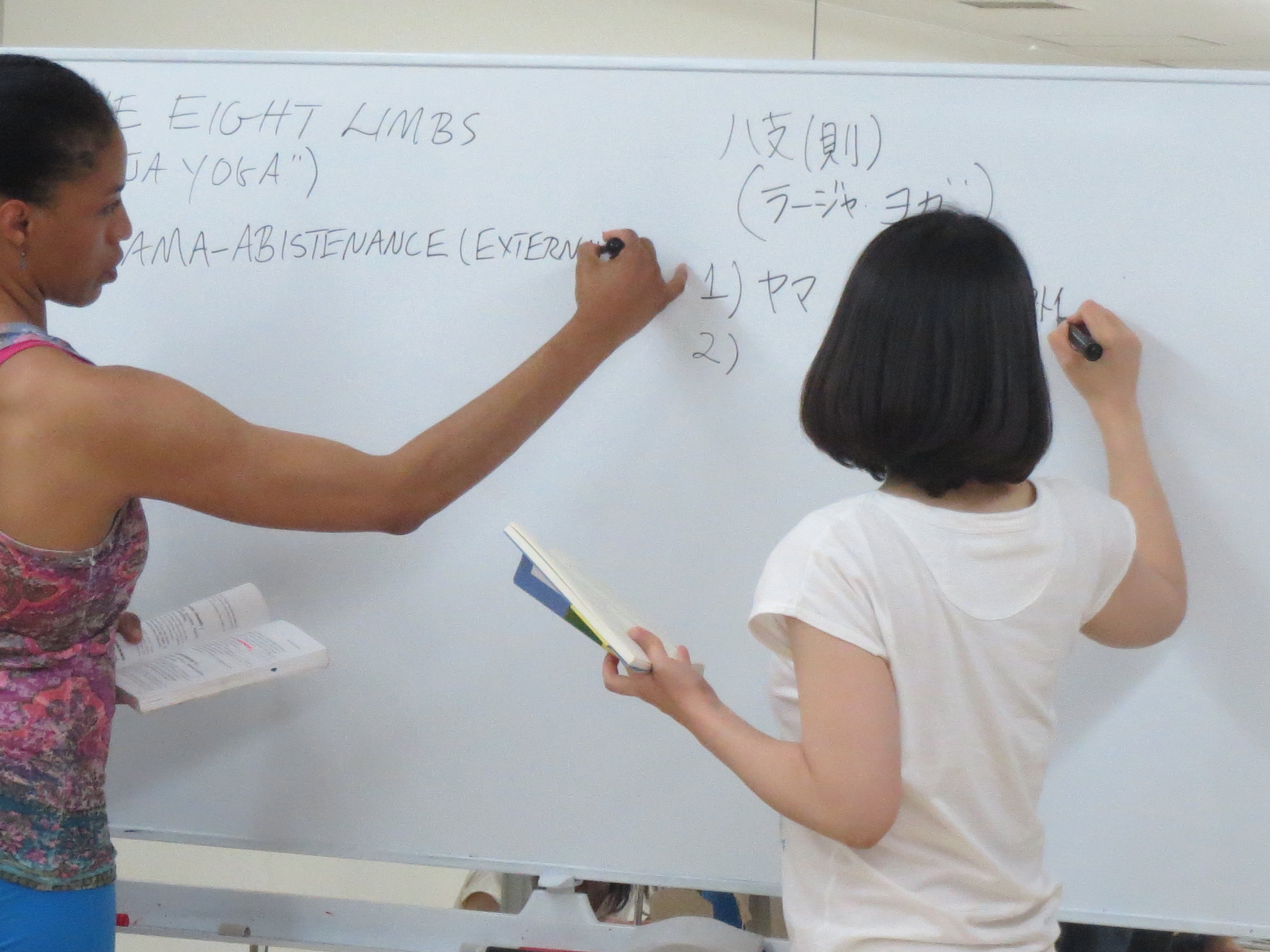
Impressive in her own right, Tomoko completed her 300hr TT a year ago in Arizona at the Yoga Studies Institute and is an influential presence in Tokyo’s yoga community.  She teaches at a community center; for the staff of her former employer; subs at Sun & Moon Yoga; offers workshops and charity mediation and kirtan session at studios in Tokyo and beyond.   Furthermore, in an effort to share yoga with a wider range of people, she is the co-director of YCIP (Yoga Classic Input Project), Japan which has been saving sacred yogic scriptures and supporting Tibetan refugees.  She is also a Committee Member of YAM (Yoga and Music in Tohoku) a charity that she created in collaboration with other yoga teachers after 3/11 to bring yoga, music,  and bodywork to the lighten up the survivors in the areas affected by the earthquake. She too is a blogger for YOGAYOMU, a free popular magazine in Japan.

I’ve enjoyed hearing about Tomoko’s community involvement during our breaks and always admired the generosity she extends to all around her: me and the students in the training, her colleagues, seniors, and quake victims. I’ll never be able to thank her enough.

http://www.yogaclassics.org/

http://www.facebook.com/YAMTOHOKU
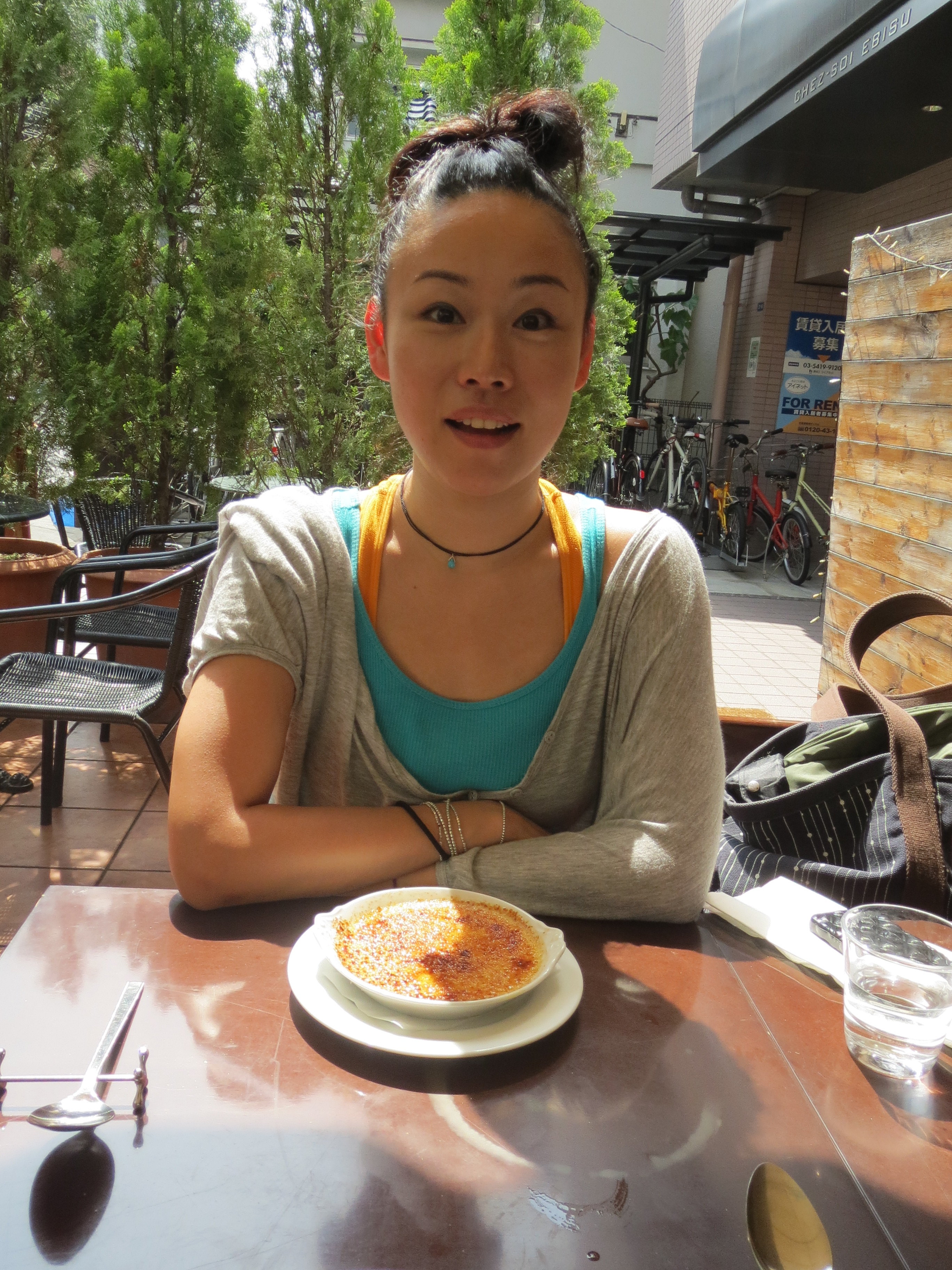
http://www.yogayomu.com/blog/tomoko/

http://sunandmoon.jp/

The Translators: Mayumi Yamashita “Souffler”

Mayumi Yamashita “Souffler”

Mayumi “Souffler” Yamashita translates for my Friday afternoon Vinayasa/Mediation class at the YogaPlus studio in  Sangenjaya.  A seasoned world traveler, Souffler first studied at the  Sivananda Vendana Yoga Center  in India and then later completed  the 200hr  Yoga Works Teacher Training in Tokyo with Caitlin Casella.  Her experiences during this training inspired her to become a translator.  She currently teaches for YogaPlus  and the Sivananda Center in Tokyo, and has taught yoga in the Bahamas, United Kingdom and India.  She was motivated to teach yoga teacher as a means to maintain her connection with her friends all over the word, but mostly because of her late father, Sadayuki Yamashita, who taught Japanese and was a translator as well.  Souffler said that her parents  were so proud of her choice to become a yoga teacher and the potential he had to have a positive influence on people’s lives.  Gregarious and always upbeat, you really do feel the positive energy that Souffler emits in her presence, she is the true embodiment of  “sattva”–luminous and light.

What I also like about Souffler is that she keeps on top of me to get my sequences in to her on time.  Each translator requests my sequence prior to class so that they can prepare and research poses or anatomical terms—I  just can’t show up and teach there’s a collaborative process involved.  Another fact that I appreciate about Souffler is that she is always willing to offer to show me around Tokyo or suggest  a store, neighborhood, or site  that I should visit.  Japanese women in general are very fashionable, especially Souffler, and I’m always commenting on her great outfits. During one of our conversations after class,  she said:

“Have you been to Shimokitazawa?

“What? …Where is that.”  I said

“Shimokitazawa…you’ll love it!  I’ts near Shibuya, take the Inokashria Line to the Shimokitazawa train station. They have lots of good deals there on clothes.”

She wrote out the directions for me and I did take her advice go there the other day and she was right–it was a terrific community–sort of like the East Village in Manhattan with lots of thrift shops and boutiques with fashionable clothes at prices far more affordable than in other areas of Tokyo.

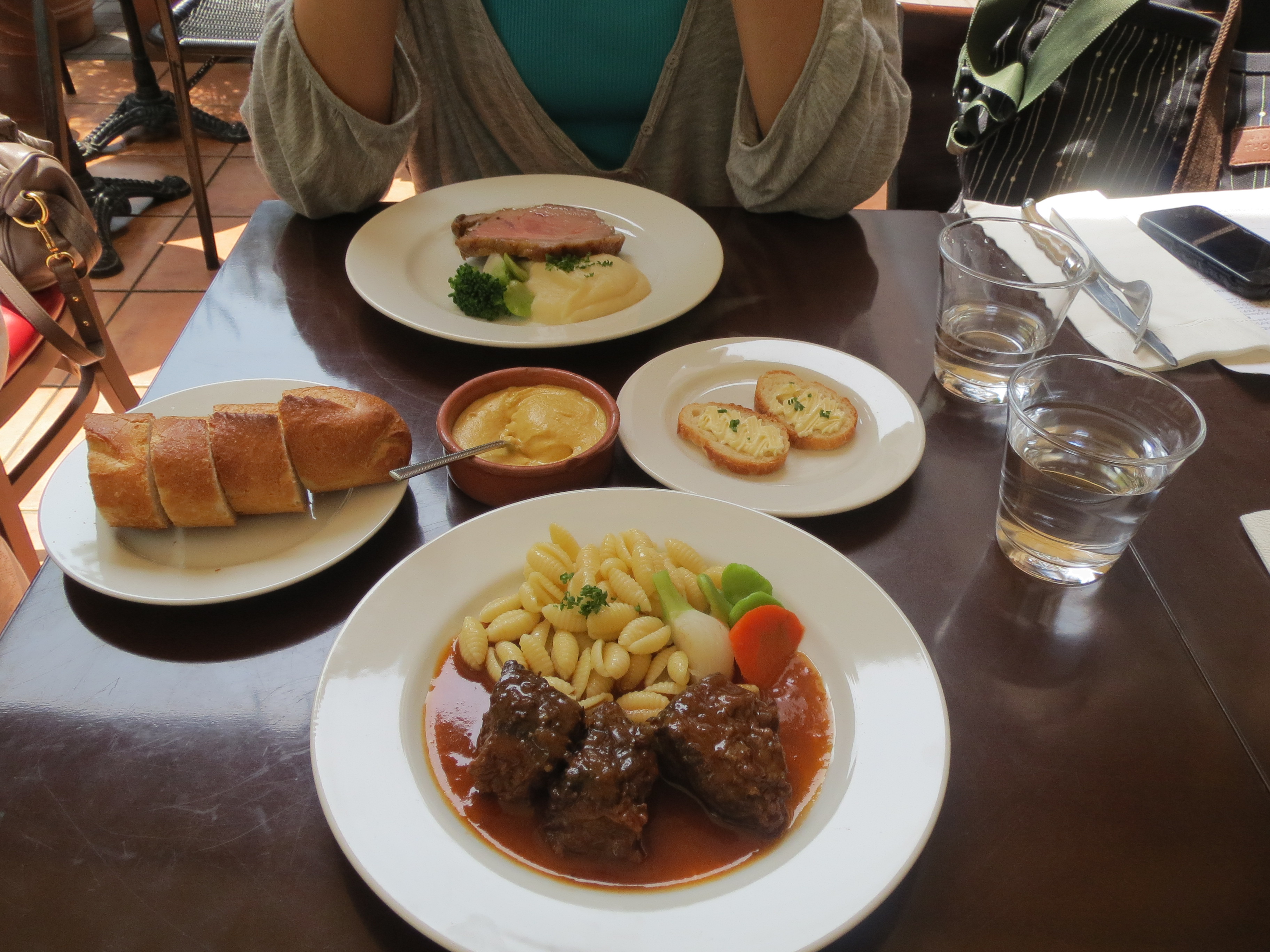
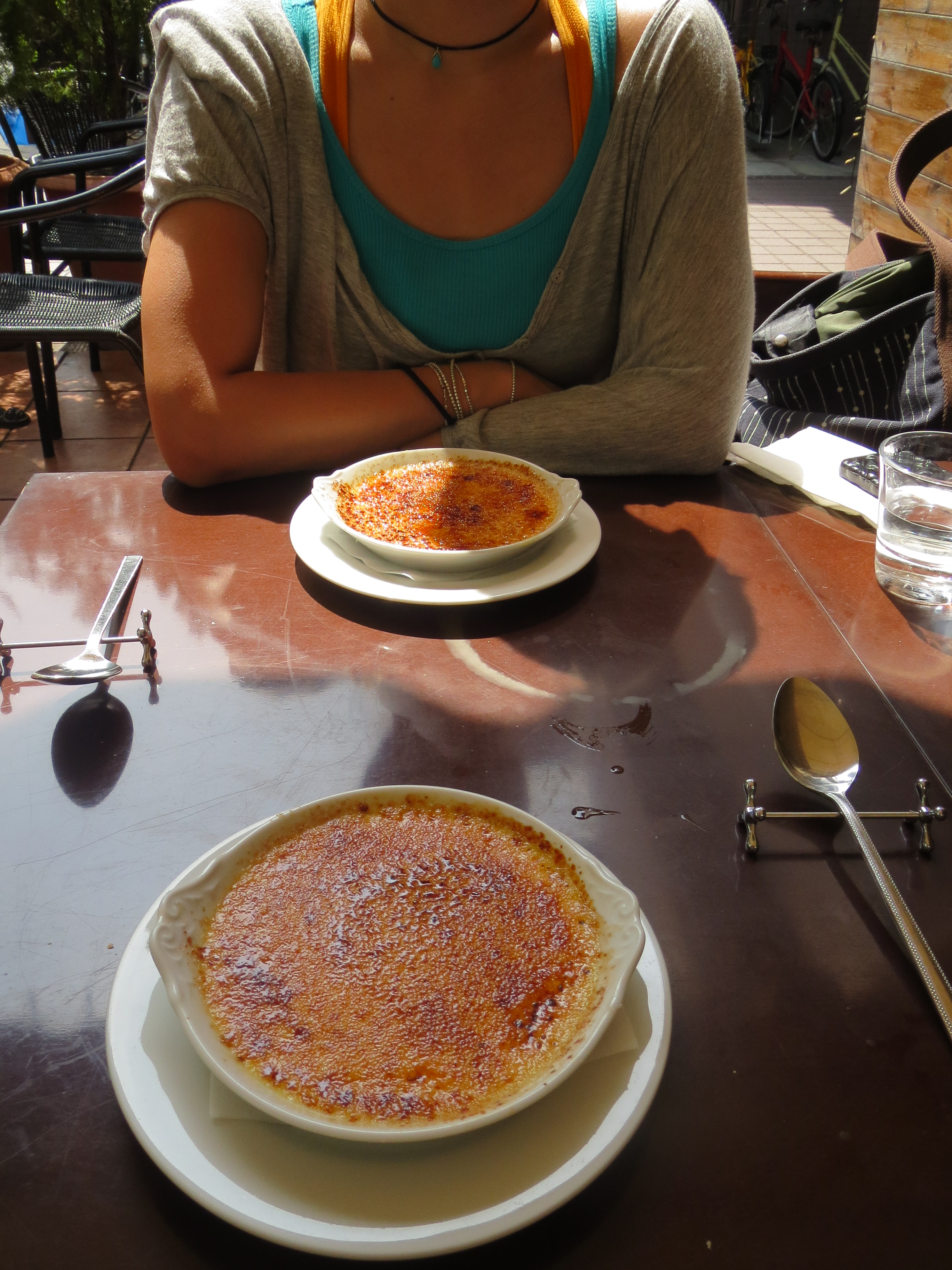
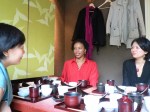
One day she wanted me to meet her take a yoga class in Meguro, I was late so she decided we should have lunch in Ebisu instead.  We went to a quaint French restaurant (Les Lions) that she likes which has a prix-fixe meal–I marvel at how the smallest of spaces can be a restaurant or cafe in Tokyo.  I’ve also noticed that French food is very popular in Tokyo.  Souffler said that there are a number of French restaurants in Tokyo better than those in Paris.   It was a nice sunny day so after lunch she thought I’d might like the shopping center at Ebisu Gardens and took me there.  As we rode on the lengthy “skywalk” for about a mile through a massive subway station, we saw a small building with a red gate nestled between two tall buildings outside. I asked her why a temple would be there of all places, and she said “because its an Inari temple and years ago, someone designated the spot as sacred and nothing can ever be built on the land and the temple will never be moved.”  How interesting I thought,   that a piece of ground could be so sacred and respected today especially in Tokyo where land is so scarce and real-estate is so valuable. I was very impressed,  these influences go back for centuries and decades and I have seen  this  respect for tradition throughout my trip here which is evident in the food, objects, clothing and customs.

Lunch at Les Lions

The Teacher Training: Weeks 5 & 6

This slideshow requires JavaScript.

We just passed the halfway point of the Teacher Training and its at this junction that so many elements come together.  In the past few weeks there has been a steady  but rapid progression of:  lectures, practicing, learning new poses, Sanskrit, philosophy, anatomy, practice teaching and written homework assignments.  It’s a rigorous program and as a teacher, I have to keep everyone motivated, engaged and work hard to present all of the topics in an organized manner.  It’s also at this junction, that I know everyone’s name–all twenty-eight of them–their personalities and who may need a little encouragement.   At week five we had the emotional “Check-in Circle” –it’s when everyone either expresses their fears, insecurities or how they feel inspired.  “Check-in-Circles” are always tough–lots of tears.  Afterwards, shaken and ‘teary” myself,  I said everyone was going to make it through, “those of you who are worried about completing the program will go on to be great teachers and those of you who are already teachers, will be better teachers.”  I then had us recite the “Sarvesham Chant”….”Loka Samastha Sukinoh Bhavantu.”   I was surprised that the words had just tumbled out of my mouth–instinct told me it was the right thing to say at the moment.  The thing I realized as I walked home that evening is that I’m not just a teacher trainer, I have to lead, help them understand and encourage them to grow–and the pressure of that responsibility can be overwhelming.  However, these students motivate me to work throughout the week preparing the lessons and show up on Saturday and Sunday to teach.  I’m seeing a lot of progress:  they are getting stronger in their asana practice, have more confidence with their practice teaching sessions and are improving with their written homework assignments.  We’ve also made it through  some tough assignments: Samadhi Pada & Sadhana Padha of the Yoga Sutras; a number of anatomy topics (the pelvis and planes of movement, shoulder girdle, spine );  subtle body and the dreaded  Surya Namaskar A & B,  Standing Twists and Urdhva Dhanurasana practice sessions.  We have four more weeks and still lots of material to cover, but we’re having a good time together and will support each other until the end.

The Third Workshop: “How to Address Common Injuries in the Classroom”

YogaPlus Teachers

The third and final workshop on the agenda was held on May 29 at the Gotanda studio for all of the YogaPlus teachers.  To my surprise there were at least 30 in attendance that morning and when I sat down in front of the room, I broke out into a serious case of nervous perspiration!  In the days leading up to the workshop,  I struggled with how to present this broad topic, “How to Address Common Injuries in the Classroom.”   I had previously asked some of the teachers at the studio what they would like to focus on, some said, “How to use props“,  “How to do chair yoga” or “Back pain.”   Finally, I  decided that it would be best to ask the participants questions at the beginning of the workshop and then work out a sequence based on the most common injuries that came up.  After a brief discussion, questions regarding a common assortment of injuries arose: back pain, shoulder, wrists, etc.  Since most of these injuries are associated with repetitive motions from vinyasa classes, misalignment in standing poses, transitioning in and out of poses or improper set-up for inversions,  I thought it would be best to teach a general sequence to address most if these issues.

The class just flowed as  I wove injuries related to categories of poses into a seamless practice, stopping only to demonstrate or to reiterate a point:  Surya Namaskar A & B, Standing Poses, Inversions, Forward Bends, Twists—all the years of practicing, teaching and now leading a teacher training, seemed to provide an unexpected a wealth of knowledge.  I knew more than I realized—a three hour workshop quickly turned into four followed by an engaging question and answer… “How do you deal with….”What if you don’t have props“…”I have a student“….  we could have gone on at length for a considerable amount of time.  In fact, I thought this could be a series organized into separate topics.  I addressed the issue of class levels, modifications, sequencing, additional study outside of the classroom (anatomy, kinesiology ) and the importance of  a “self-practice.”  As teachers  all of this relates to the niyama svadhaya  “self-study” which is the ongoing process of examining yourself, the body, and literature that helps you to find the answers.  As our discussion was winding down I was starting to feel a strong  emotional connection with these young teachers who have such passion towards learning—it comes through in so many ways.  They embrace each person that visits them in Tokyo and just being with them makes me feel so appreciated. I love this photo of the YogaPlus teachers—it literally seems to vibrate with energy.

The Translators: Kosai Kato

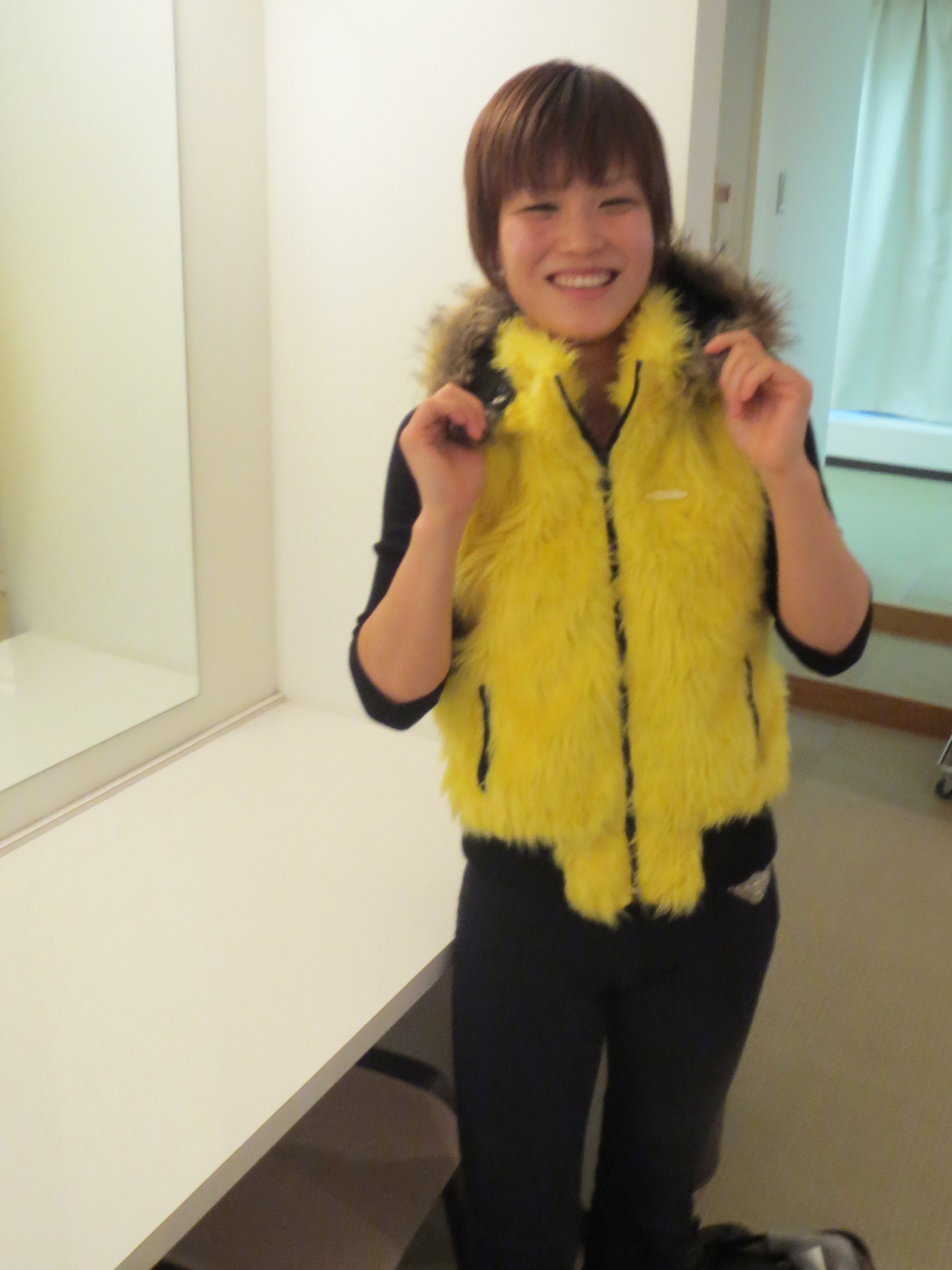
Kosai Kato has been translating for my Tuesday morning Level 1/2  class in Gotanda and for the teacher’s  workshop, “How to Address Common Injuries in the Classroom.”   Always radiant, chic and stylish, she walked into our first  staff meeting  wearing frosted eyeshadow and a fuzzy yellow vest trimmed in black–and looked great!   Not only do I like her personal style, she’s brave and daring as well.  Would you believe that she studied aviation at the University of North Dakota and that she also worked as a member of an international flight crew based in Singapore from 2009-2011?  Kato has been teaching yoga since 2006 and completed her 200HR Yogaworks Teacher Training in Tokyo with Eka Ekong.  She currently teaches at YogaPlus in Yokohama, Tokyo.

Romy & Kosai at the Gotanda Studio

The Infamous Yellow Vest

Eating in Tokyo: Mame-Maru

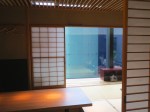
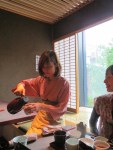
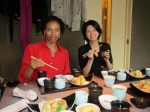
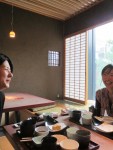
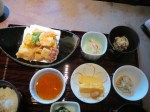
A week ago, few of my students, Ahn Eunsun, Yoshiko Okamoto, & Yuka Matsuo, took me to lunch in downtown Tokyo.  Ahn said that we were going to a “Kyoto Japanese Style” restaraunt, called Mame-Maru.  We entered a small place and after taking off our shoes, were guided into our own private room.  The floor was covered in tatami mats and we sat on cushions with our legs placed in a pit under the table which appeared to be hovering above the floor.  This soothing setting overlooked a tranquil garden on a rainy day.   A waitress wearing a warm yellow colored kimono served  us the most beautiful meal and numerous cups of tea.  The meal, “cha-kaiseki” would be considered a more casual form of “Kaiseki” which has its roots in Kyoto.  Visually appealing, kaiseki  is “an art form that balances the taste, texture, appearance, and colors of food.” That is certainly true indeed as evidenced from the images taken of the meal.

http://mame-maru.jp/

The Translators: Yuri Nakamura

Yuri Nakamura

People have asked me how can I conduct the classes and teacher  training if I don’t speak Japanese?  The answer to that is an excellent team of translators!  I’m so indebted to them and appreciate their help so much, I thought it would be nice to highlight  each of them individually.  We share the space in the classroom teaching in tandem,  and through this process I’ve gotten to know them on a personal level.  Yuri is translating for the bulk of classes during the week–Wednesday “Yoga Therapeutics” in Gotanda; Thursday  “Level 1/2, Sangenjaya;  & Friday Level, 2/3 in Gotanda. She also translated for the two workshops “Living a Better Life Through Yoga.”  Yuri’s first experience translating was for Eka Ekong (Yogaworks, Los Angeles) who led a  200  Hour training in Tokyo in  2011. She’s also translates for Catlin Casella (YW, New York) when she comes to town.

Yuri is a petite sized “dynamo” whose expressive voice is delightfully uplifting.  She has been teaching yoga for approximately a year and completed her Yogaworks 200hr Teacher Training with Jennie Cohen (YW, New York) and now teaches for YogaPlus in Kichijoji. Yuri graduated from the University of Utah where she majored in Dance & Psychology. These experiences and more are embodied in her elegant presence in the classroom and on the mat.

Me & Yuri, Gotanda, 2012

The Welcome Party

The YogaPlus staff  wanted to host a welcome party for me. It took us a few weeks to coordinate our schedules, but were able to gather last weekend, May 12, at Tofuro—a traditional style resturaunt with “the wabi-sabi ambience of the tea-house world.”  The party was lively with great food—platters of sashimi, soup that was made at the table, varieties of tempura and fresh tofu— and lots of laughs!  Here are a few pictures that captured the moment….

This slideshow requires JavaScript.

The Second Workshop: “Living a Better Life Through Yoga”

Part I: “The Physical Body”

In the meeting with the translators and programmers during my first week here,  I was also asked to create a couple of workshops for the public.  The staff had ideas of their own: they said they wanted me to come up with something to address common aches and pains, fatigue and stress–symptoms of urban life,  long work hours and surprisingly, the upcoming rainy season which can be the cause of depression for many. The workshops also had to be held in two parts over a weekend ( the one weekend I had off from teacher training) and each be 2.5 hours in length.  They said that ” Part I” should  somehow address the physical body and “Part II”, the mental.   We spent a few moments going back and forth over a few titles and then I blurted out “Living a Better Life Through Yoga”  they liked it–and so did I.  When I sat down a few days later it became the name for this blog.  I realized that this effort to “live a better life,”  is my primary reason for practicing yoga,  teaching and what I hope my students ultimately gain from the experience. The workshops held on May 12 & 13, were a success.  At first I was worried that I wouldn’t be able to hold the space or their attention for that amount of time, but the moments flew by and both sessions were followed by lots of discussion and questions.  Encouraged and inspired by the group’s response, I’m now planning to continue developing this workshop concept to cover a series of topics.

Part II: “The Mental Body”

Sightseeing: Senso-Ji Temple

Two of my students, Kasumi (“Lotty’) Tanaka and Hisako Imaizumi and her son Yu, took me on an excursion to Asakusa to tour the Senso-Ji Temple Grounds.   The sun had finally come out  after a few days of rain so we were able to spend considerable time touring the grounds.  The Senso-Ji Temple is the oldest temple in Japan and dates back to 628 A.D. It was built to honor the Bodhisattva Kannon—a figure highly regarded in Buddhism which is believed to have been sent to relieve human misery on earth.  Many Japanese believe that their hopes and pleas will reach this deity, which is evidenced in the various methods available on the grounds for prayer— to bless, request good fortune or to eliminate illness and vessels for ritualistic cleansing.  I took so many pictures that I created a slide show to share this rare experience.

This slideshow requires JavaScript.