Re:gendo with Keiko Okuno

This slideshow requires JavaScript.

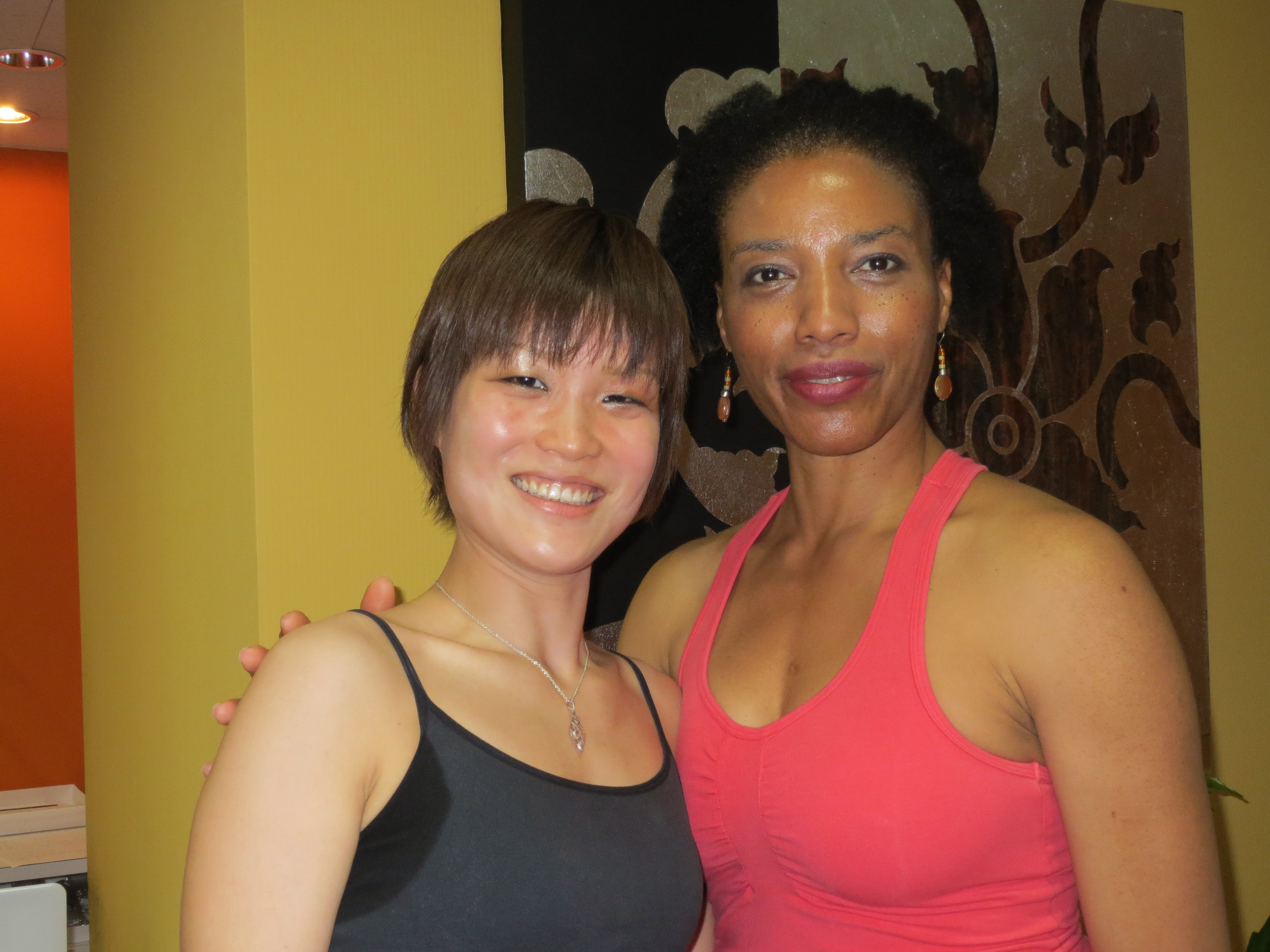
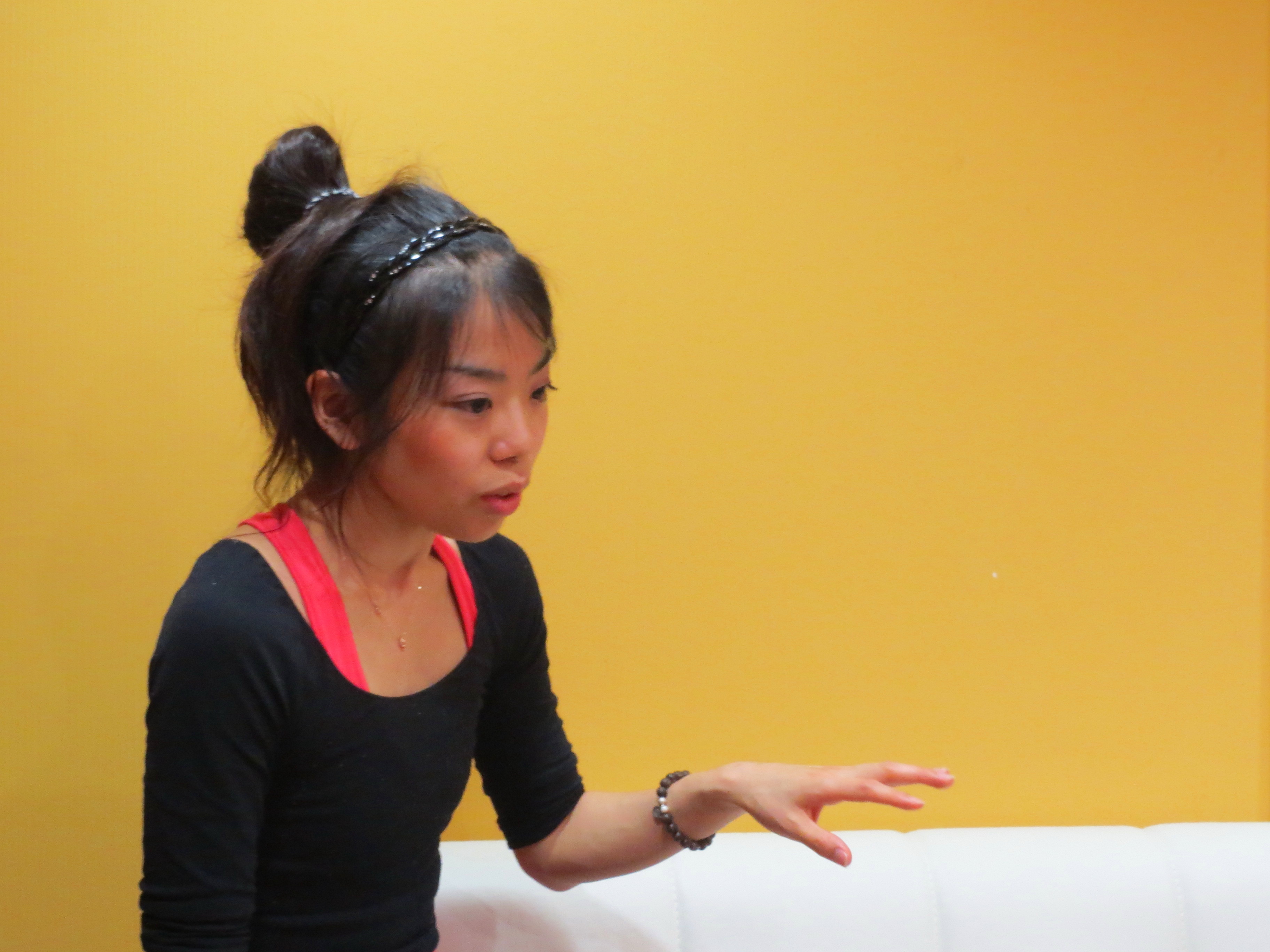
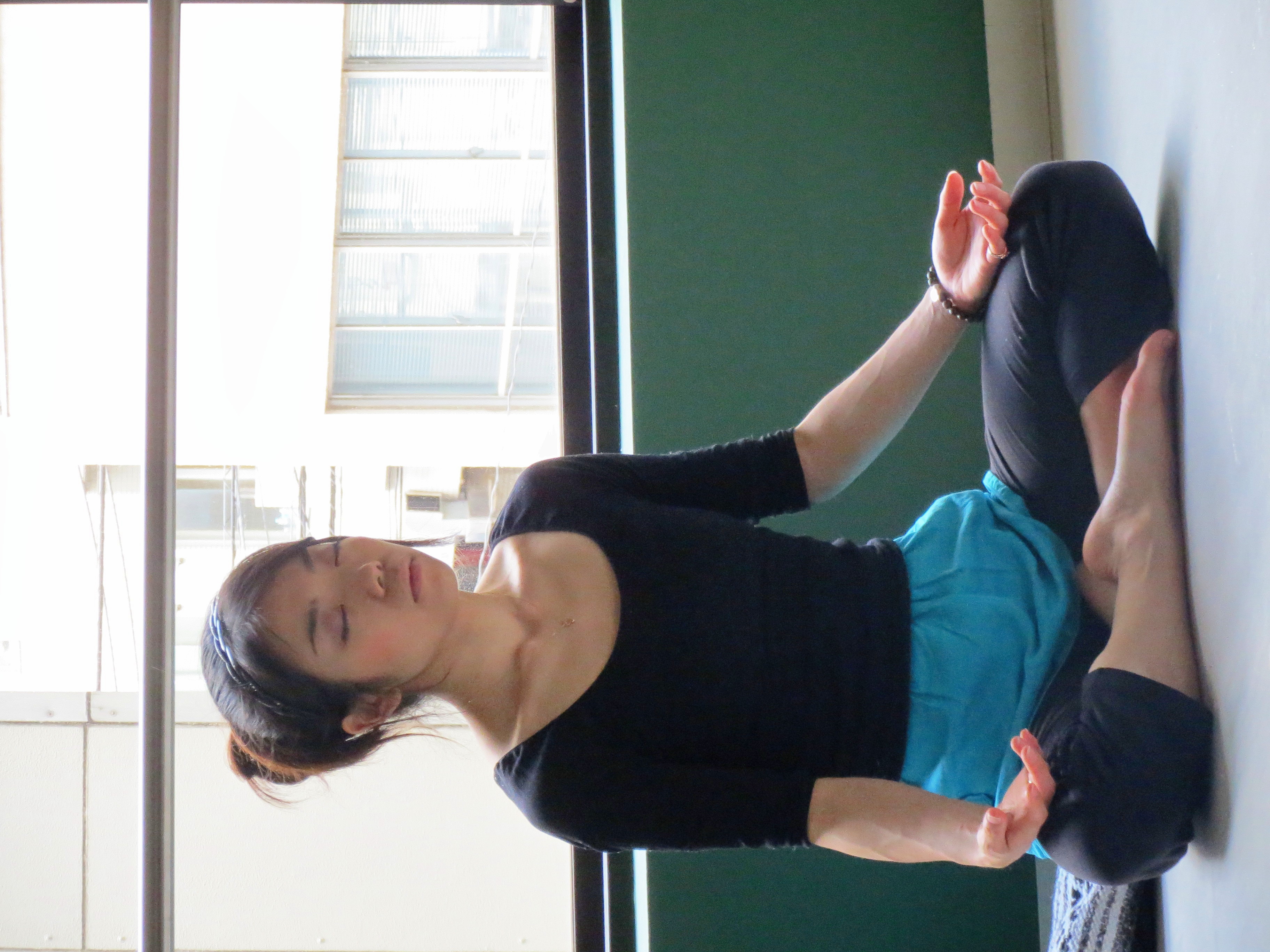
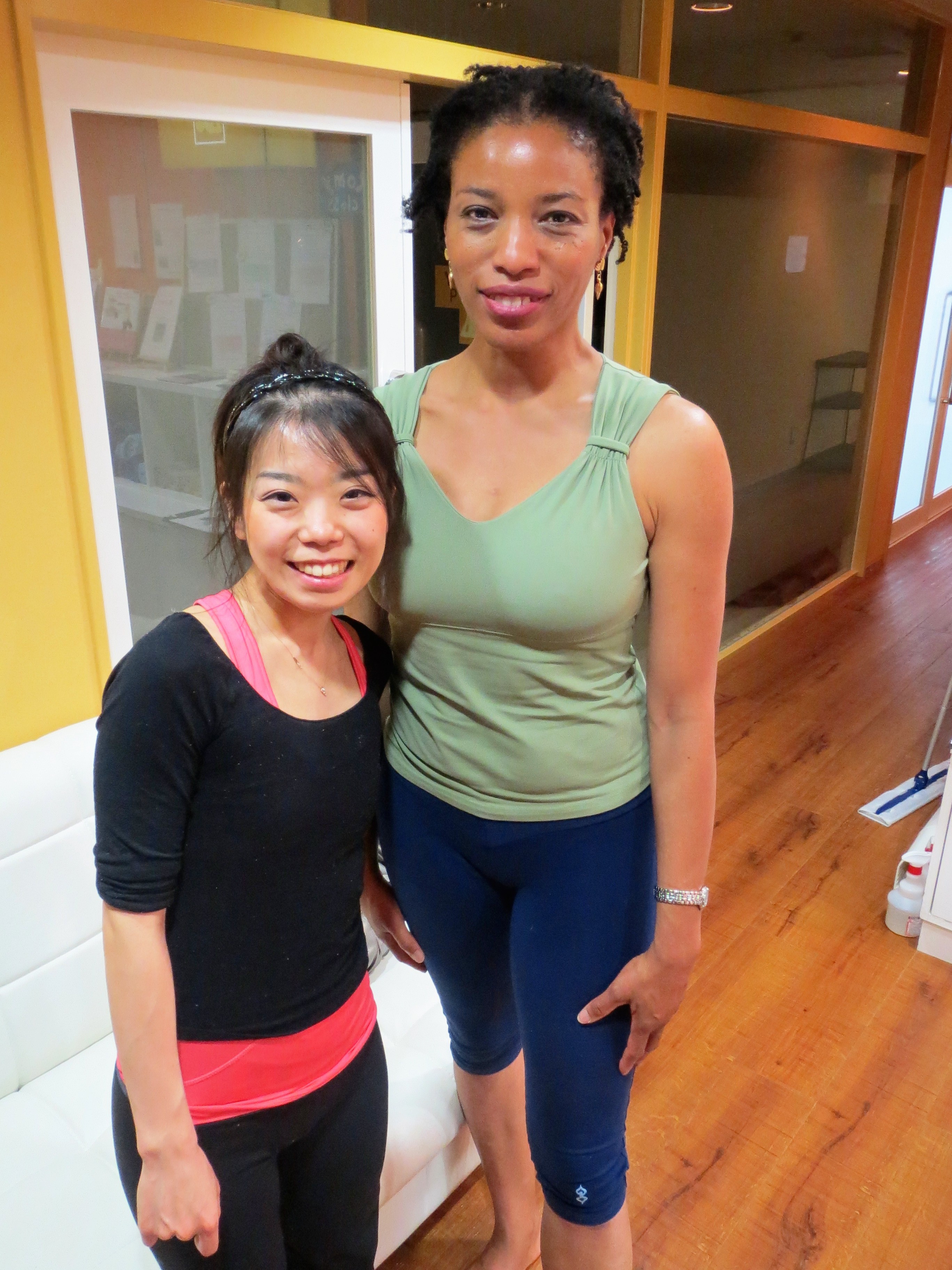
About a two weeks ago, I met up with Keiko Okuno, a former Yoga Works  colleague of mine who  moved back to Tokyo with her husband after spending five years in Los Angles. She is now a very popular yoga teacher in Tokyo.  A few months after the 2011 earthquake & tsunami in north-east Japan, Keiko made a brief visit to Los Angeles and the women from our  2007 Yoga Works Professional Program gathered to welcome her with a small reunion.  Now it’s almost a year later and the two of us are going to meet in Nishiogikubo, Tokyo, which would be for me, an adventurous journey by train.  The directions…  “from Sangejaya (platform 2) take the De-ontoshi Line to Shibuya, then the JR line (platform 1) to Shinjuku (platform 12) then take the JR Chou-ow (kaisoku) to Nishiogikubo and then walk to the south exit…”   Somehow I made it there and I would soon find the trip to be well worth it.  Keiko thought it would be nice to have “sweets” at a place nearby.  After a short walk  through a quiet residential  neighborhood we came upon a wooden house that she said had been relocated from somewhere in Japan.   To my surprise we entered the most delightful place— “Re:gendo”—rustic, simple and serene with airy rooms  featuring a  small boutique and cafe surrounding an enclosed garden.  We sat down at a wooden table covered with a faded patterned design and ordered the most wonderful “sweets” with exotic and colorful ingredients such as; honey green tea ice cream, black sesame paste, matcha mouse, black bean jam, and mango.   Coincidentally, while we were eating there was a small tremor putting everyone on alert but it soon passed and we all relaxed—everything was okay…

Later we  browsed the tiny store highlighting  handcrafted leather shoes made by the owner, clothing made from flax handwoven into linen fabrics in deep indigo, eggplant, and other natural tones. I was told that this type of fabric was traditionally used for casual kimonos. Glazed pottery, glassware, assorted kitchenware and haishi (chopsticks) rounded out the assortment of items.  The late afternoon sun began to cast a golden glow on the surroundings, adding another element to the spectrum of sensory appeal that is so prominent in the experience of Japan.
http://www.re-gendo.jp/

The Translators: Kosai Kato

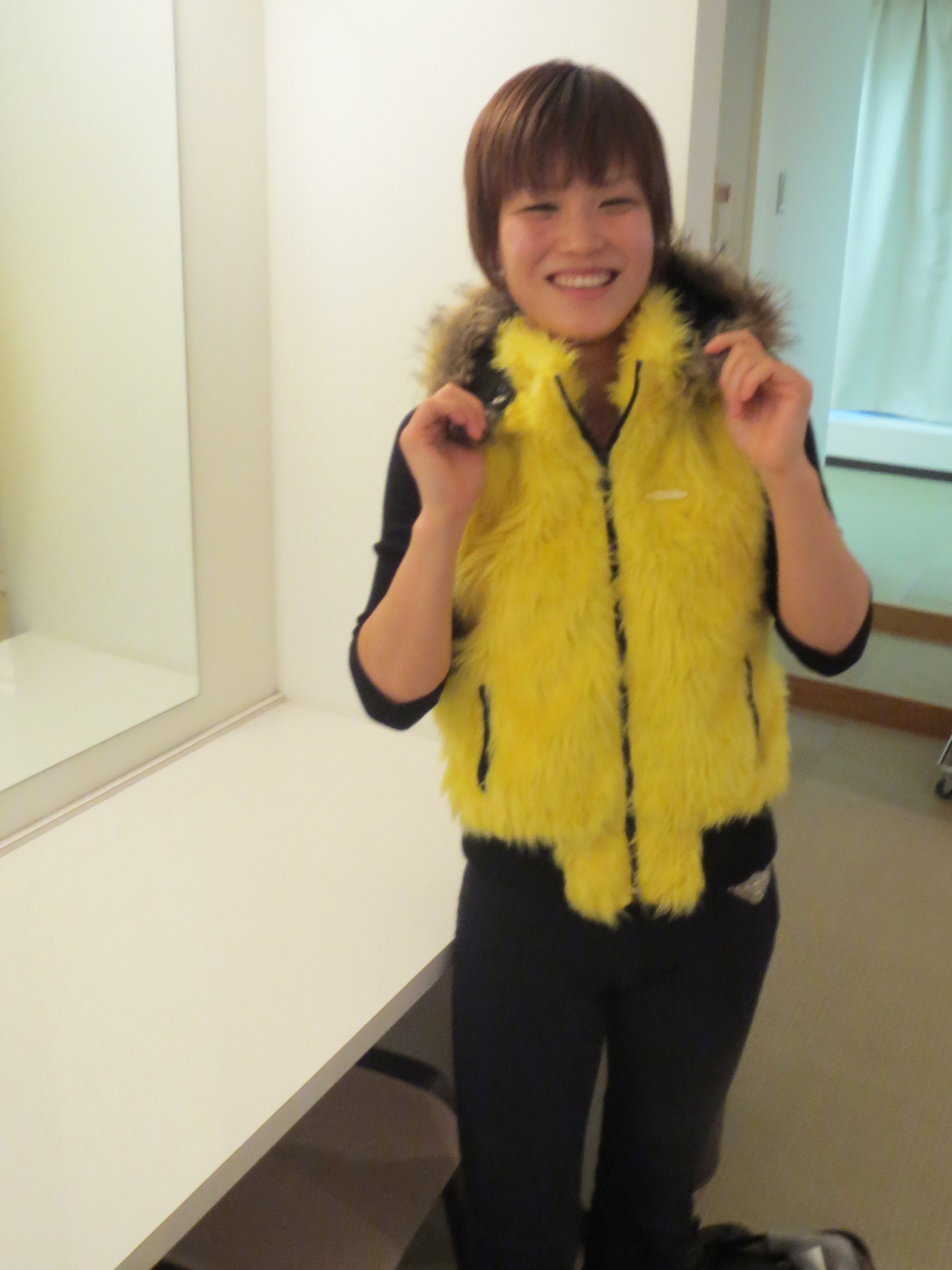
Kosai Kato has been translating for my Tuesday morning Level 1/2  class in Gotanda and for the teacher’s  workshop, “How to Address Common Injuries in the Classroom.”   Always radiant, chic and stylish, she walked into our first  staff meeting  wearing frosted eyeshadow and a fuzzy yellow vest trimmed in black–and looked great!   Not only do I like her personal style, she’s brave and daring as well.  Would you believe that she studied aviation at the University of North Dakota and that she also worked as a member of an international flight crew based in Singapore from 2009-2011?  Kato has been teaching yoga since 2006 and completed her 200HR Yogaworks Teacher Training in Tokyo with Eka Ekong.  She currently teaches at YogaPlus in Yokohama, Tokyo.

Romy & Kosai at the Gotanda Studio

The Infamous Yellow Vest

Eating in Tokyo: Mame-Maru

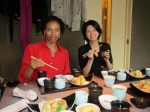
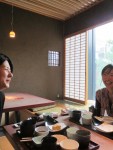
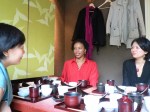
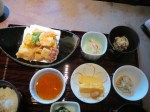
A week ago, few of my students, Ahn Eunsun, Yoshiko Okamoto, & Yuka Matsuo, took me to lunch in downtown Tokyo.  Ahn said that we were going to a “Kyoto Japanese Style” restaraunt, called Mame-Maru.  We entered a small place and after taking off our shoes, were guided into our own private room.  The floor was covered in tatami mats and we sat on cushions with our legs placed in a pit under the table which appeared to be hovering above the floor.  This soothing setting overlooked a tranquil garden on a rainy day.   A waitress wearing a warm yellow colored kimono served  us the most beautiful meal and numerous cups of tea.  The meal, “cha-kaiseki” would be considered a more casual form of “Kaiseki” which has its roots in Kyoto.  Visually appealing, kaiseki  is “an art form that balances the taste, texture, appearance, and colors of food.” That is certainly true indeed as evidenced from the images taken of the meal.

http://mame-maru.jp/

Sightseeing: Omotesando

One of my students suggested that I go to Omotesando, Harajuko and Yoyogi Park to look around. I had time after the workshop on Sunday, May 13 to do some sightseeing. The weather was great–no rain—and there was no teacher training that weekend. I spent the entire afternoon there and was pleasantly surprised—Omotesando and its surroundings reminded me of Soho, Tribeca and Paris infused with a distinct Japanese aesthetic. Omotesando is a fashionable neighborhood, with numerous boutiques and cafes highlighting unique architecture, design, clothing,  food and pastries.  I ventured down numerous streets and  never made it to Harajuku or Yoyogi Park that day. But the pictures tell the story–I think my favorite  image of that day would be of the young woman quietly strolling down chic Aoyama wearing a traditional kimono…

This slideshow requires JavaScript.

The Translators: Yuri Nakamura

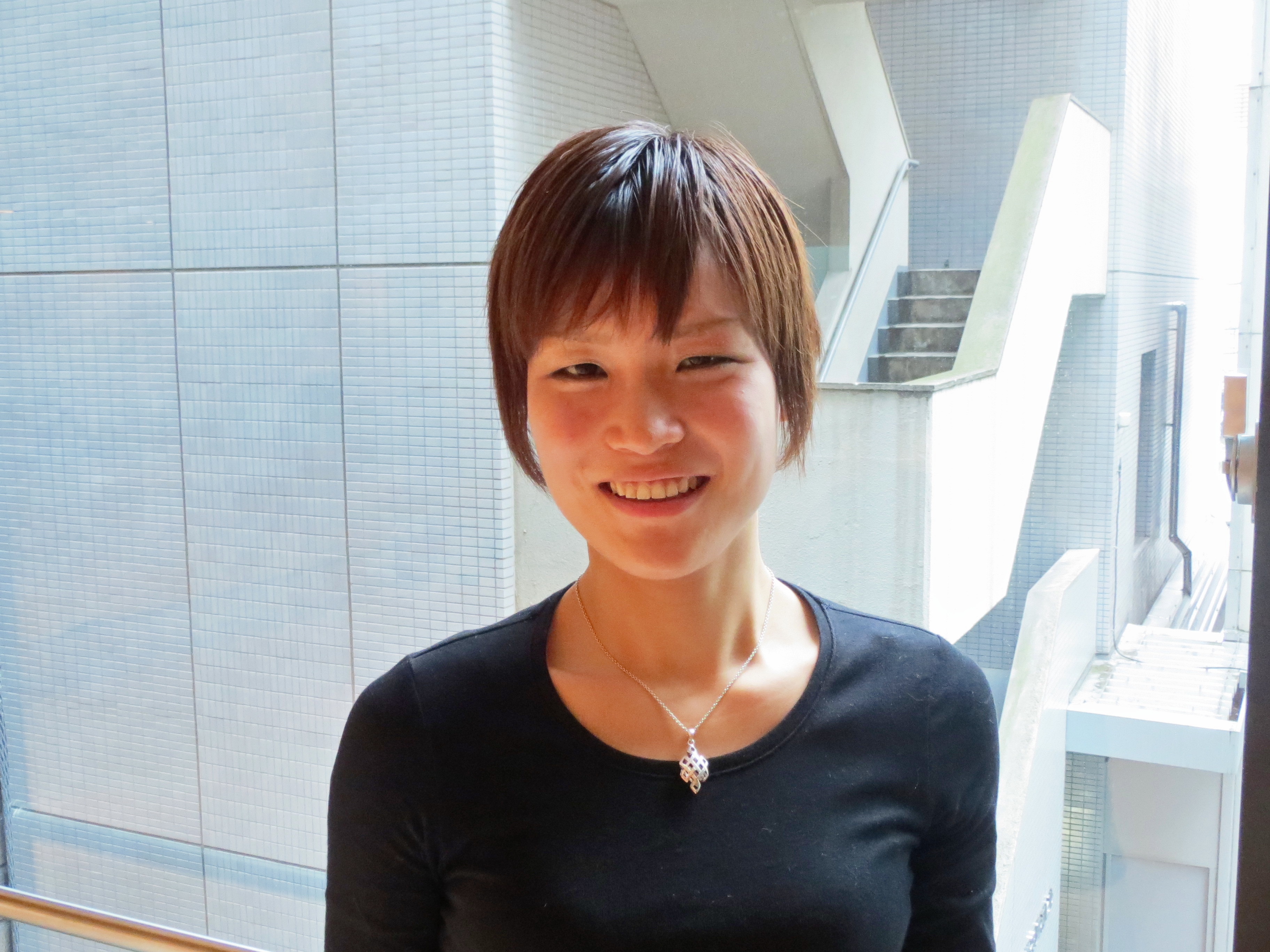
Yuri Nakamura

People have asked me how can I conduct the classes and teacher  training if I don’t speak Japanese?  The answer to that is an excellent team of translators!  I’m so indebted to them and appreciate their help so much, I thought it would be nice to highlight  each of them individually.  We share the space in the classroom teaching in tandem,  and through this process I’ve gotten to know them on a personal level.  Yuri is translating for the bulk of classes during the week–Wednesday “Yoga Therapeutics” in Gotanda; Thursday  “Level 1/2, Sangenjaya;  & Friday Level, 2/3 in Gotanda. She also translated for the two workshops “Living a Better Life Through Yoga.”  Yuri’s first experience translating was for Eka Ekong (Yogaworks, Los Angeles) who led a  200  Hour training in Tokyo in  2011. She’s also translates for Catlin Casella (YW, New York) when she comes to town.

Yuri is a petite sized “dynamo” whose expressive voice is delightfully uplifting.  She has been teaching yoga for approximately a year and completed her Yogaworks 200hr Teacher Training with Jennie Cohen (YW, New York) and now teaches for YogaPlus in Kichijoji. Yuri graduated from the University of Utah where she majored in Dance & Psychology. These experiences and more are embodied in her elegant presence in the classroom and on the mat.

Me & Yuri, Gotanda, 2012

The Welcome Party

The YogaPlus staff  wanted to host a welcome party for me. It took us a few weeks to coordinate our schedules, but were able to gather last weekend, May 12, at Tofuro—a traditional style resturaunt with “the wabi-sabi ambience of the tea-house world.”  The party was lively with great food—platters of sashimi, soup that was made at the table, varieties of tempura and fresh tofu— and lots of laughs!  Here are a few pictures that captured the moment….

This slideshow requires JavaScript.

The Second Workshop: “Living a Better Life Through Yoga”

Part I: “The Physical Body”

In the meeting with the translators and programmers during my first week here,  I was also asked to create a couple of workshops for the public.  The staff had ideas of their own: they said they wanted me to come up with something to address common aches and pains, fatigue and stress–symptoms of urban life,  long work hours and surprisingly, the upcoming rainy season which can be the cause of depression for many. The workshops also had to be held in two parts over a weekend ( the one weekend I had off from teacher training) and each be 2.5 hours in length.  They said that ” Part I” should  somehow address the physical body and “Part II”, the mental.   We spent a few moments going back and forth over a few titles and then I blurted out “Living a Better Life Through Yoga”  they liked it–and so did I.  When I sat down a few days later it became the name for this blog.  I realized that this effort to “live a better life,”  is my primary reason for practicing yoga,  teaching and what I hope my students ultimately gain from the experience. The workshops held on May 12 & 13, were a success.  At first I was worried that I wouldn’t be able to hold the space or their attention for that amount of time, but the moments flew by and both sessions were followed by lots of discussion and questions.  Encouraged and inspired by the group’s response, I’m now planning to continue developing this workshop concept to cover a series of topics.

Part II: “The Mental Body”

Sightseeing: Ginza

We decided to stop in Ginza on our way back from Asakusa.  Ginza is the most expensive neighborhood in Tokyo and with numerous boutiques and department stores featuring the finest designers in the world.  This shopping district is often compared to the Champs Elysee in Paris, yet to me,  seemed very similar to Fifth Avenue in New York.  After walking around a for a while, we stopped in a traditional Japanese fish house for dinner. 

This slideshow requires JavaScript.

Sightseeing: Senso-Ji Temple

Two of my students, Kasumi (“Lotty’) Tanaka and Hisako Imaizumi and her son Yu, took me on an excursion to Asakusa to tour the Senso-Ji Temple Grounds.   The sun had finally come out  after a few days of rain so we were able to spend considerable time touring the grounds.  The Senso-Ji Temple is the oldest temple in Japan and dates back to 628 A.D. It was built to honor the Bodhisattva Kannon—a figure highly regarded in Buddhism which is believed to have been sent to relieve human misery on earth.  Many Japanese believe that their hopes and pleas will reach this deity, which is evidenced in the various methods available on the grounds for prayer— to bless, request good fortune or to eliminate illness and vessels for ritualistic cleansing.  I took so many pictures that I created a slide show to share this rare experience.

This slideshow requires JavaScript.

Eating in Tokyo: Ootoya

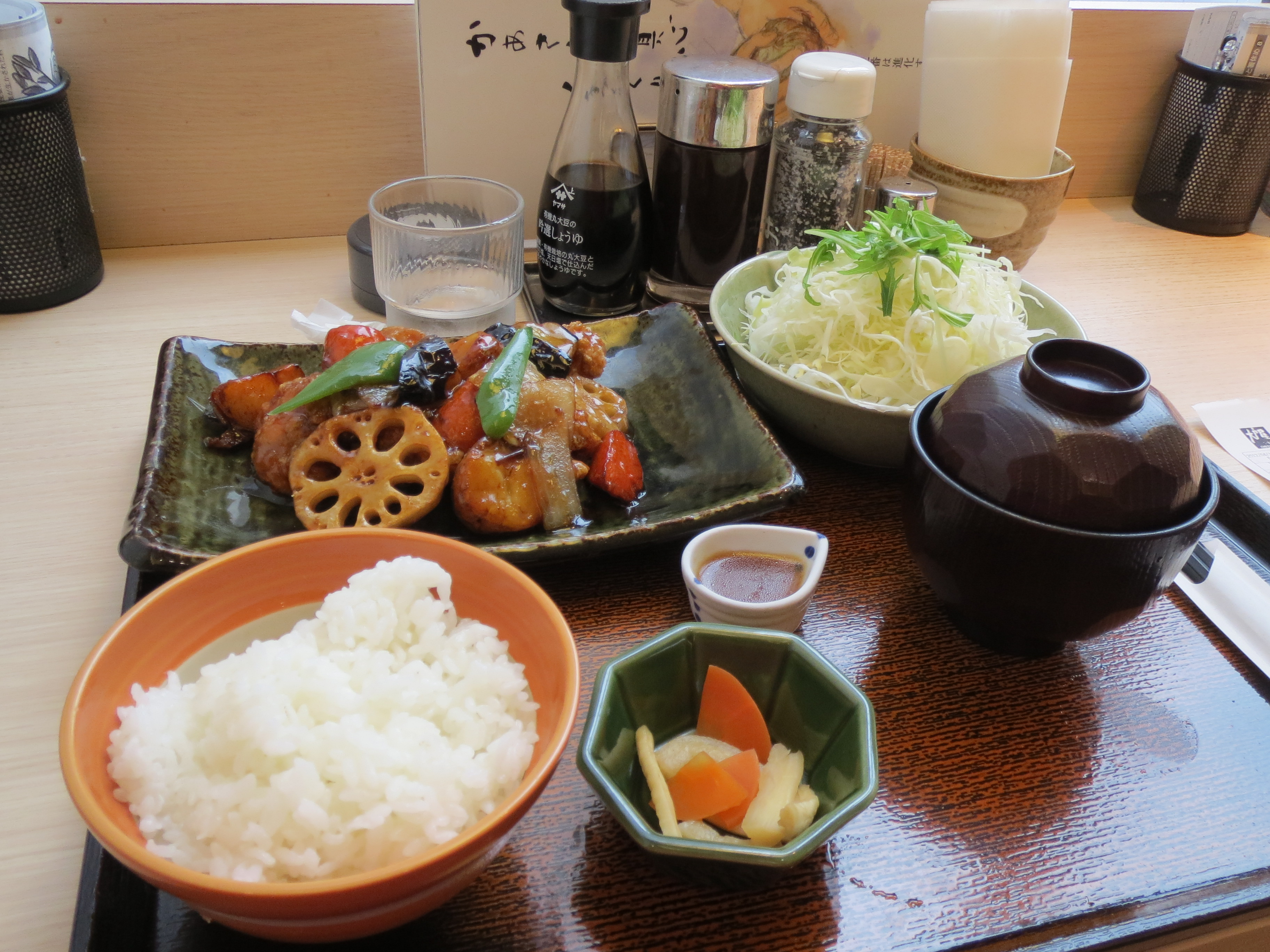
Mixed Vegetables with Chicken, Rice, Cabbage Salad with Sesame Dressing, Miso Soup

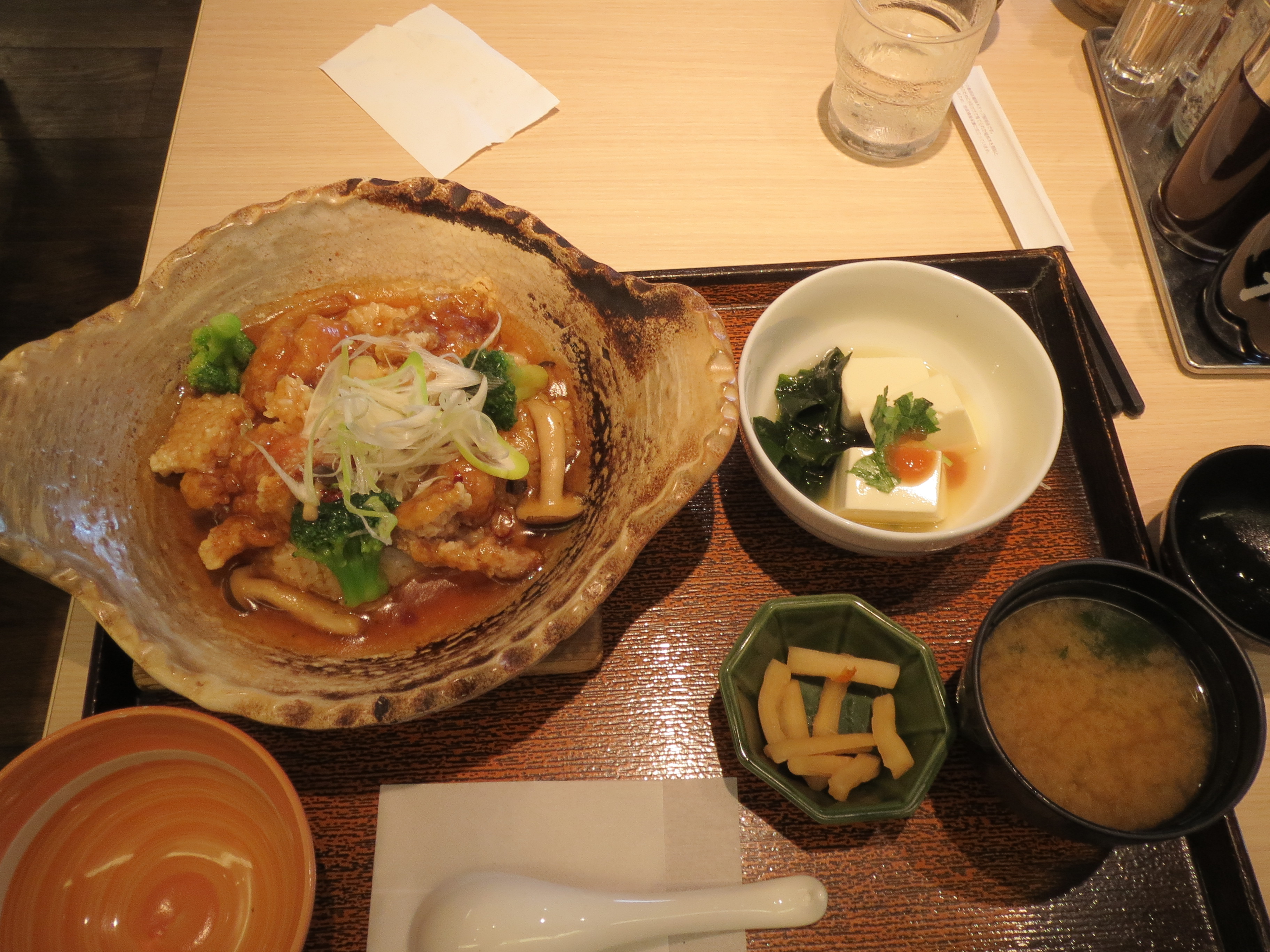
Chicken and Rice Baked in a Clay Pot, Tofu and Seaweed Salad, Miso Soup, Pickled Vegetables

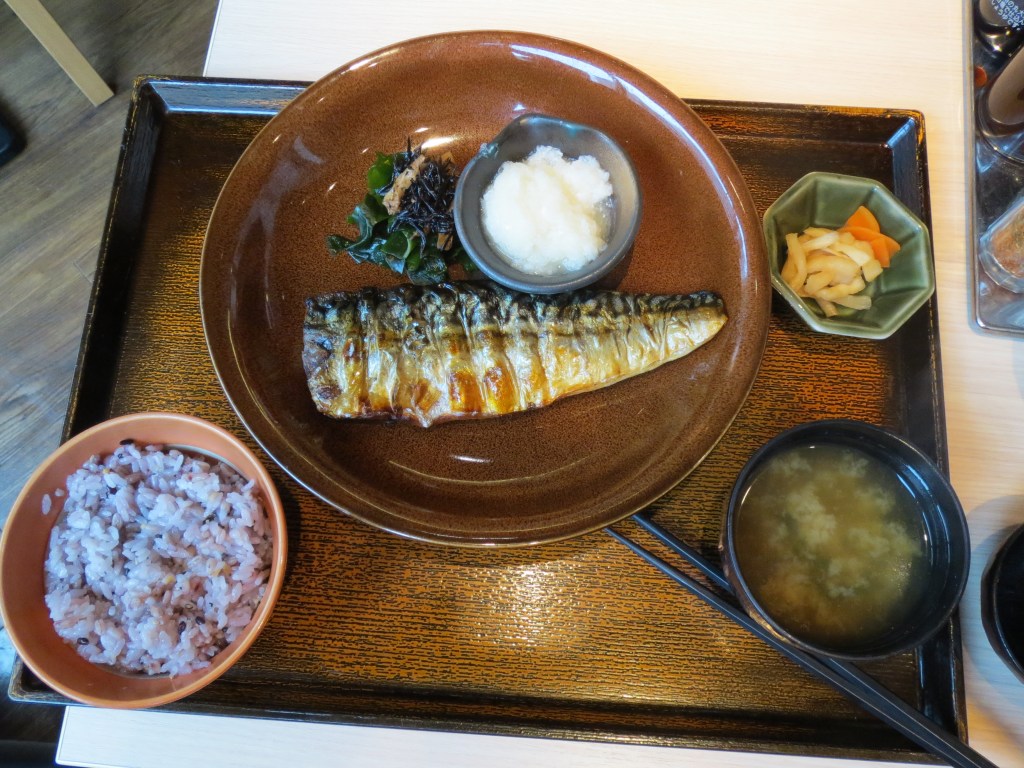
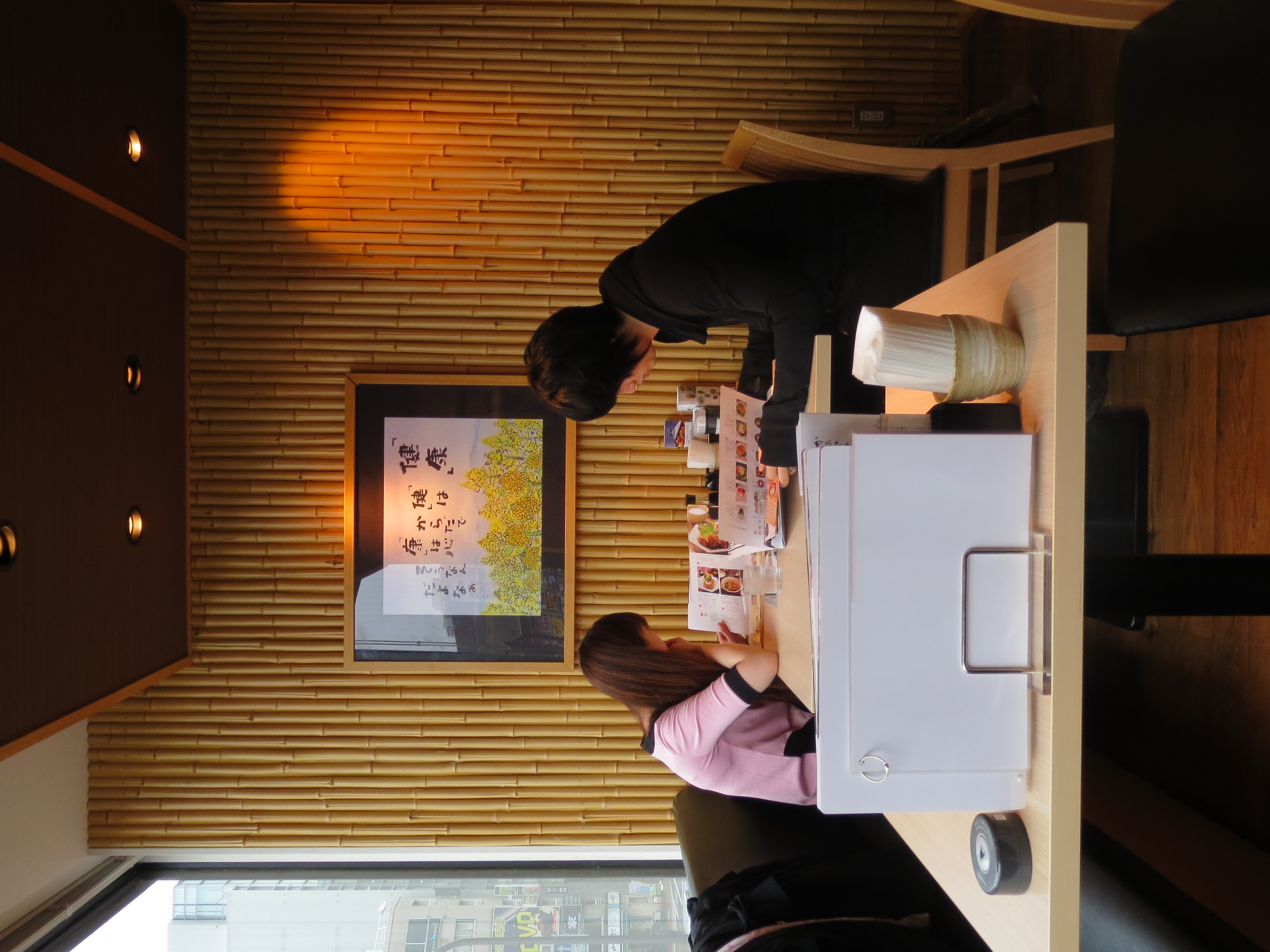
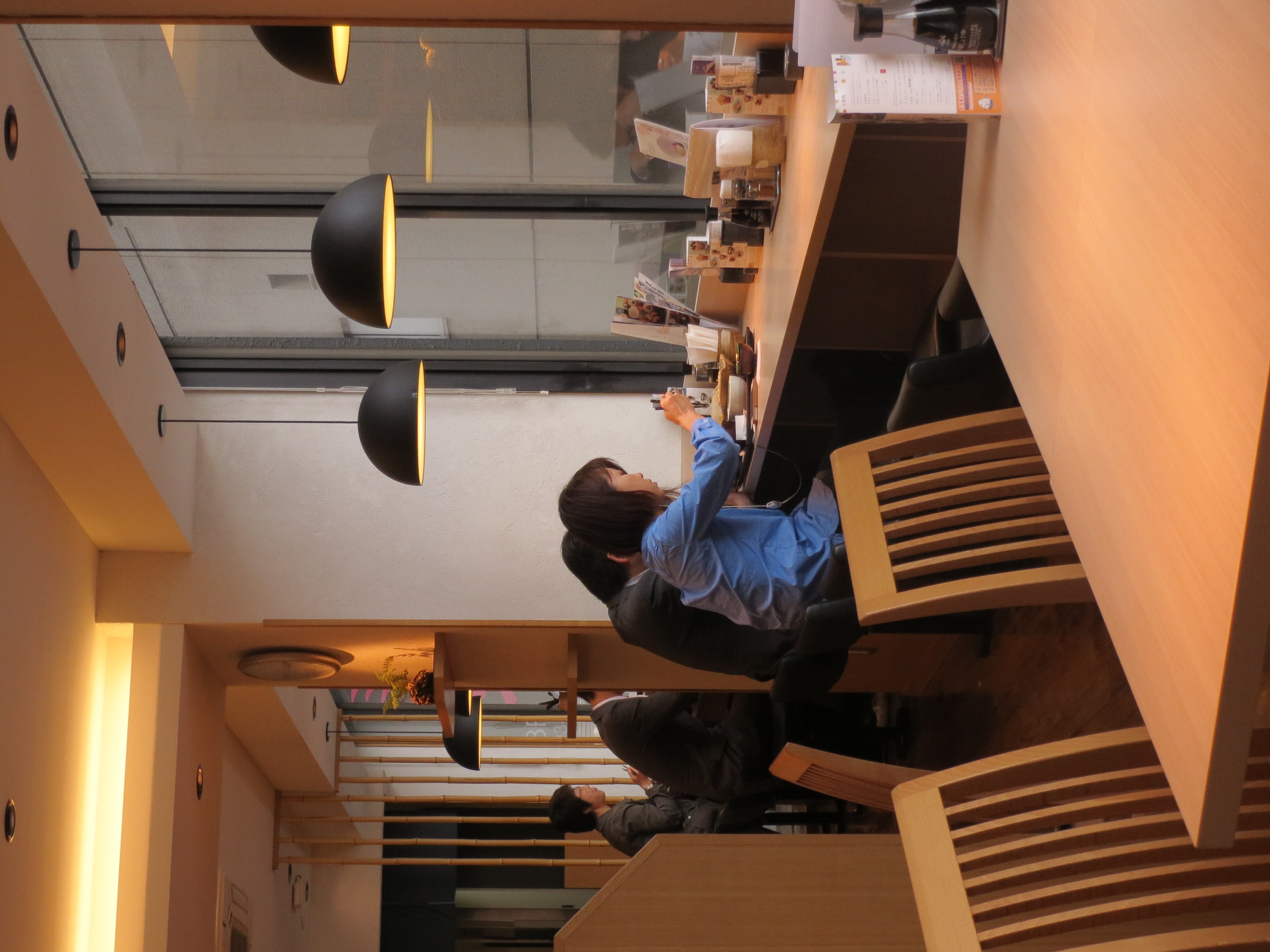
Food is a cultural highlight in Japan and much pride is taken in the preparation and presentation of meals. For me, the exposure to different and somewhat exotic dishes has become one of the most intriguing aspects of this trip. If you’re adventurous, you’ll experience real Japanese cuisine which may be some of this most delicious and interesting food you’ll ever have. I know have favorite places that I visit routinely and photograph the meals with unique visual appeal.  Some of  the meals have been disappointing, but some have been real standouts. Ootoya is a place I found during my first few days here.  It was raining and I had no idea where to go for lunch, I then saw a nice sign directing me upstairs. I’ve found this restaurant to offer the best value (large portions) for the price and the interior is comforting. You can also get as much green or barley tea with your meals. Each set photographed cost less than $10.00.

Grilled Mackerel with Horseradish & Seaweed, Mochi-Mochi, Pickled Vegetables, & Miso Soup

Grilled Mackerel with Horseradish & Seaweed, Mochi-Mochi, Pickled Vegetables, Miso Soup

Interior Scene, Ootoya

Counter by the Window, Ootoya