“Yokocho” Tokyo Alleys & Side Streets

This slideshow requires JavaScript.

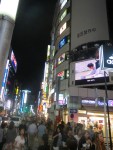
Space is a premium in Tokyo, alleys and side streets are prime real estate and I’ve discovered that they are hidden communities where locals convene to go to the market.  Yokocho means “alleys to the side of the main street.” One of my favorite side streets is Togoshiginza in Gotanda. I usually take a stroll there to relieve tension after the teacher training on Saturday or Sunday evenings; or to get my favorite fish sandwich for lunch at the bakery; shop for vegetables; or stop at the 100Y shop.  There are other neighborhoods interesting “side streets” as well, Sangenjaya is a maze of rustic and colorful venues; bargains can be found in Kichijojoi; and the narrow streets in Shimokitzawa make up a lively bohemian village.  Next to Ueno Park is the popular “Ameyayokocho,”  an exotic, sprawling mix of food stalls, shops and even a  gorgeous shrine. If you ever visit Tokyo, remember to be adventurous and look around the corner, you never know what you may find.

Gotanda

This slideshow requires JavaScript.

In contrast to Shibuya is the neighborhood in which I am staying, Gotanda,  and in my opinion reflects a real Japanese community.  Over these three months here, I’ve come to realize that Tokyo is not Shibuya but more like Gotanda, a balanced mix of residential and business and a small city within a city. I’ve now explored the quiet streets, walked along the river and eaten in many of the petite restaurants and cafes.  It’s relatively quiet for an urban environment and when I walk home from the station or class, I feel grateful that I’m staying here and not in Shibuya.  One day, in search of a park, I walked all the way to Meguro and back.  It took me all day, but it was one of the best days I’ve spent here. The photos depict the contrast of the imagined Tokyo and the real.

Shibuya

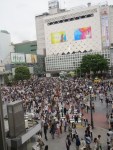
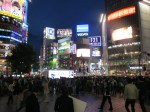
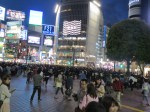
I always had this image of Tokyo before I came here and it was much like Shibuya. Twice a week, I change trains at the bustling Shibuya station on my way to teach in Sangenjaya.  Yes, the busiest cross walk in the world is there–and its a sight to see.  In fact,  I remember the first time I had to leave the station to change trains when I heard a fervent hum in the air–a cacophony of sound emanating from the thousands of people, electricity and trains that literally pierces through the body.    Shibuya is energetic, dense and teaming with tourists.  Many locals and natives avoid it. When I once told Yuri that I was going to Shibuya, she said “Why go there?”  I will admit that I’ve come to like other parts of Tokyo for shopping or walking around and actually there are more neighborhoods that reflect the “real” Tokyo.  However, I’m not through with Shibuya yet and curiosity makes me leave the station on my way to Sangenjaya to walk around and take in the zany spectacle of it all.

Sightseeing: The Zoo in Ueno Park

This slideshow requires JavaScript.

A few weeks ago, Charlottte Tanaka, Mikoto, Goto Hisako and Ryu Imaizumi invited me to go with them to the zoo in Ueno Park.  I hadn’t been to a zoo in years and was really looking forward to it and 4 1/2 -year old Ryu was particularly excited.  We took the JR LIne to this vast park, which is very similar to New York’s Central Park, in scale and for the presence of prominent museums.  Shortly after entering the zoo, we  saw the panda bears and then continued on to see an elephant, bears, a towering giraffe, penguins and a menagerie of variegated wildlife.  A powerful storm quickly moved in forcing us to run for cover and take a monorail through lush, green, treetops in search of an area to wait out the downpour.  The four of us had snacks under a pavilion overlooking a sweeping lake covered in waterlilies. Finally the rain stopped and we were able explore a bit longer until a classical melody played over the speakers indicating closing time.  Similarly, throughout Tokyo, a nursery rhyme is amplified at 5:00 p.m. each day, Tomoko Kawahara said that this is a signal “for all little children to go home because their parents are waiting for them.”  After leaving the zoo, Ryu wanted to see the bullet trains “Shinkansen” and we were able to get passes at the train station to go below and see them arrive and depart.  Ryu was so thrilled to be there with the trains–and so upset when we had to leave.  In all, it was great to spend the day experiencing life’s simple pleasures through the eyes of a child.

The Translators: Mayumi Yamashita “Souffler”

Mayumi Yamashita “Souffler”

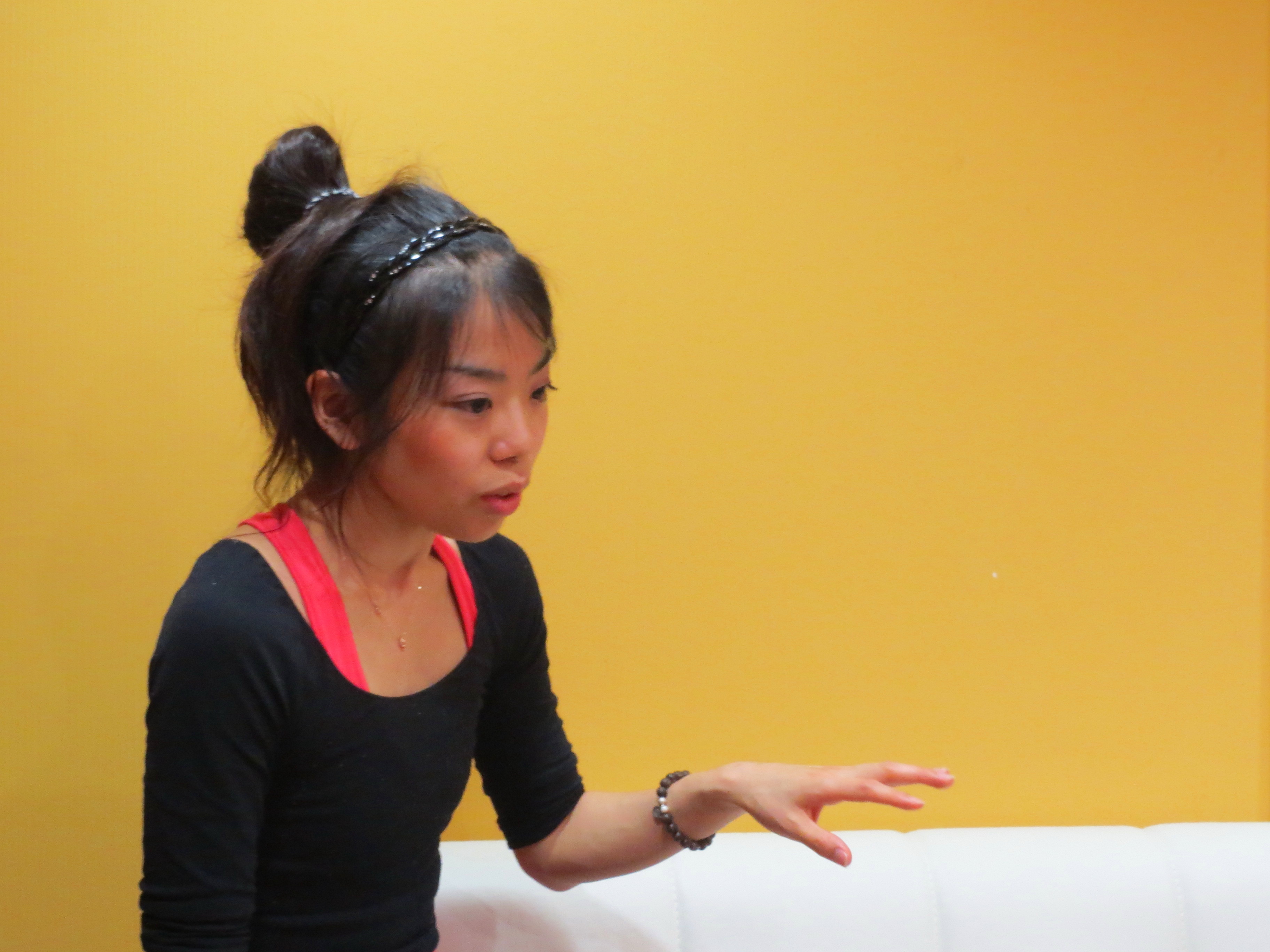
Mayumi “Souffler” Yamashita translates for my Friday afternoon Vinayasa/Mediation class at the YogaPlus studio in  Sangenjaya.  A seasoned world traveler, Souffler first studied at the  Sivananda Vendana Yoga Center  in India and then later completed  the 200hr  Yoga Works Teacher Training in Tokyo with Caitlin Casella.  Her experiences during this training inspired her to become a translator.  She currently teaches for YogaPlus  and the Sivananda Center in Tokyo, and has taught yoga in the Bahamas, United Kingdom and India.  She was motivated to teach yoga teacher as a means to maintain her connection with her friends all over the word, but mostly because of her late father, Sadayuki Yamashita, who taught Japanese and was a translator as well.  Souffler said that her parents  were so proud of her choice to become a yoga teacher and the potential he had to have a positive influence on people’s lives.  Gregarious and always upbeat, you really do feel the positive energy that Souffler emits in her presence, she is the true embodiment of  “sattva”–luminous and light.
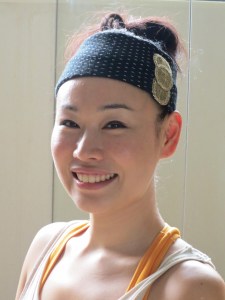
What I also like about Souffler is that she keeps on top of me to get my sequences in to her on time.  Each translator requests my sequence prior to class so that they can prepare and research poses or anatomical terms—I  just can’t show up and teach there’s a collaborative process involved.  Another fact that I appreciate about Souffler is that she is always willing to offer to show me around Tokyo or suggest  a store, neighborhood, or site  that I should visit.  Japanese women in general are very fashionable, especially Souffler, and I’m always commenting on her great outfits. During one of our conversations after class,  she said:

“Have you been to Shimokitazawa?

“What? …Where is that.”  I said

“Shimokitazawa…you’ll love it!  I’ts near Shibuya, take the Inokashria Line to the Shimokitazawa train station. They have lots of good deals there on clothes.”

She wrote out the directions for me and I did take her advice go there the other day and she was right–it was a terrific community–sort of like the East Village in Manhattan with lots of thrift shops and boutiques with fashionable clothes at prices far more affordable than in other areas of Tokyo.

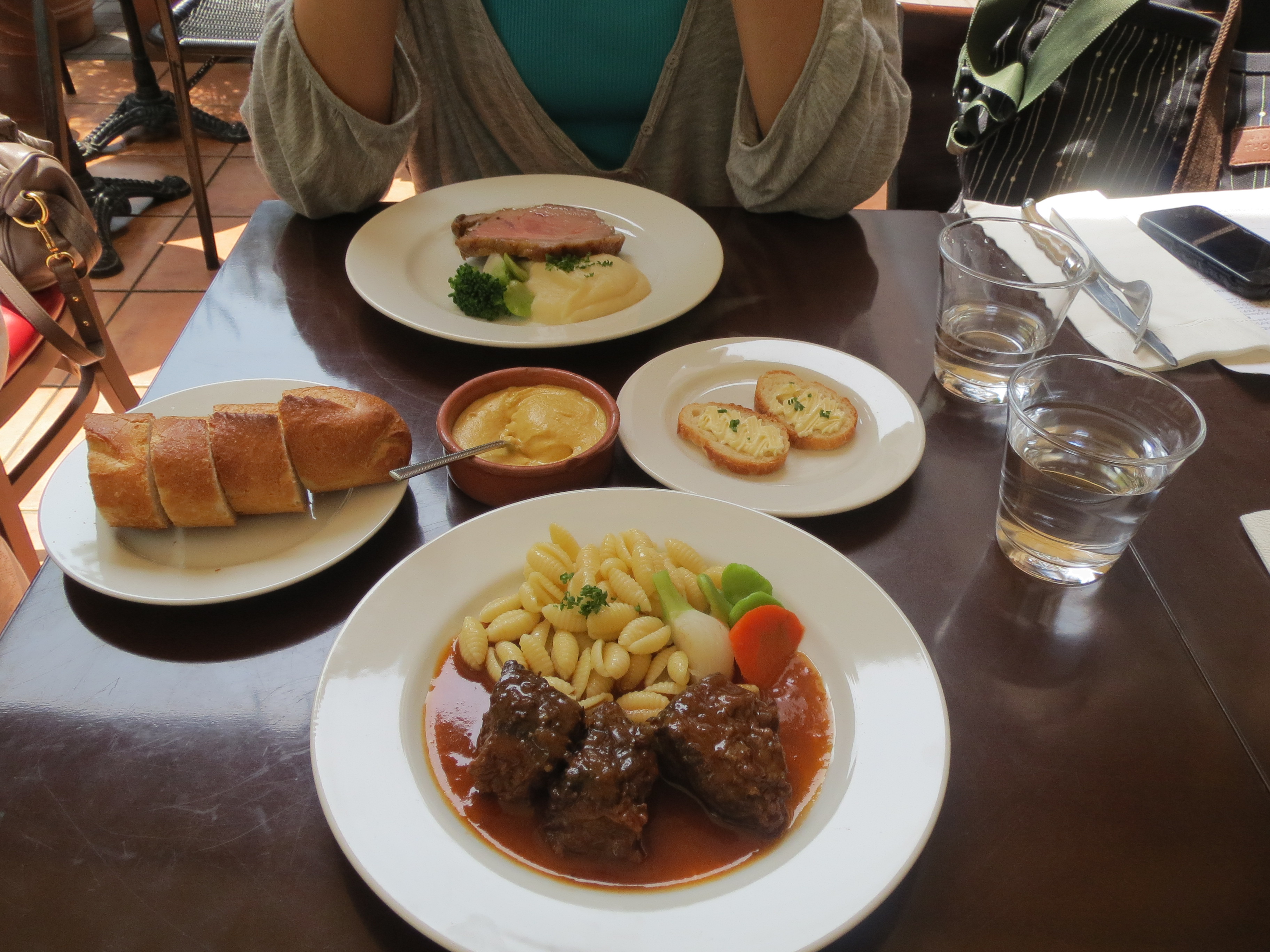
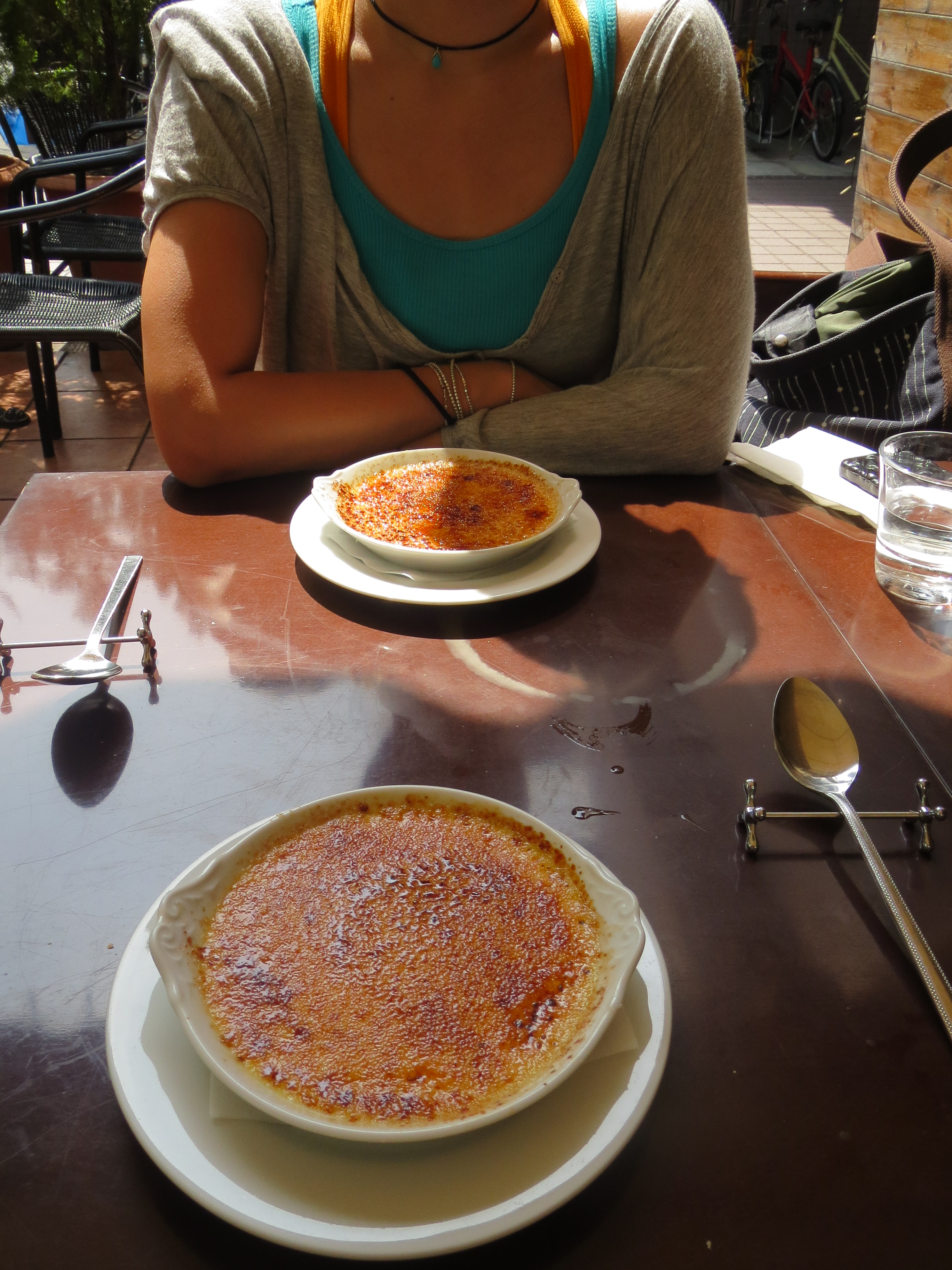
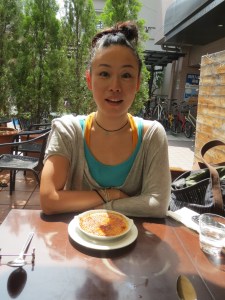
One day she wanted me to meet her take a yoga class in Meguro, I was late so she decided we should have lunch in Ebisu instead.  We went to a quaint French restaurant (Les Lions) that she likes which has a prix-fixe meal–I marvel at how the smallest of spaces can be a restaurant or cafe in Tokyo.  I’ve also noticed that French food is very popular in Tokyo.  Souffler said that there are a number of French restaurants in Tokyo better than those in Paris.   It was a nice sunny day so after lunch she thought I’d might like the shopping center at Ebisu Gardens and took me there.  As we rode on the lengthy “skywalk” for about a mile through a massive subway station, we saw a small building with a red gate nestled between two tall buildings outside. I asked her why a temple would be there of all places, and she said “because its an Inari temple and years ago, someone designated the spot as sacred and nothing can ever be built on the land and the temple will never be moved.”  How interesting I thought,   that a piece of ground could be so sacred and respected today especially in Tokyo where land is so scarce and real-estate is so valuable. I was very impressed,  these influences go back for centuries and decades and I have seen  this  respect for tradition throughout my trip here which is evident in the food, objects, clothing and customs.
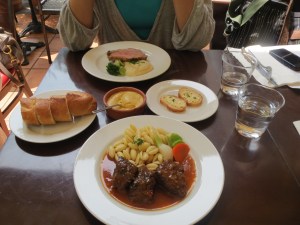
Lunch at Les Lions
Eating in Tokyo: Mame-Maru

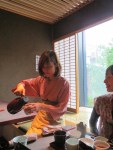
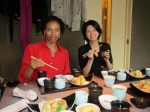
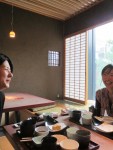
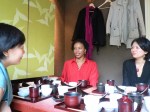
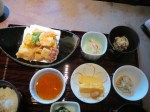
A week ago, few of my students, Ahn Eunsun, Yoshiko Okamoto, & Yuka Matsuo, took me to lunch in downtown Tokyo.  Ahn said that we were going to a “Kyoto Japanese Style” restaraunt, called Mame-Maru.  We entered a small place and after taking off our shoes, were guided into our own private room.  The floor was covered in tatami mats and we sat on cushions with our legs placed in a pit under the table which appeared to be hovering above the floor.  This soothing setting overlooked a tranquil garden on a rainy day.   A waitress wearing a warm yellow colored kimono served  us the most beautiful meal and numerous cups of tea.  The meal, “cha-kaiseki” would be considered a more casual form of “Kaiseki” which has its roots in Kyoto.  Visually appealing, kaiseki  is “an art form that balances the taste, texture, appearance, and colors of food.” That is certainly true indeed as evidenced from the images taken of the meal.

http://mame-maru.jp/

Sightseeing: Omotesando

One of my students suggested that I go to Omotesando, Harajuko and Yoyogi Park to look around. I had time after the workshop on Sunday, May 13 to do some sightseeing. The weather was great–no rain—and there was no teacher training that weekend. I spent the entire afternoon there and was pleasantly surprised—Omotesando and its surroundings reminded me of Soho, Tribeca and Paris infused with a distinct Japanese aesthetic. Omotesando is a fashionable neighborhood, with numerous boutiques and cafes highlighting unique architecture, design, clothing,  food and pastries.  I ventured down numerous streets and  never made it to Harajuku or Yoyogi Park that day. But the pictures tell the story–I think my favorite  image of that day would be of the young woman quietly strolling down chic Aoyama wearing a traditional kimono…

This slideshow requires JavaScript.

The Translators: Yuri Nakamura

Yuri Nakamura

People have asked me how can I conduct the classes and teacher  training if I don’t speak Japanese?  The answer to that is an excellent team of translators!  I’m so indebted to them and appreciate their help so much, I thought it would be nice to highlight  each of them individually.  We share the space in the classroom teaching in tandem,  and through this process I’ve gotten to know them on a personal level.  Yuri is translating for the bulk of classes during the week–Wednesday “Yoga Therapeutics” in Gotanda; Thursday  “Level 1/2, Sangenjaya;  & Friday Level, 2/3 in Gotanda. She also translated for the two workshops “Living a Better Life Through Yoga.”  Yuri’s first experience translating was for Eka Ekong (Yogaworks, Los Angeles) who led a  200  Hour training in Tokyo in  2011. She’s also translates for Catlin Casella (YW, New York) when she comes to town.

Yuri is a petite sized “dynamo” whose expressive voice is delightfully uplifting.  She has been teaching yoga for approximately a year and completed her Yogaworks 200hr Teacher Training with Jennie Cohen (YW, New York) and now teaches for YogaPlus in Kichijoji. Yuri graduated from the University of Utah where she majored in Dance & Psychology. These experiences and more are embodied in her elegant presence in the classroom and on the mat.

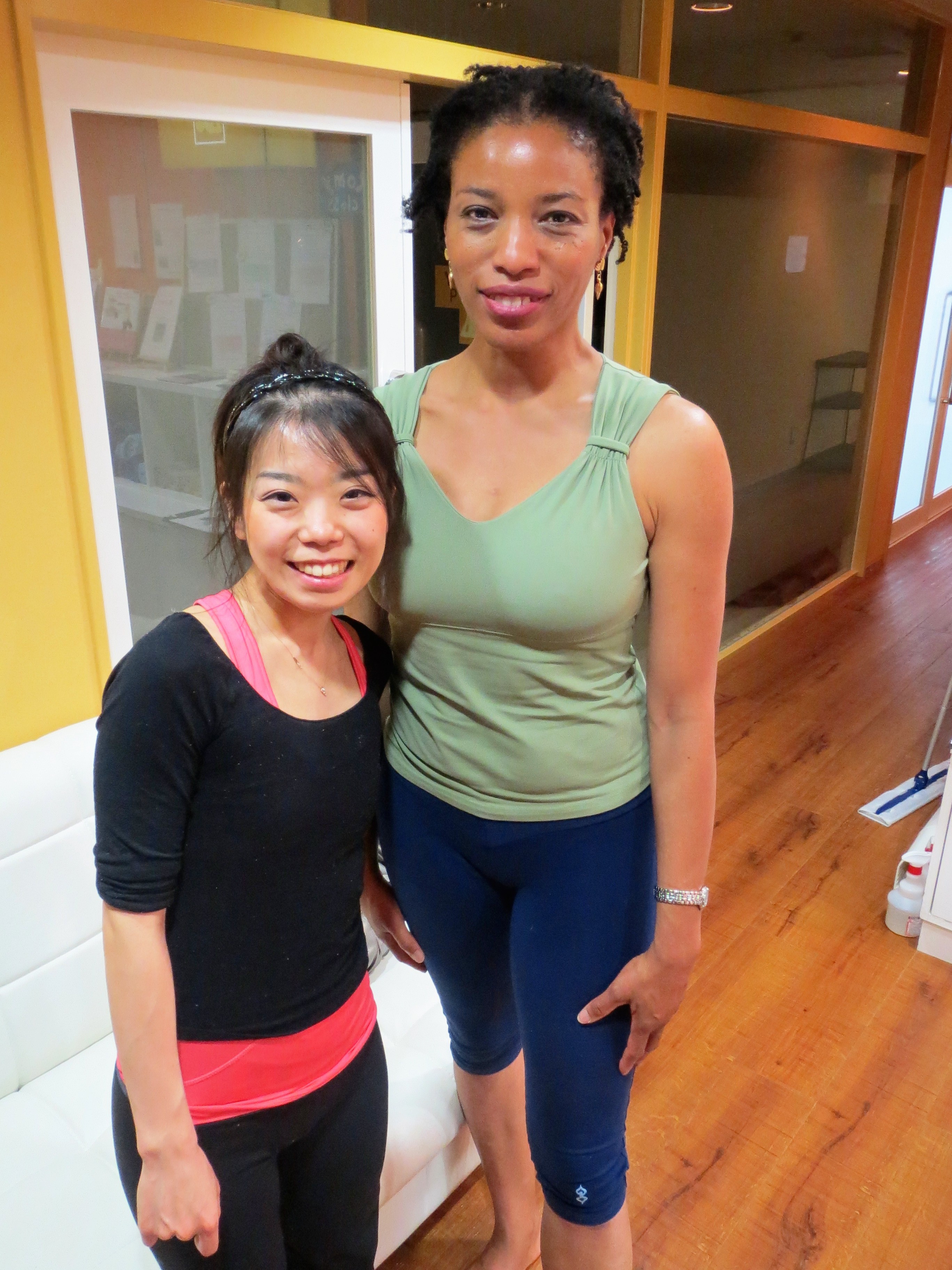
Me & Yuri, Gotanda, 2012

Sightseeing: Ginza

We decided to stop in Ginza on our way back from Asakusa.  Ginza is the most expensive neighborhood in Tokyo and with numerous boutiques and department stores featuring the finest designers in the world.  This shopping district is often compared to the Champs Elysee in Paris, yet to me,  seemed very similar to Fifth Avenue in New York.  After walking around a for a while, we stopped in a traditional Japanese fish house for dinner. 

This slideshow requires JavaScript.

Sightseeing: Senso-Ji Temple

Two of my students, Kasumi (“Lotty’) Tanaka and Hisako Imaizumi and her son Yu, took me on an excursion to Asakusa to tour the Senso-Ji Temple Grounds.   The sun had finally come out  after a few days of rain so we were able to spend considerable time touring the grounds.  The Senso-Ji Temple is the oldest temple in Japan and dates back to 628 A.D. It was built to honor the Bodhisattva Kannon—a figure highly regarded in Buddhism which is believed to have been sent to relieve human misery on earth.  Many Japanese believe that their hopes and pleas will reach this deity, which is evidenced in the various methods available on the grounds for prayer— to bless, request good fortune or to eliminate illness and vessels for ritualistic cleansing.  I took so many pictures that I created a slide show to share this rare experience.

This slideshow requires JavaScript.